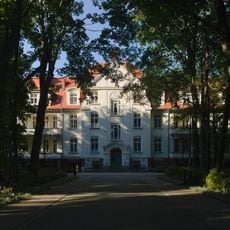
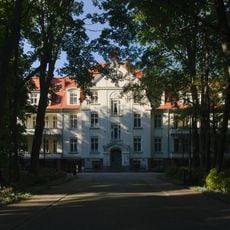
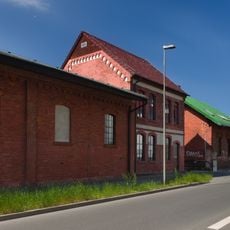
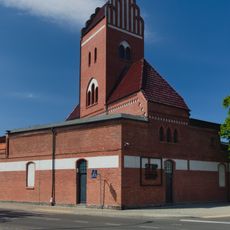
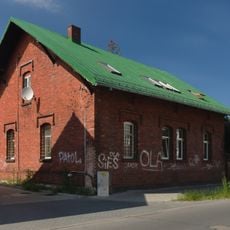
Wasserwerk Świnoujście, Water treatment facility in Świnoujście, Poland
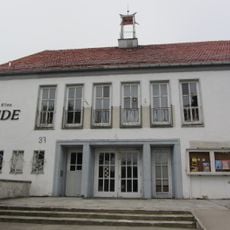
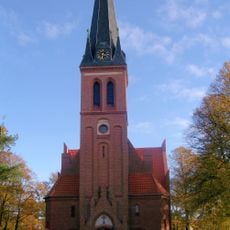
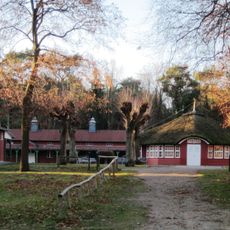
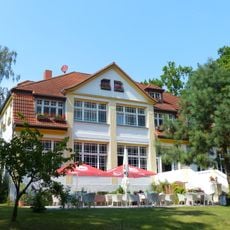
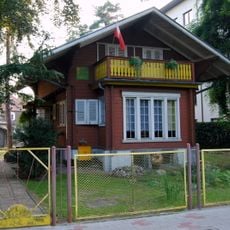
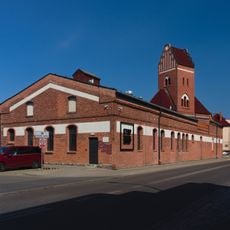
Wasserwerk Świnoujście is a water treatment facility built of red brick with large windows and distinctive industrial elements from the early 20th century. The plant processes water from underground sources through multiple wells and distributes it across the city through an extensive network of pipes.
The facility began operations in 1910 and initially supplied drinking water to the community through an expanding pipe network. The system grew alongside the city and reflects the development of water supply infrastructure in the region.
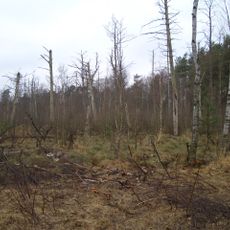
The plant's Polish name "Granica" means "border", recalling that the site lay in the GDR until 1951. The waterworks itself was handed to Poland with a 75-hectare wooded spur, called "worek" (sack) in Polish, while the GDR received land near Staffelde on the Oder in exchange.
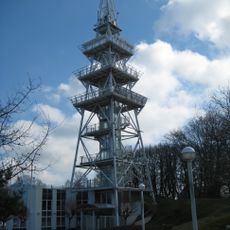
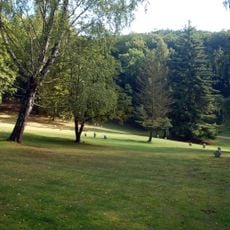
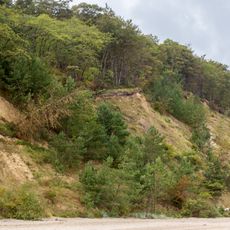
The plant is not open to visitors; it operates as a working water facility. It stands on the 53-metre Kalkberg, where the water tanks are located, near the eastern shore of the Wolgastsee. The site lies in a wooded strip that Poland acquired from the GDR in 1951.
The plant sits on a 53-metre-high Kalkberg hill, where the water reservoirs are located. The site only became Polish in 1951: a border commission protocol signed on 11 June 1951 by Felix Kazmierczak for Poland, Horst Weirandt for the GDR and Gennadi Filippow for the Soviet Control Commission moved the plant and a 75-hectare wooded spur, called "worek" (sack) in Poland, from the GDR to Poland.
The community of curious travelers
AroundUs brings together thousands of curated places, local tips, and hidden gems, enriched daily by 94,623 contributors worldwide.