Teatro Nacional D. Maria II, Neoclassical theater in Rossio Square, Lisbon, Portugal
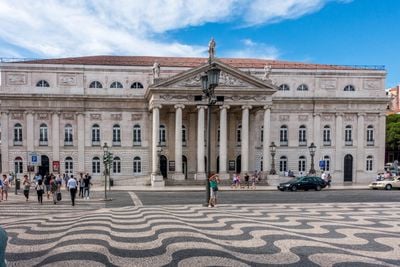
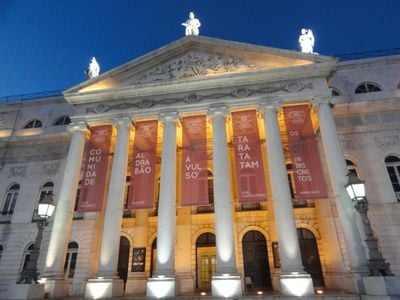
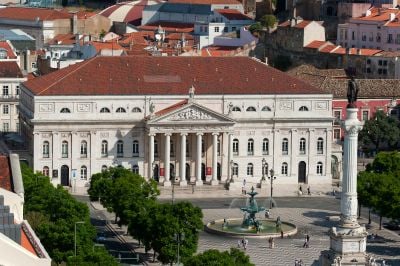
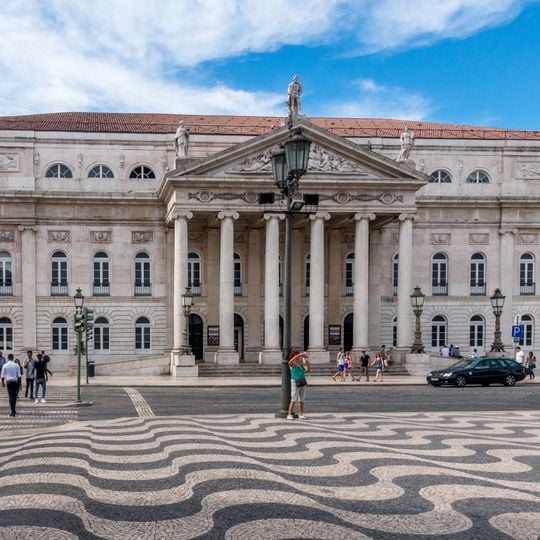
Teatro Nacional D. Maria II is a Neoclassical theatre on Rossio Square, built 1842–1846 to a design by Fortunato Lodi. Its hexastyle portico has six Ionic columns reused from the Saint Francis Convent, a triangular pediment with a relief of Apollo and the Muses, and a statue of playwright Gil Vicente at the top. The pale stone facade has arched ground-floor windows and tall rectangular windows above.
The Estaus Palace, built around 1450 for foreign dignitaries, housed the Portuguese Inquisition from the 16th century until its suppression in 1821. After a fire destroyed it in 1836, Almeida Garrett pushed for a national theatre, and the Neoclassical building by Fortunato Lodi opened in 1846. A fire on 2 December 1964 gutted the interior, sparing only Amélia Rey Colaço's dressing room; the theatre reopened in 1978.
The building draws theater enthusiasts from across Lisbon and beyond who gather to watch performances on its stages. This tradition shapes how people in the city connect with live performance and the arts.
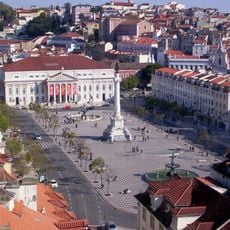
The theatre seats 948 people and faces the Rossio square from its north side, so it is easy to reach on foot from the surrounding Baixa streets. The building closed for renovation work in 2024, so check before travelling whether performances have resumed. The six Ionic columns of the portico were reused from the Saint Francis Convent of Lisbon.
The 1964 fire spared only the exterior walls and Amélia Rey Colaço's dressing room. The archive and a portrait of Queen Maria II were rescued, but Columbano Bordalo Pinheiro's ceiling paintings were lost. The play staged the night before, Macbeth, was blamed for the blaze.
The community of curious travelers
AroundUs brings together thousands of curated places, local tips, and hidden gems, enriched daily by 93,122 contributors worldwide.