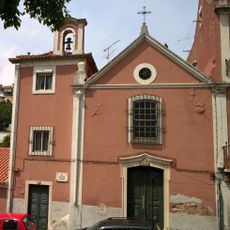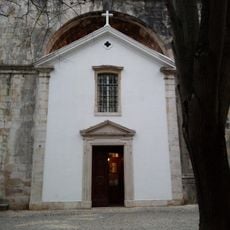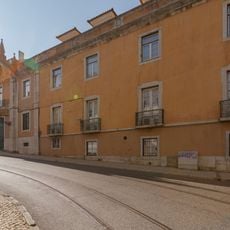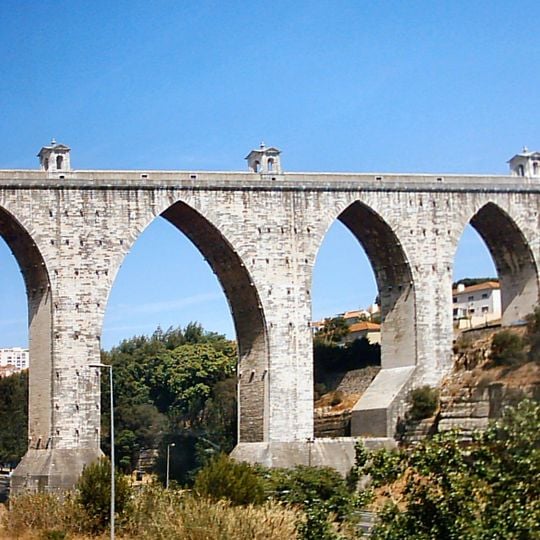
Águas Livres Aqueduct, Stone aqueduct in Campolide, Portugal
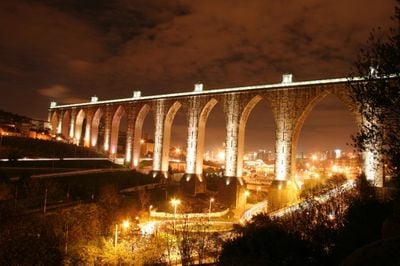
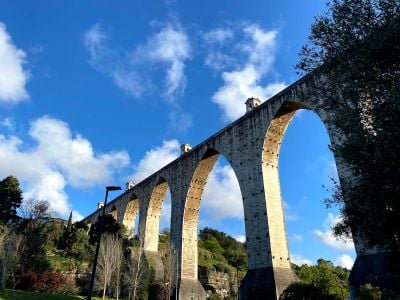
The Águas Livres Aqueduct is a baroque stone water supply system in Campolide and Santo António, Portugal, stretching across large sections of Lisbon. The arches, built from pale limestone, cross valleys and hills and reach about 65 meters (213 feet) at the highest point, with the entire structure covering dozens of kilometers.
Construction started in the mid-18th century under King John V to solve water problems in the growing capital. The structure survived the severe earthquake of 1755 and remained the main water source for the city for many decades.
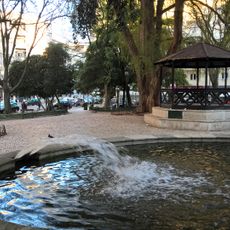
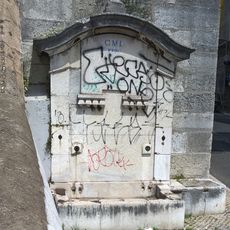
The name Águas Livres, "Free Waters", recalls that the water was made available to the public through a network of fountains fed by gravity, such as the Chafariz da Esperança. The system was decommissioned in 1968 by the Companhia das Águas de Lisboa. Visitors can now walk the Alcântara arcade on guided tours and occasionally enter the Mãe d'Água das Amoreiras reservoir.
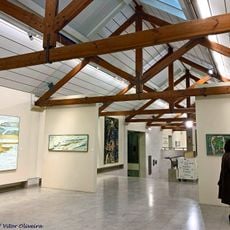
Visits are possible Tuesday through Sunday from 10 a.m. to 5:30 p.m., with guided tours starting at the Water Museum. Access involves stairs and narrow walkways, so appropriate footwear is advisable.
The walkway along the top of the arcade was permanently closed in 1852. Contrary to popular legend, the closure was not caused by the crimes attributed to Diogo Alves, who threw victims from the arches and was the last person executed in Portugal. Two narrow pedestrian walkways run inside the thickness of the structure, separated by the water gallery, and ventilation lanterns above the piers connected them and aerated the water.
The community of curious travelers
AroundUs brings together thousands of curated places, local tips, and hidden gems, enriched daily by 93,128 contributors worldwide.