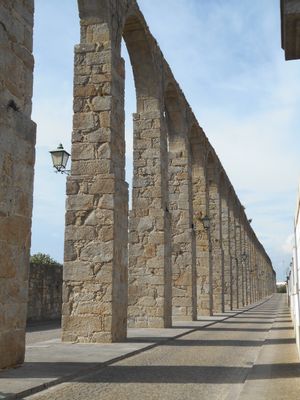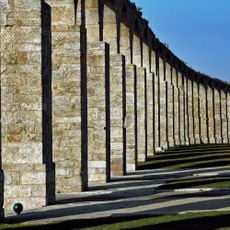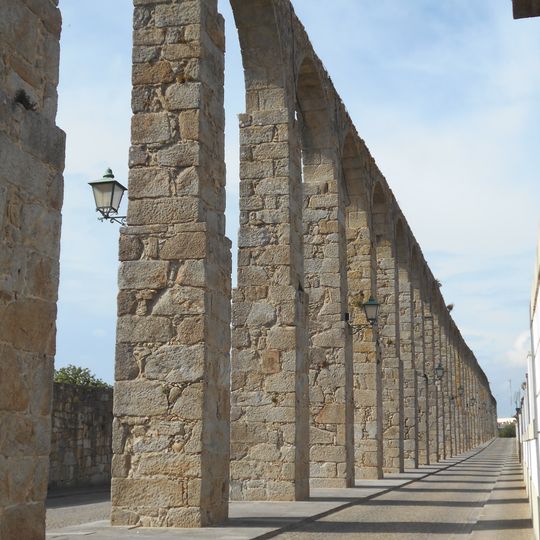
Aqueduto de Santa Clara, 18th-century aqueduct in Vila do Conde, Portugal.
The Santa Clara Aqueduct is a stone structure with multiple arches that carried water across the landscape from a spring to serve the convent, spanning approximately four kilometers. The final section of these arches is still visible in the town, particularly along the street where it passes near buildings.
Work on the structure started in the early 1600s but was interrupted for many decades before being resumed and completed in the early 1700s. These long pauses show how difficult it was to fund and maintain such large projects over many years.
The structure takes its name from the convent it served and demonstrates a practical solution developed centuries ago to meet daily water needs. Walking past the arches, one senses the skill of workers who built this system without modern machinery.
The remaining arches are accessible by foot in the town center and can be seen directly from nearby streets without special access requirements. Taking time to walk along the route and view the structure from different angles helps appreciate the craftsmanship of the stonework.
The structure received official recognition as a National Monument in the early 1900s, marking it as one of Portugal's important engineering accomplishments. The round arches are notable for their precision and represent a construction method that was less common than other approaches used in similar projects.
The community of curious travelers
AroundUs brings together thousands of curated places, local tips, and hidden gems, enriched daily by 91,217 contributors worldwide.