Castle of the Moors, Castle in Sintra, Portugal.
The Castle of the Moors is a ruined hilltop fortress of rough grey and brown granite on a rocky spur of the Serra de Sintra. A tall square crenellated tower with narrow rectangular openings stands at one end; curtain walls with triangular merlons enclose an inner courtyard containing low ruined wall segments and a rectangular opening covered by a metal grate. A curved stone staircase rises in the foreground, and the walled circuit, about 450 metres long, follows the uneven rock.
The castle was built in the 8th and 9th centuries under Muslim rule to protect the agricultural population of the region. In 1093 the ruler of Badajoz handed Sintra to Alfonso VI of León and Castile, but it fell to the Almoravids the following year. After the fall of Lisbon in 1147, the castle surrendered voluntarily to Afonso Henriques, who granted it a charter in 1154 and entrusted its security to 30 inhabitants.
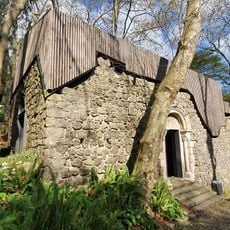
The castle's chapel, built within the walls in the second half of the 12th century, became the parish seat of São Pedro. By 1493 it was abandoned by the parish and used by the small Jewish community, until Manuel I expelled the Jews and the castle was left empty. Excavations in 1979 found medieval tombs from around 1300 in the chapel.
The site sits on a hilltop with steep paths and uneven terrain, so sturdy footwear is important. Allow time to wander through the grounds, as the elevation makes regular stops natural, and views throughout the walk reward the effort.
The cistern beside the castle is classified as a National Monument together with the walls, by decree of 23 June 1910. It stored rainwater inside the enclosure, which is why the garrison could hold out on the ridge above Sintra.
The community of curious travelers
AroundUs brings together thousands of curated places, local tips, and hidden gems, enriched daily by 94,066 contributors worldwide.