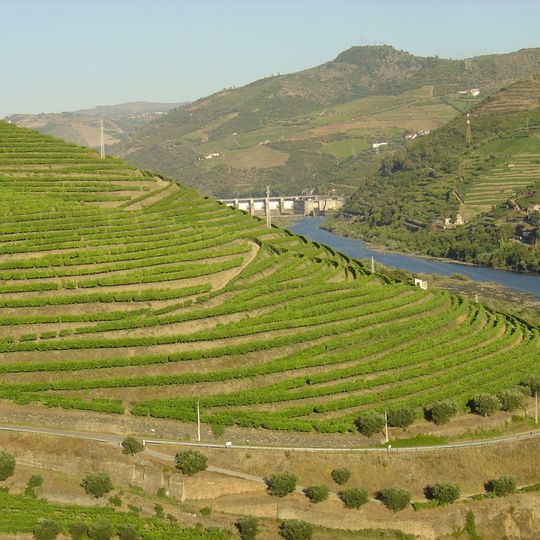
Douro DOC, Protected wine region in northern Portugal
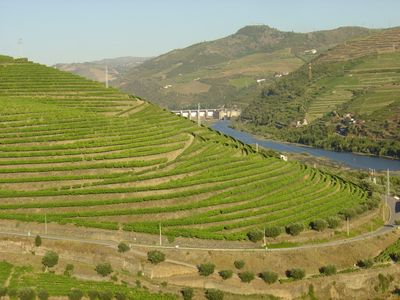
Douro DOC is a demarcated wine region around the Douro river valley and the lower valleys of its tributaries Varosa, Corgo, Távora, Torto and Pinhão, sheltered from Atlantic winds by the Marão and Montemuro mountains. Its vineyards climb in terraces held by low earth or stone risers, planted in rows on schist for Port and on granite soils for table wine.
A royal Portuguese charter of 10 September 1756 defined the production region for Port wine, making the Douro the world's first formally demarcated wine region. The demarcated vineyards lay in the western part of today's region, and planting later moved east into hotter, drier areas. The Douro was declared a World Heritage Site in 2001.
Winemakers here work their vineyards by hand on narrow terraces, using knowledge passed down through families for centuries. This way of life shapes the rhythm of villages and connects people deeply to their land.
Three zones make up the region: Baixo Corgo, Cima Corgo, and Douro Superior, each with its own estates and tasting options. Visitors should wear sturdy shoes, as the steep terraces and uneven ground demand careful footing.
More than 80 grape varieties grow here, and many estates blend different grapes within a single vineyard rather than keeping them separate. This approach lets each producer develop a personal signature in their wines.
The community of curious travelers
AroundUs brings together thousands of curated places, local tips, and hidden gems, enriched daily by 93,704 contributors worldwide.