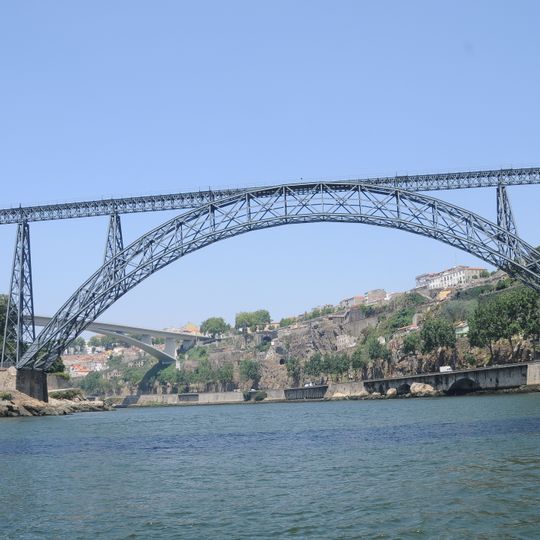
Maria Pia Bridge, 19th century railway bridge in Porto, Portugal
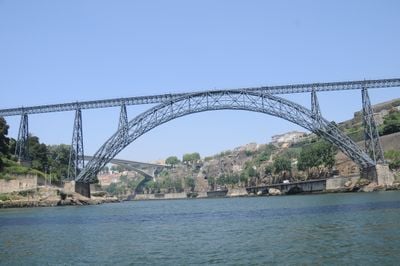
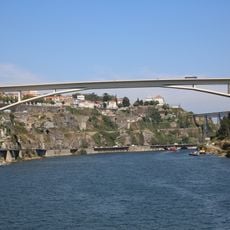
Maria Pia Bridge is a wrought iron railway viaduct in northern Portugal that spans 160 meters across the Douro River between Porto and Vila Nova de Gaia. Its arch of riveted metal girders rises 61 meters above the riverbed and rests on masonry abutments at both banks.
French engineer Gustave Eiffel completed this railroad structure in 1877, giving it the longest single-span arch in the world at that time. The crossing served train traffic between Porto and northern Portugal until 1991, when it was replaced by a more modern structure.
This railway crossing takes its name from Queen Maria Pia of Savoy, who linked Portugal and Italy through royal marriage in the late 1800s. The structure gained status as a National Monument in 1982, reflecting its importance in the country's industrial development.
The viaduct is no longer in service for rail traffic but can be viewed from the riverbanks. Both the Porto and Vila Nova de Gaia waterfront areas offer sightlines to the metal framework above the water.
The parabolic arch achieves a span of 37.5 meters and used a then-novel building system of prefabricated iron parts. This prefabrication technique influenced many later crossings in Europe and overseas.
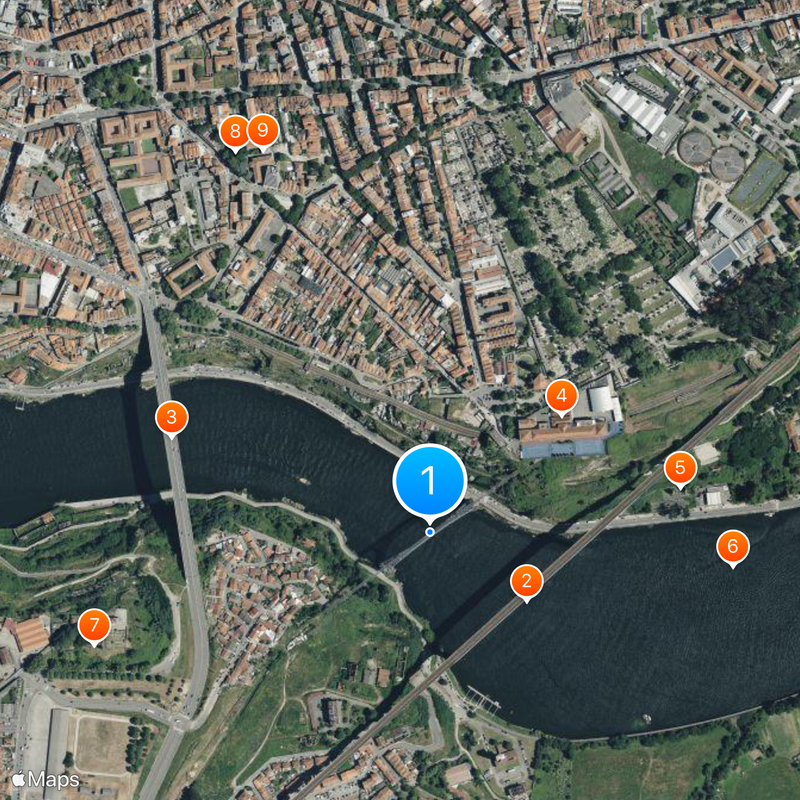
Location: Bonfim
Location: Santa Marinha e São Pedro da Afurada
Location: Oliveira do Douro
Inception: October 31, 1877
Architects: Gustave Eiffel
Official opening: 1877
Height: 61.2 m
Length: 160 m
Longest Span: 160 m
GPS coordinates: 41.13982,-8.59702
Latest update: December 5, 2025 22:27
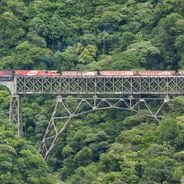
Gustave Eiffel and his firm designed and constructed metal bridges across several continents between the 1860s and early 1900s. These structures enabled railway and road connections over rivers, gorges, and valleys. The bridges used wrought iron and later steel, with truss and arch designs that represented advanced engineering methods for their time. Examples of this work are found in Portugal, where the Maria Pia Bridge crosses the Douro River, and in France, including the Garabit Viaduct over the Truyère. In Vietnam, the Long Bien Bridge connects Hanoi across the Red River. Additional structures stand in Peru, Bolivia, and other South American countries. Many of these bridges remain operational or accessible as preserved engineering monuments.
Monastery of Serra do Pilar
894 m
Ponte de São João
179 m
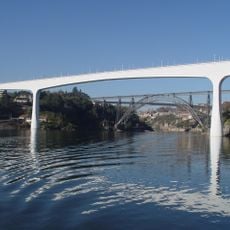
Infante Dom Henrique bridge
415 m
Jardim Marques de Oliveira
825 m
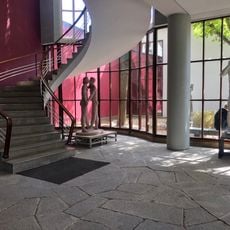
Faculty of Fine Arts of the University of Porto
711 m
Praia Fluvial do Areinho
985 m
Jardim de São Lázaro
832 m
Municipal Public Library of Porto
790 m
Museu Militar do Porto
663 m
Liceu Alexandre Herculano
974 m
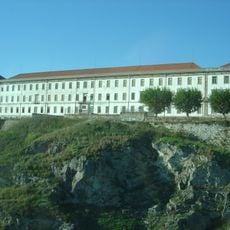
Seminário Episcopal do Porto
266 m
Parque de Nova Sintra
762 m
Convent of Santo António da Cidade
800 m
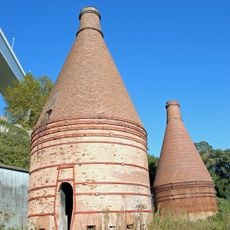
Fornos da Fábrica de Louça de Massarelos
384 m
Capela dos Alfaiates
951 m
Arca de Água de Mijavelhas
988 m
Junta de Freguesia do Bonfim
932 m
Estátua de D. Pedro V na Praça da Batalha
1 km
Igreja da Serra do Pilar
945 m
Edifícios na Avenida Rodrigues de Freitas
735 m
Burmester wine cellars
1 km
Escola Superior de Belas-Artes do Porto
712 m
Chafariz do Jardim de São Lázaro
850 m
Palácio da Batalha
1 km
Edifício UEP
796 m
Bloco de Habitação Colectiva "Ouro"
984 m
Casa do Ascensor dos Guindais
1 km
Recolhimento da Porta do Sol
978 mVisited this place? Tap the stars to rate it and share your experience / photos with the community! Try now! You can cancel it anytime.
Discover hidden gems everywhere you go!
From secret cafés to breathtaking viewpoints, skip the crowded tourist spots and find places that match your style. Our app makes it easy with voice search, smart filtering, route optimization, and insider tips from travelers worldwide. Download now for the complete mobile experience.
A unique approach to discovering new places❞
— Le Figaro
All the places worth exploring❞
— France Info
A tailor-made excursion in just a few clicks❞
— 20 Minutes