Seven Sisters, Stalinist skyscrapers in Moscow, Russia
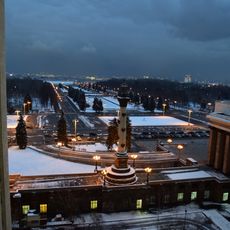
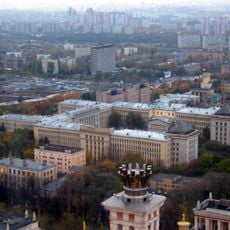
Seven Sisters is a group of seven high-rises in Moscow built from 1947 to 1957, the tallest being the 240-metre main building of Moscow State University with 36 floors in its central volume. Each has a central shaft rising to a slender spire topped by a star, with stepped lower wings and rows of narrow vertical windows. Exteriors are faced in ceramic tiles fixed with stainless steel anchors.
The towers were built under Stalin's orders to compete with Manhattan's architecture after World War II and demonstrate Soviet power. Their construction symbolized the rebuilding of the city and served the government as a visible sign of political strength.
Muscovites use the areas around these structures as meeting points, and many associate them with a particular pride in Soviet architecture. Students, hotel guests, and government employees shape daily life inside the towers, keeping them active places today.
Two of the buildings serve as hotels, while others house residential apartments, government offices, and educational facilities with direct connections to public transport. Visitors can view them from outside by walking along the wide streets that lead to each location.
The foundations are far heavier than those of American skyscrapers: the university building rests on a concrete slab 7 meters thick. Exterior ceramic panels of up to 15 square meters are held by stainless steel anchors. The Kuchino ceramics plant built for the project later supplied Khrushchev's housing programme.
The community of curious travelers
AroundUs brings together thousands of curated places, local tips, and hidden gems, enriched daily by 92,193 contributors worldwide.