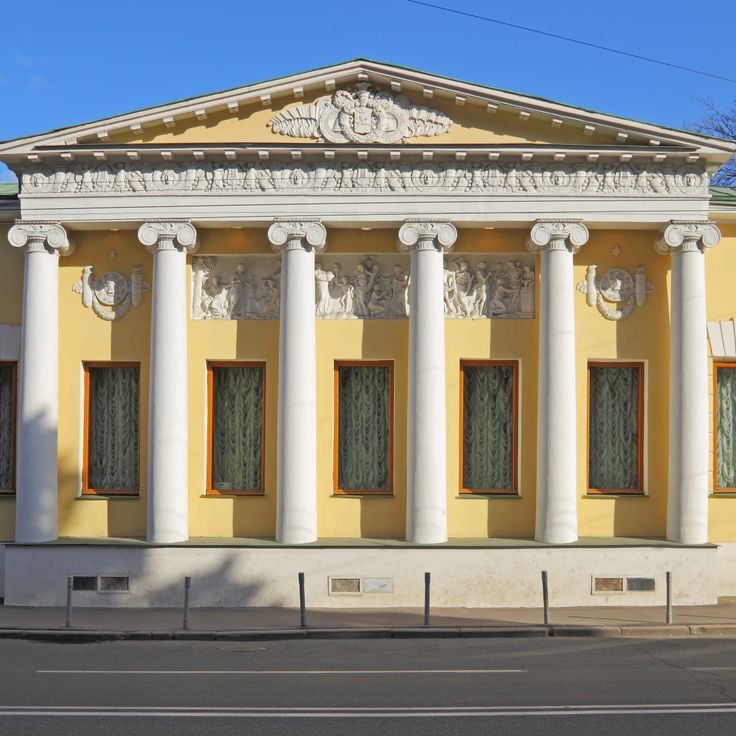
Moscow offers photographers centuries of history packed into one city, from cathedral domes decorated with gemstones to Stalins concrete towers. We look forward to returning in a calm setting.
Moscow offers photographers a wide range of subjects covering centuries of Russian history and architecture. The city combines Orthodox cathedrals with colorful domes, classical theaters and museums, large parks, and modern art galleries. From the medieval fortress walls of the Kremlin to the monumental buildings of the Stalin era, Moscow presents itself as a city of contrasts.
Landmarks include Saint Basil's Cathedral on Red Square, the Bolshoi Theatre, and the Cathedral of Christ the Saviour. Parks such as Gorky Park and Zaryadye Park with its floating bridge provide green spaces in the heart of the city. Historical estates like Kolomenskoye and Kuskovo preserve the architecture of past eras. Museums such as the Tretyakov Gallery, the Pushkin Museum, and the Garage Museum of Contemporary Art display works from different periods. The Stalin skyscrapers continue to shape the skyline, while places like Patriarch Ponds, Arbat Street, and Sparrow Hills offer glimpses into Moscow life.
Moscow offers photographers centuries of history packed into one city, from cathedral domes decorated with gemstones to Stalins concrete towers. We look forward to returning in a calm setting.
Moscow offers photographers a wide range of subjects covering centuries of Russian history and architecture. The city combines Orthodox cathedrals with colorful domes, classical theaters and museums, large parks, and modern art galleries. From the medieval fortress walls of the Kremlin to the monumental buildings of the Stalin era, Moscow presents itself as a city of contrasts.
Landmarks include Saint Basil's Cathedral on Red Square, the Bolshoi Theatre, and the Cathedral of Christ the Saviour. Parks such as Gorky Park and Zaryadye Park with its floating bridge provide green spaces in the heart of the city. Historical estates like Kolomenskoye and Kuskovo preserve the architecture of past eras. Museums such as the Tretyakov Gallery, the Pushkin Museum, and the Garage Museum of Contemporary Art display works from different periods. The Stalin skyscrapers continue to shape the skyline, while places like Patriarch Ponds, Arbat Street, and Sparrow Hills offer glimpses into Moscow life.
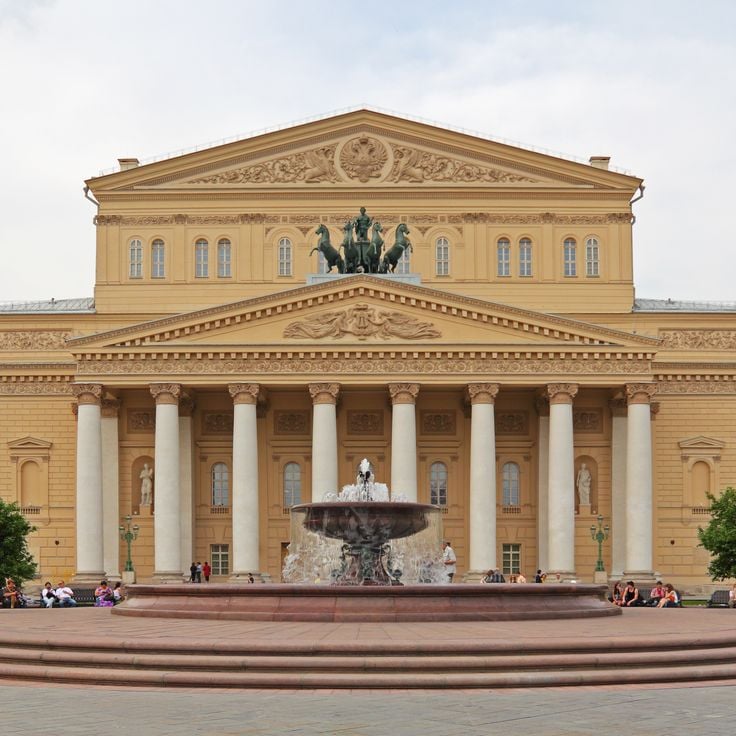
The Bolshoi Theatre is one of the most recognized opera and ballet houses in Russia and a natural stop for photographers exploring Moscow. Built in 1825 in a neoclassical style, its white facade with tall columns frames the main entrance. Inside, several levels of boxes are decorated in red and gold. The acoustics carry every voice to the back of the hall.
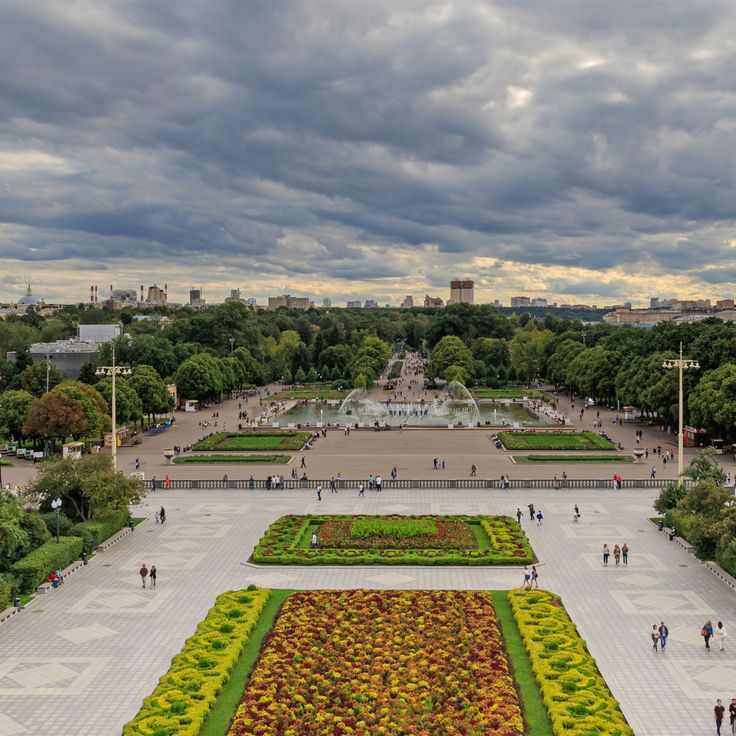
Gorky Park runs along the Moscow River and is one of the most visited spots in the city. It holds art galleries, restaurants, and sports facilities, and draws people of all ages throughout the day. For photographers exploring Moscow, this park offers a look at everyday urban life, a contrast to the cathedrals and monumental buildings found elsewhere in the city.
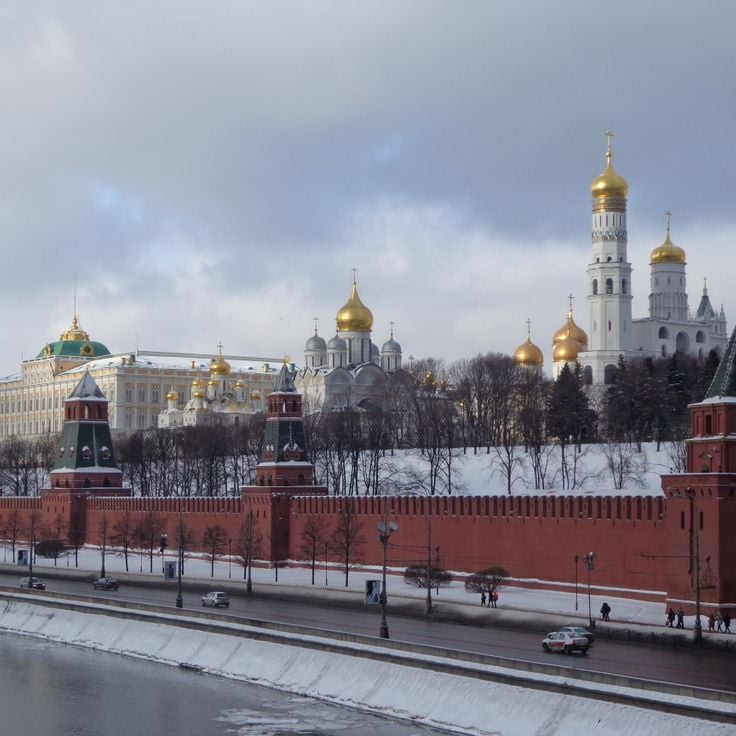
The Moscow Kremlin is a 15th century fortress with red brick walls, towers, palaces, cathedrals, and government buildings. For photographers, this complex at the heart of Moscow offers subjects that span centuries of Russian history: golden domes of Orthodox churches, open squares where state ceremonies take place, and architecture where religious life and political power have long stood side by side.
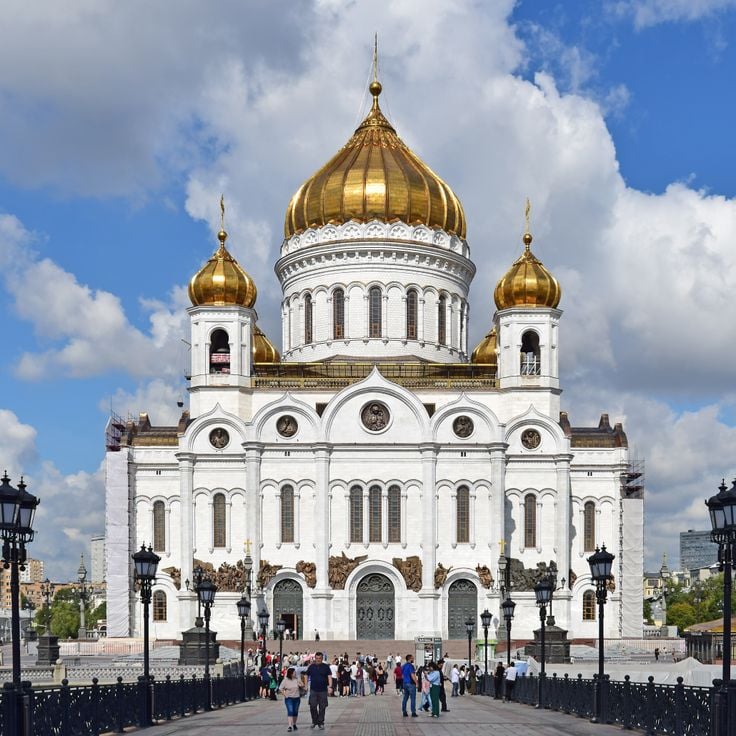
The Cathedral of Christ the Saviour stands in the center of Moscow, close to the Moskva River. It was rebuilt in 2000 following historical plans and rises to 103 meters (338 feet), making it one of the tallest Orthodox churches in the world. The golden domes catch the light differently throughout the day. Inside, there are frescoes, mosaics, and marble in warm tones. For photographers, the cathedral offers many angles: from the nearby bridge, the riverbank, or the surrounding streets. On sunny days, the white facades stand out sharply against a blue sky, and in the evening, floodlights bring the whole building to life.
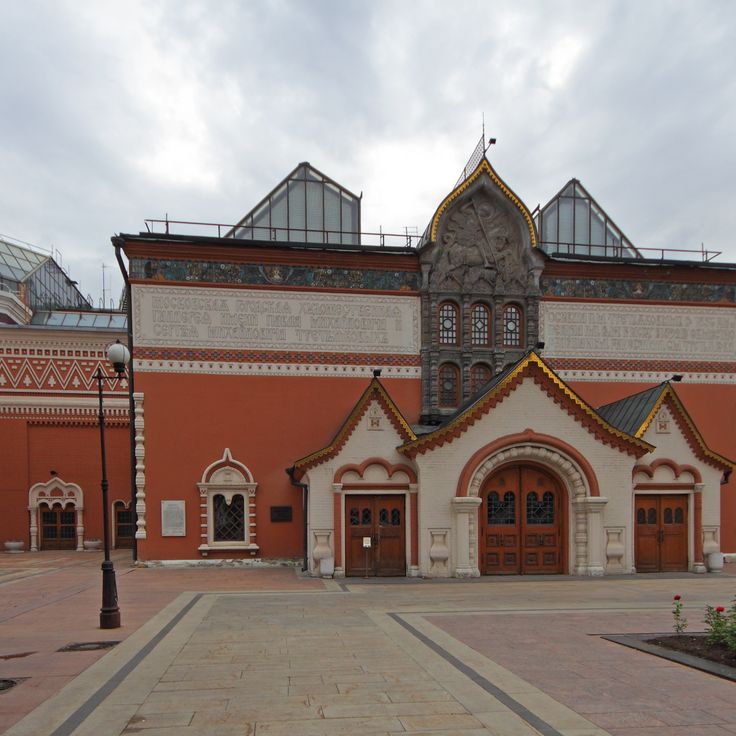
This gallery preserves Russian art from the 11th to the 20th century, including icons, paintings and sculptures. Photographers find interior spaces with natural light, historic exhibition halls and works that document periods of Russian painting. The collection contains religious images, realist portraits and landscapes. Visitors see how Russian art evolved over centuries and which themes moved artists during different eras.
VDNKh is a large Soviet-era exhibition complex that gives photographers a strong sense of postwar Soviet design. Wide avenues lead past symmetrical pavilions decorated with golden details and large statues. Between the buildings, fountains and gardens fill the open spaces. An amusement park with a Ferris wheel sits on the grounds. The mix of historical architecture and open public space makes VDNKh one of the most photographically rich places in Moscow.
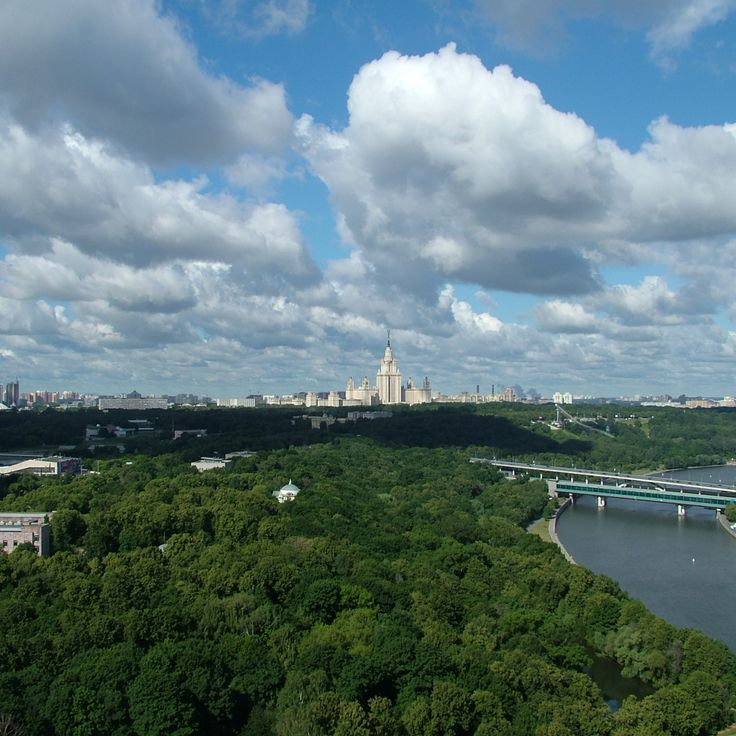
This hill in the southwestern part of the city rises above the river and offers photographers an elevated viewpoint over the panorama of Moscow. Sparrow Hills has been a popular vantage point for centuries, where visitors take in the interplay of historical and modern architecture. The main building of the university stands at the top, one of the seven Stalinist skyscrapers that dominates the view. Walkers and cyclists come here to use the terrace, stand at the railings and look out over the city skyline. The atmosphere is relaxed, with couples taking photos, families sitting on benches, and students meeting after classes. In winter the slope is open for skiing, in summer groups bring picnic blankets.
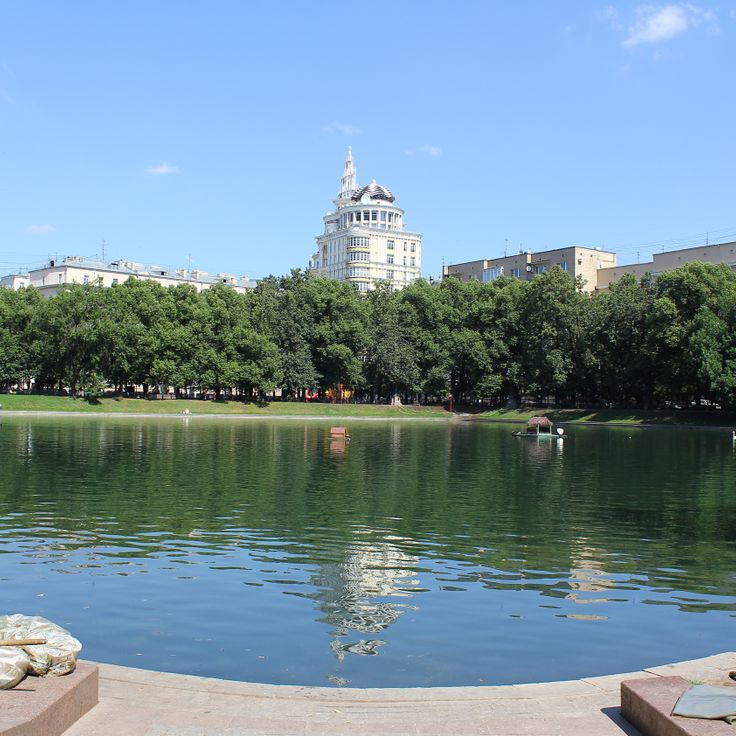
Patriarch Ponds is a calm spot in central Moscow, surrounded by residential buildings from the 19th century. In summer, people sit on benches by the water; in winter, they skate on the frozen surface. Trees line the paths along the shore, and the water mirrors the facades of the old buildings nearby. The area has restaurants and small green spaces that invite a walk. For photographers, Patriarch Ponds brings together the daily life of the city and the architecture of past centuries in one frame.
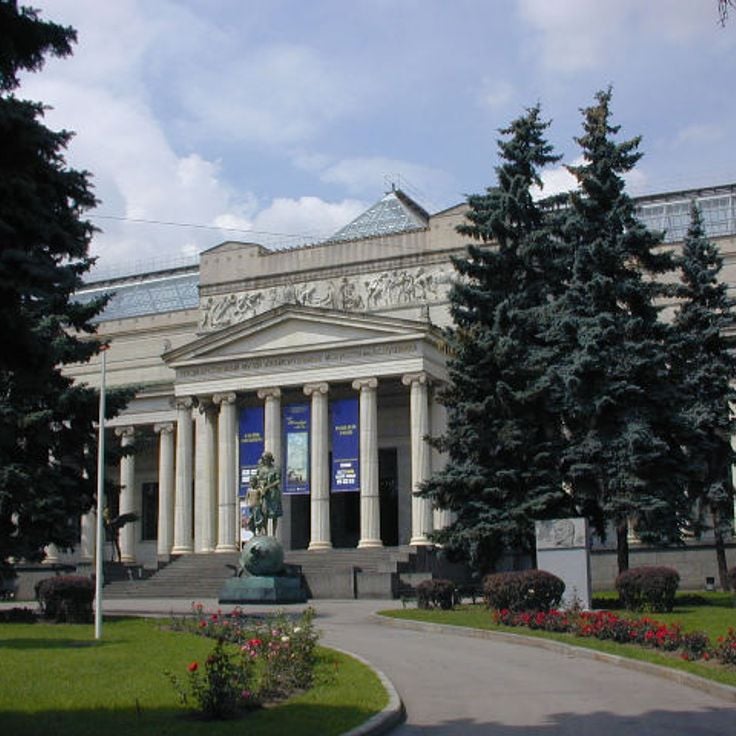
This museum gathers paintings, sculptures and archaeological objects from different periods of art history, offering glimpses into European and international traditions.
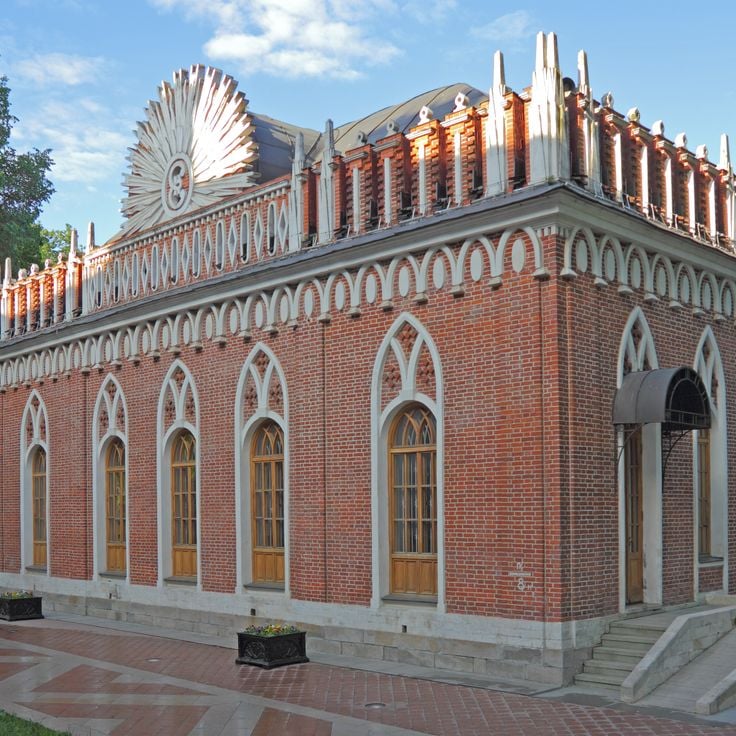
This palace was Catherine the Great's residence and sits within a large park that includes lakes and gardens. Tsaritsyno Palace offers photographers a mix of historical buildings and natural surroundings. The complex displays Russian architecture from the 18th century with its red brick facades and white decorative elements. The gardens spread around several ponds and create different perspectives for photographs. In summer, the pavilions reflect in the water, while winter transforms the grounds with snow. Paths wind through wooded areas and open spaces that provide room for compositions combining architecture and nature.
Kolomenskoye sits on a hill above the Moskva River in the south of Moscow. This open-air museum preserves wooden structures from the 16th century that recall the era of Russian tsars. The white stone Church of the Ascension rises above the grounds and is one of the oldest stone buildings in the city. Walking through the old tree-lined avenues, visitors discover timber houses with carved windows and get a sense of what it was like when rulers spent their summers here.
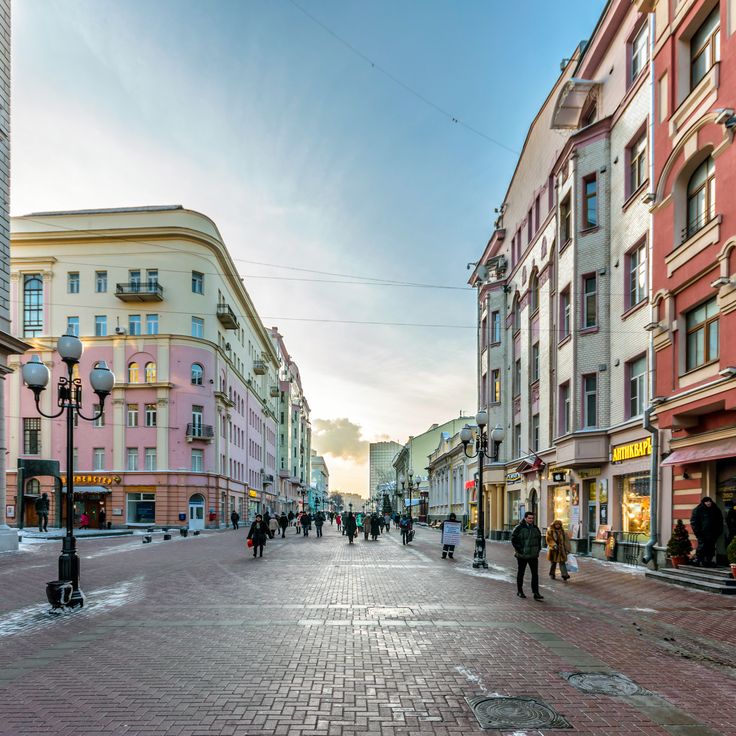
This historic pedestrian zone stretches for nearly a mile through central Moscow. Artists sell portraits and caricatures on the street, while musicians perform on benches and in front of doorways. Arbat Street connects old houses with painted facades, small theaters and bookshops. Cafes open their doors to the street, where people sit on terraces and watch the activity. In the evening, the sidewalks fill with locals and visitors who stroll between the shops. Photographers find subjects in the colorful storefronts, the street performers and the architecture from different centuries.
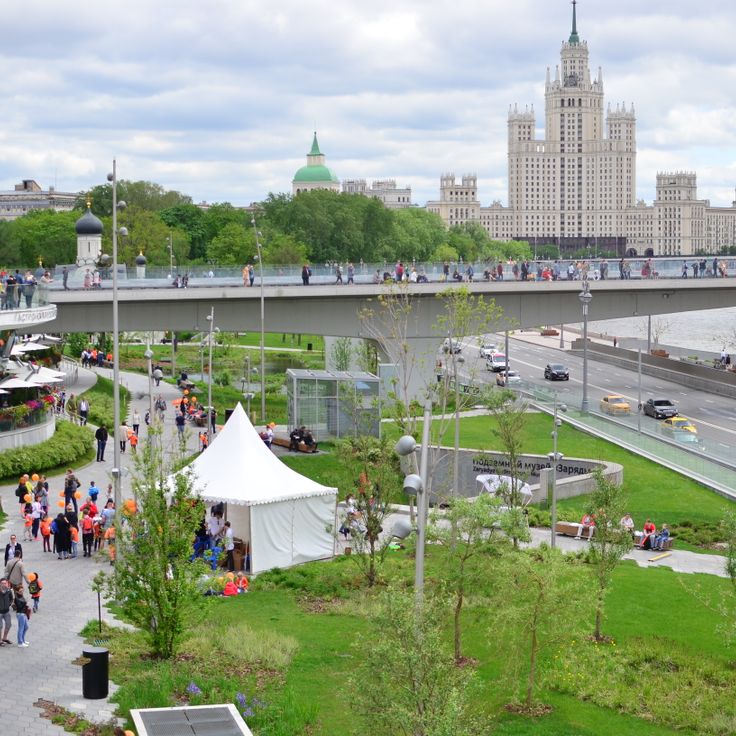
Zaryadye Park sits between the Kremlin and the Moskva River and brings together different Russian landscape types recreated on terraced hills and platforms. The floating bridge appears to hover above the water without visible supports, offering direct views toward the Kremlin walls and towers. The design combines concrete, glass and timber with native plants from different climate zones across Russia. For photographers, the park offers a range of subjects, from the modern bridge to the historical buildings in the background.
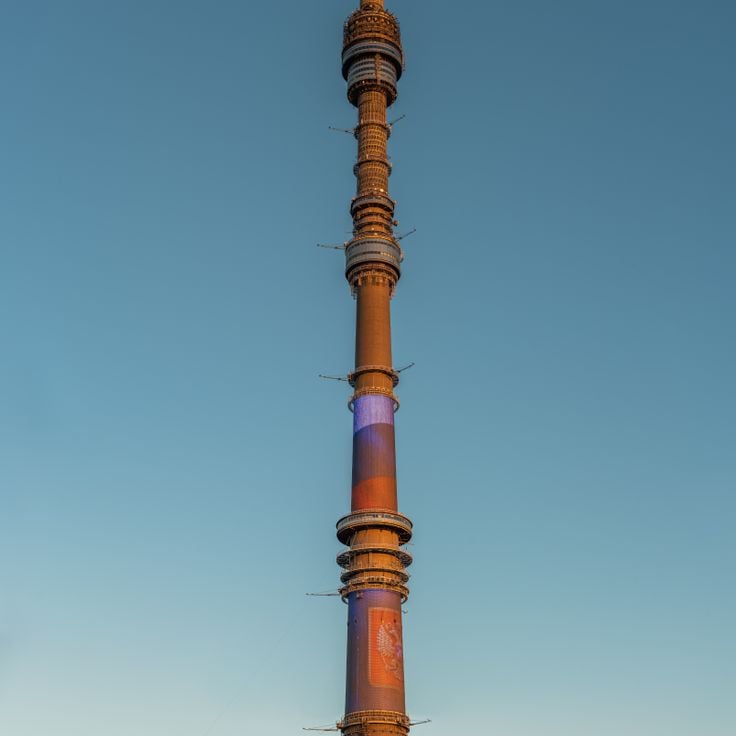
This television tower was completed in 1967 and reaches a height of 1,772 feet (540 meters). It offers photographers the chance to document Moscow from an elevated perspective. From the observation deck at 1,106 feet (337 meters) high, you can see the city with its historical buildings, Soviet high-rises, and modern districts. The tower itself appears as a slender concrete needle and stands in contrast to the colored domes or classical facades of the city center. On clear days, the view extends across the entire metropolis to the horizon.
This convent was founded in 1524 and shows the religious architecture of that era. The complex includes a cathedral, six churches and a bell tower with baroque elements. Red and white facades define the look, while golden domes shine above the buildings. Behind thick walls lie gardens and cemeteries where important figures from Russian history rest. For photographers, this place offers historical subjects with towers, gates and chapels reflected in the waters of a pond.
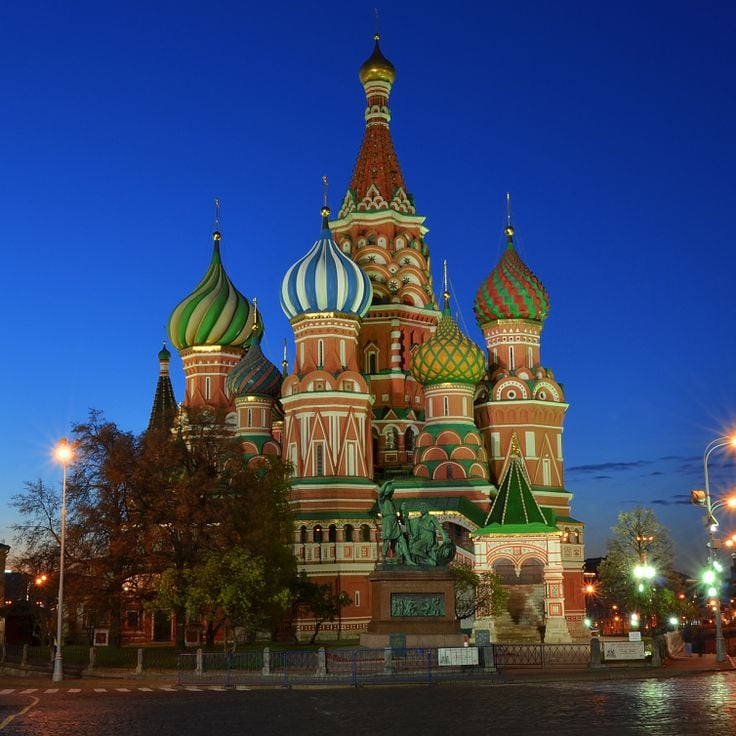
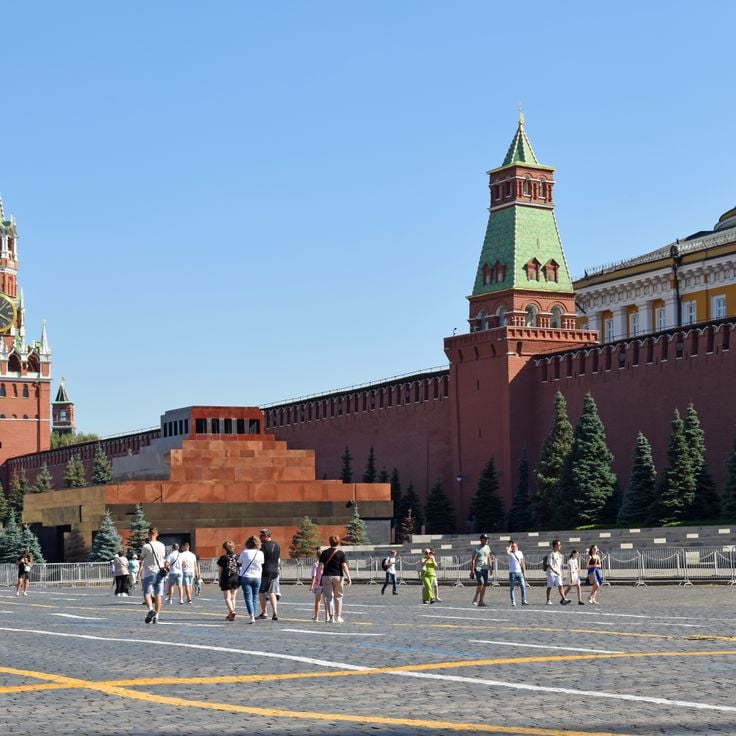
Red Square sits at the heart of Moscow and is one of the main stops for photographers in the city. Saint Basil's Cathedral with its colored domes, the Kremlin walls, and Lenin's Mausoleum all stand close together here. The wide paved space allows shots of the full scene or individual details. In the morning, the sun casts long shadows across the stones. In the evening, the building facades glow in warm light. Tourists pause in front of the large structures, while locals cross the square on their way to the metro.
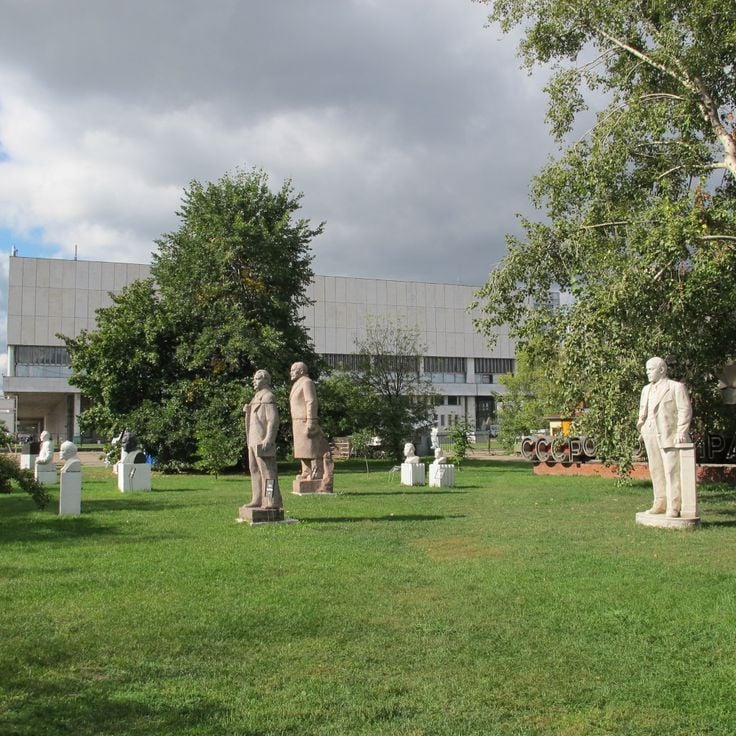
This park displays more than 700 sculptures from different periods. After the Soviet Union ended, monuments from across the city were gathered here. You find Stalin statues next to contemporary installations. The collection includes socialist reliefs, abstract works and figurative pieces. Artists from Russia and other countries are represented. Visitors walk among the objects, read inscriptions and photograph the contrasts. Muzeon Park of Arts sits along the Moskva River and combines garden spaces with open-air exhibition.
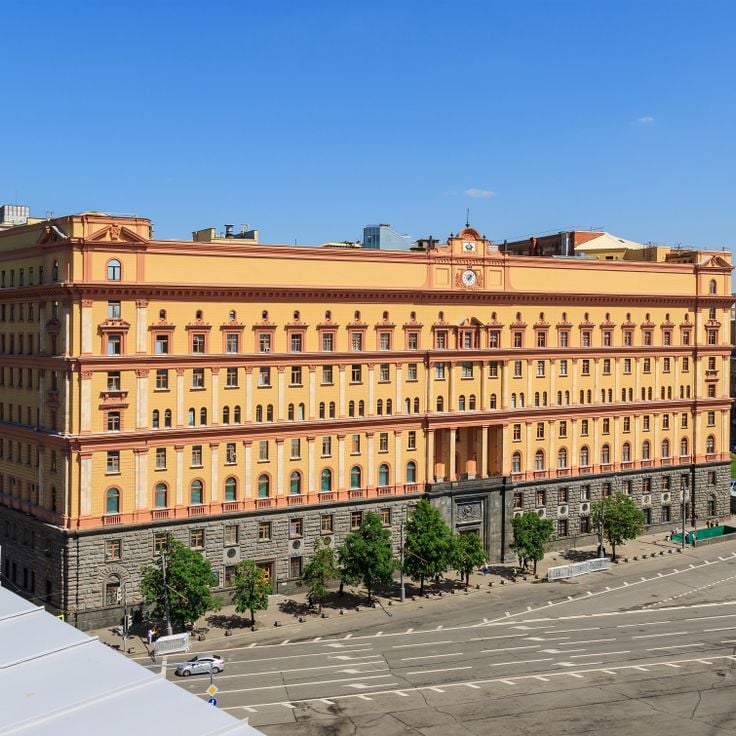
The Lubyanka Building is a yellow structure in central Moscow that served for decades as the headquarters of the Soviet secret police. Today it houses the Russian FSB intelligence service. The plain facade from the early 20th century stands in contrast to the modern buildings nearby. Inside, a museum displays the history of the KGB. The square in front was the site of many events during Soviet times. For photographers documenting Soviet-era Moscow, the Lubyanka Building is an important subject, one that represents a difficult chapter of history.
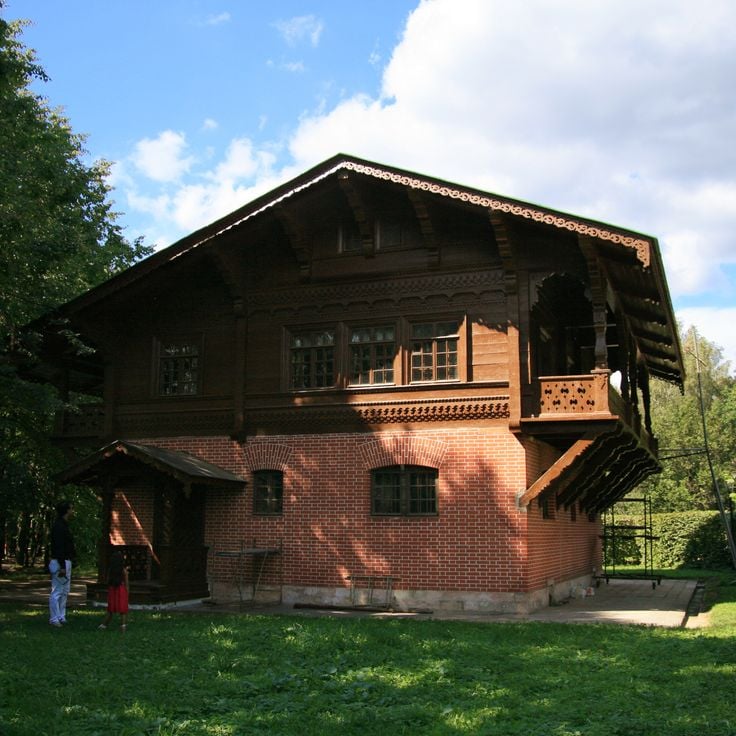
This 18th century estate opens with a manor house, a French garden and a lake. The property shows the era of Russian aristocracy through its architecture, the trimmed paths between flower beds and the quiet view over the water. Photographers find here historical facades, symmetrical garden patterns and reflections on the surface of the lake, documenting Moscow's architectural variety and its connection to the noble past.
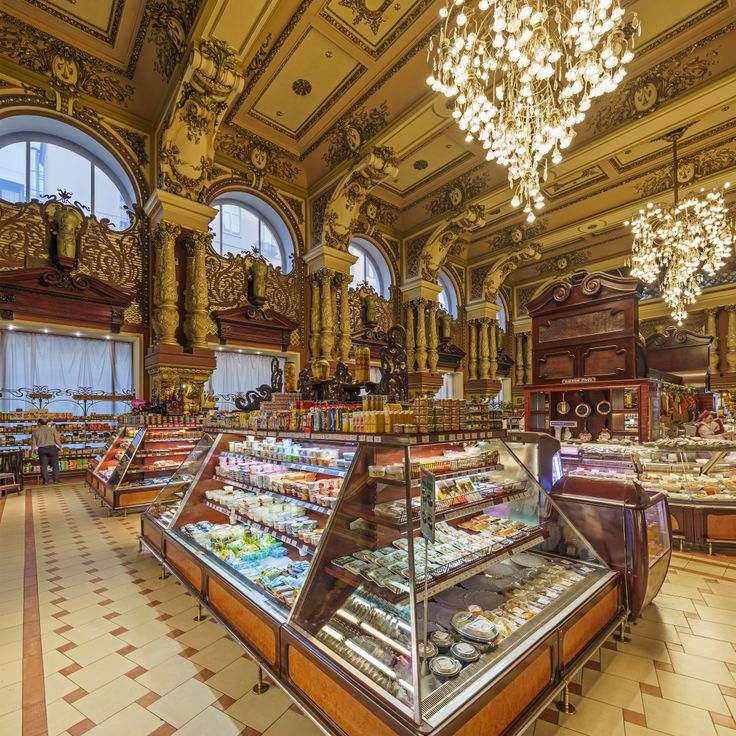
This historic store opened in 1901 and draws visitors with its neo-baroque ceilings and chandeliers. The shelves display a large selection of Russian specialties, from caviar to imported delicacies. The interiors combine the grace of past eras with the function of a modern grocery. Photographers find subjects here in gilded decorations, tall vaults and the colors of displayed products. Gastronom No. 1 sits on Tverskaya Street, one of Moscow's main thoroughfares, and fits into the line of representative buildings in this area.
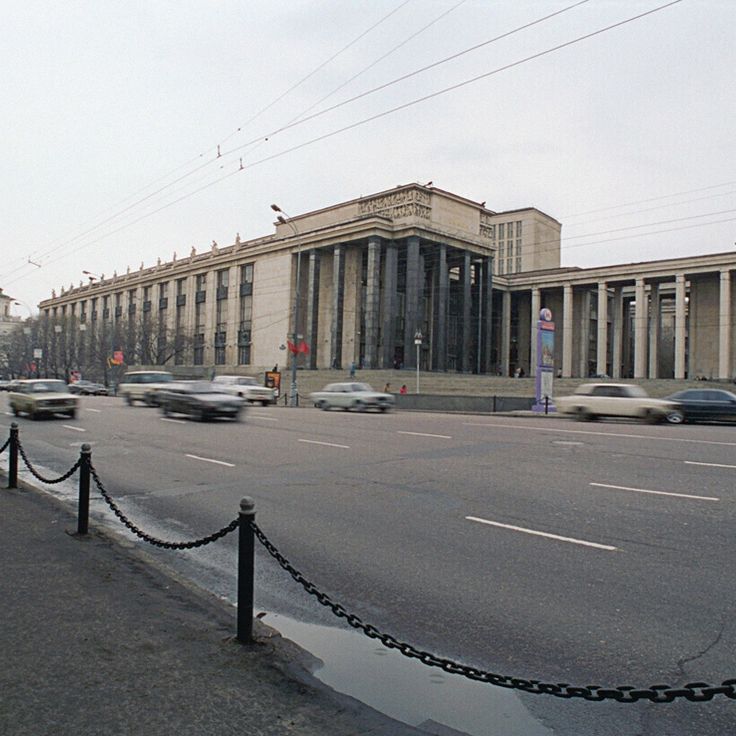
The Lenin Library is one of the largest libraries in the world and a central part of research life in Moscow. Its grand reading room seats hundreds of readers and is lined with green-shaded lamps that cast a warm glow over the tables. The wooden shelves date to 1862 and give the space a strong sense of history. The building mixes classical architecture with the demands of a working institution. For photographers, the long rows of books, tall ceilings, and reading desks where visitors study manuscripts and texts offer a wealth of subjects.
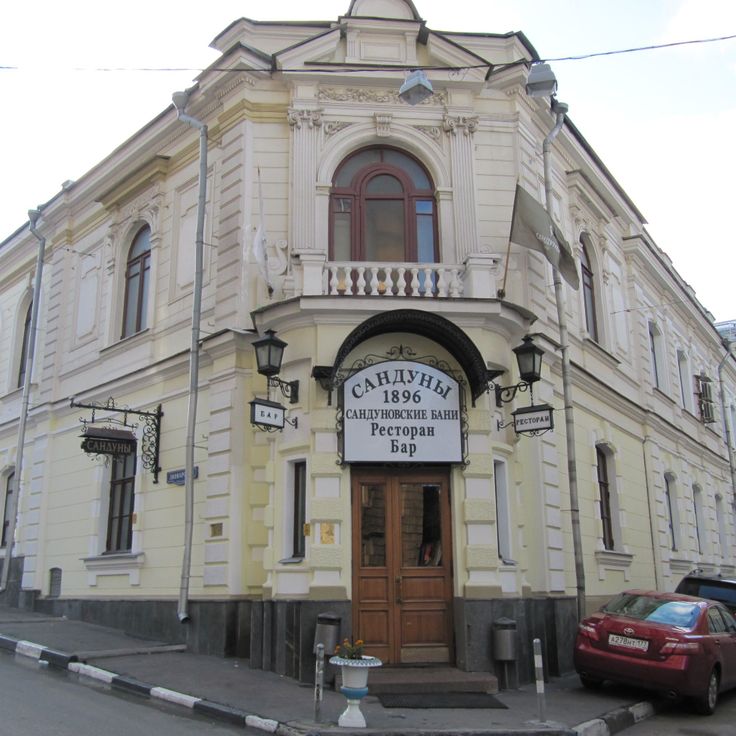
This bathhouse opened in 1808 and preserves the old tradition of the Russian banya to this day. The neoclassical facade hides steam rooms with marble columns, wooden benches and pools with varying temperatures. Photographers will find both the ornate halls with stucco and chandeliers and the humid, steam-filled spaces where visitors use birch branches to treat their skin. Those documenting Moscow's architectural contrasts will discover in this place a piece of past times amid the modern metropolis.
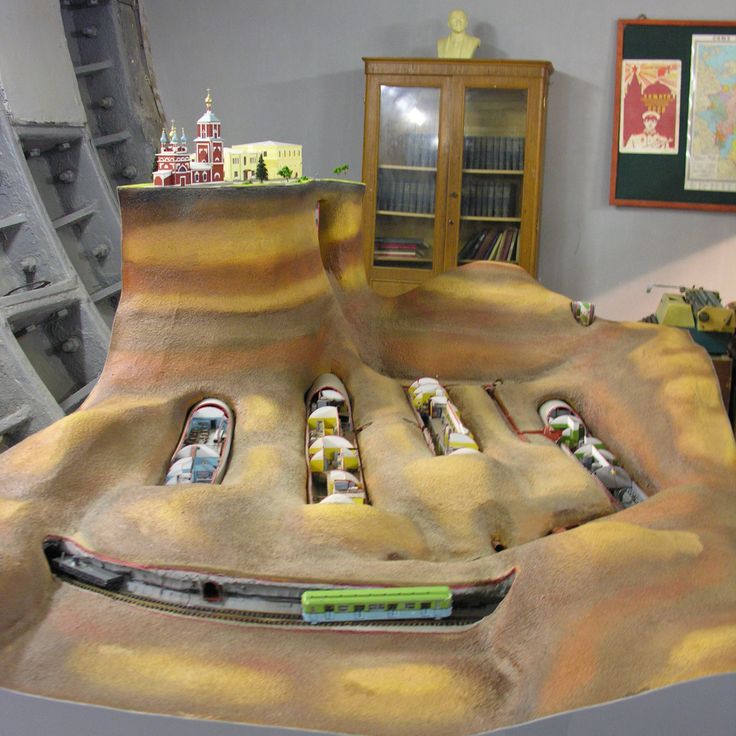
The Taganka Bunker sits 65 meters (213 feet) below ground and dates from the 1950s, when Moscow built shelters in case of a nuclear attack. The facility preserves military equipment from that era, communication devices, documents, and rooms that show how people were meant to live here in an emergency. Corridors lead through different sections with original furnishings. You see ventilation systems, radios, and maps on the walls. The light is dim, the air cool and damp. For photographers, this bunker offers subjects in concrete, metal, and historical objects that document the years of the Cold War.
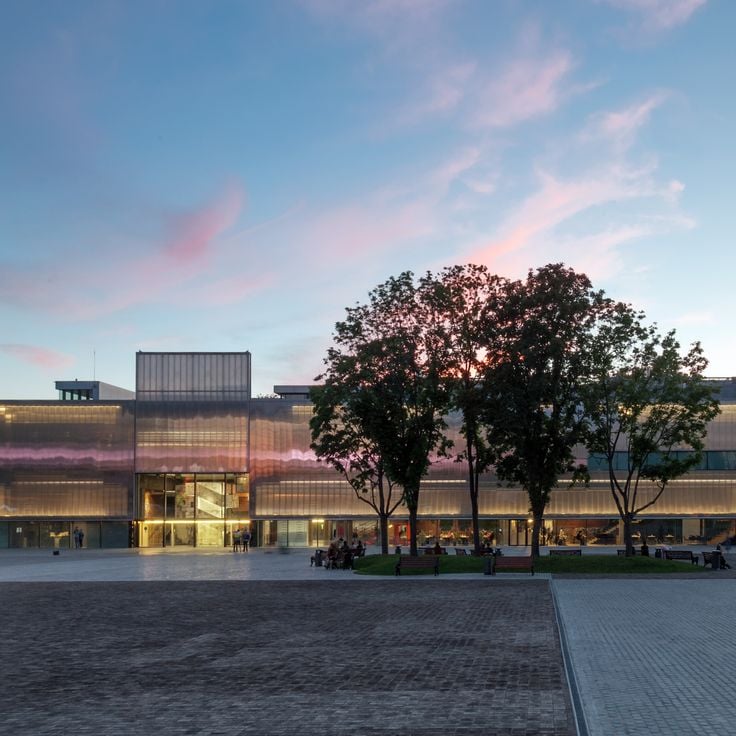
This museum displays contemporary art by international artists in a renovated 1960s building within Gorky Park. The space connects Moscow's artistic tradition with modern forms of expression and documents the development of present-day art. The building's architecture reflects Soviet post-war construction and creates a contrast with the exhibited works, which often follow experimental approaches. The location within the park makes this museum part of a larger cultural landscape in the city.
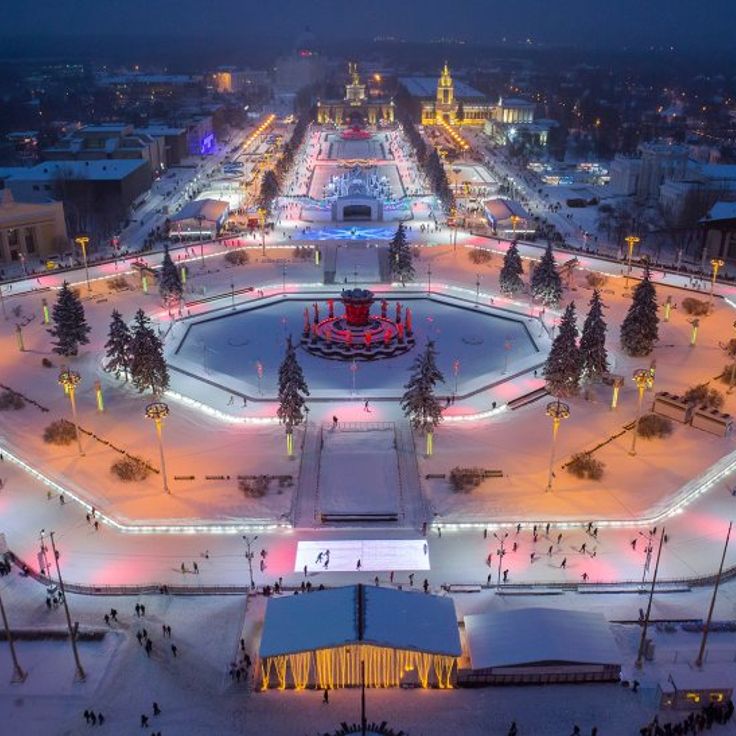
The VDNKh ice skating rink sits inside the Exhibition of Achievements of National Economy park and becomes one of the largest ice surfaces in the city each winter. From November to March, families, couples, and sports enthusiasts glide across the ice, surrounded by Soviet-era pavilions and wide parkways. In the evenings, lights shine over the surface and music accompanies the skaters. Stalls sell hot drinks and snacks, and rental skates are available on site.
This park covers a large area with sports fields, cafes, a concert hall and botanical gardens. Sokolniki Park is one of Moscow's older green spaces and serves residents as a place for relaxation and physical activities. In summer, families come here to picnic and jog, in winter ice rinks are set up. The paths lead through pine forests and past ponds. The park offers photographers subjects ranging from tree-lined avenues and wooden pavilions to sculptures, as well as scenes of urban life between nature and architecture.
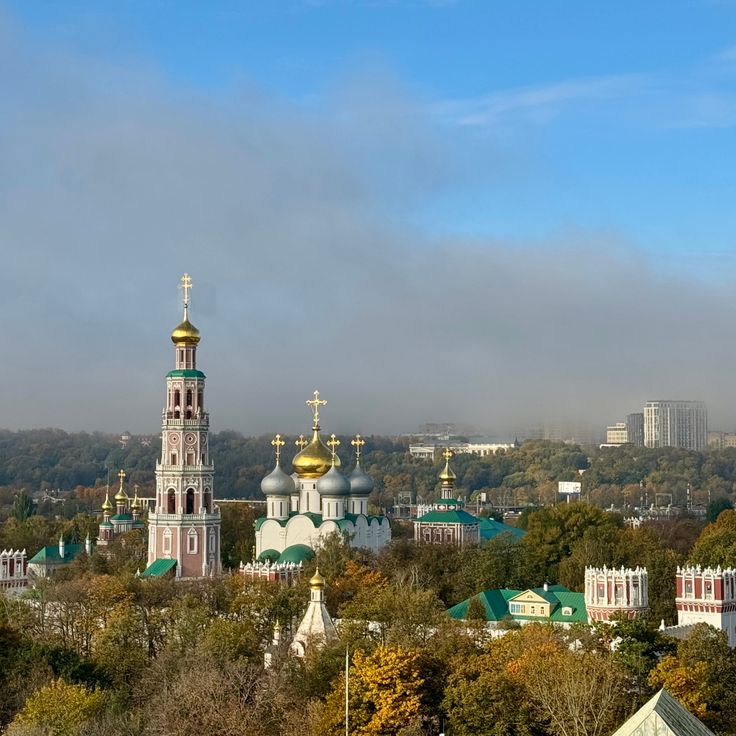
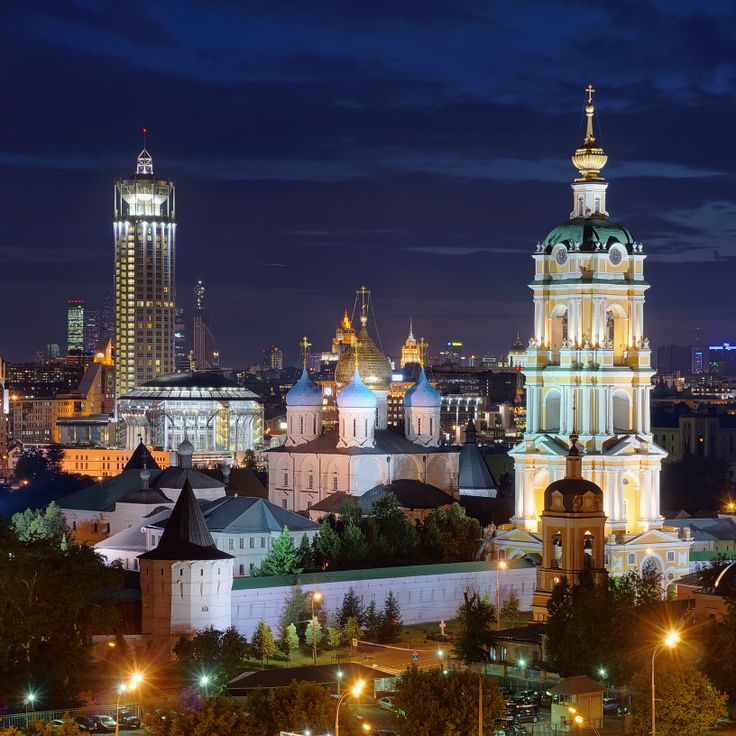
Novospassky Monastery has stood above the Moskva River since the 14th century and is one of the oldest monasteries in Moscow. Behind its walls lie courtyards, chapels, and a cemetery where members of Russian noble families were buried. The white cathedral with golden domes is visible from a distance and reflects in the river. Photographers will find subjects ranging from painted frescoes and crypts to the outline of the complex rising above the water.
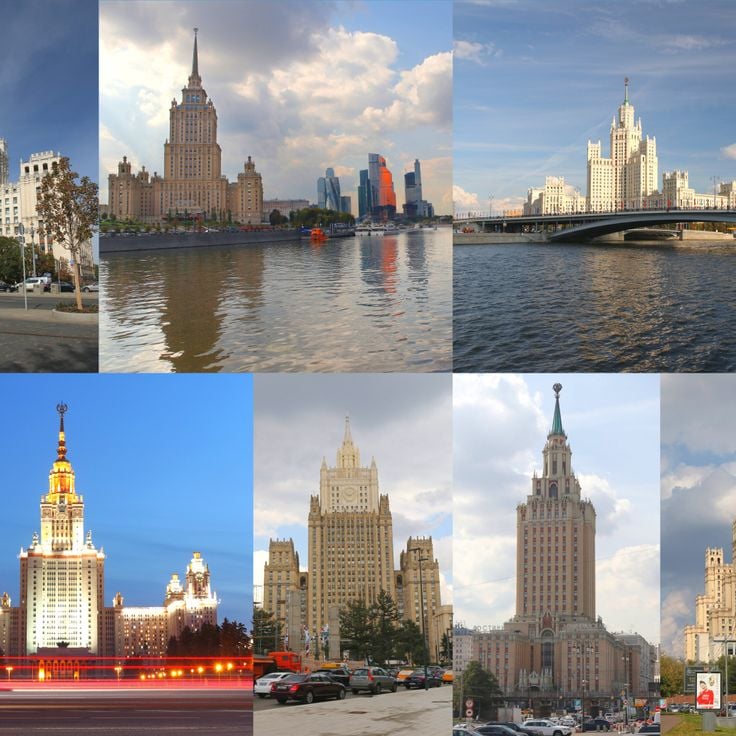
The seven skyscrapers from the 1940s and 1950s shape Moscow's skyline with their vertical architecture. These monumental buildings combine residential and office spaces. Several towers rise over 500 feet (150 meters) and carry gilded spires. The facades show Soviet ornaments and sculptures. These high-rises spread across the city and each has a different function: a hotel, a university building, ministries, apartments. From different points in Moscow you see their distinctive silhouettes. As a photographic subject, these structures represent Soviet architectural language and the ambitious construction program of that era.
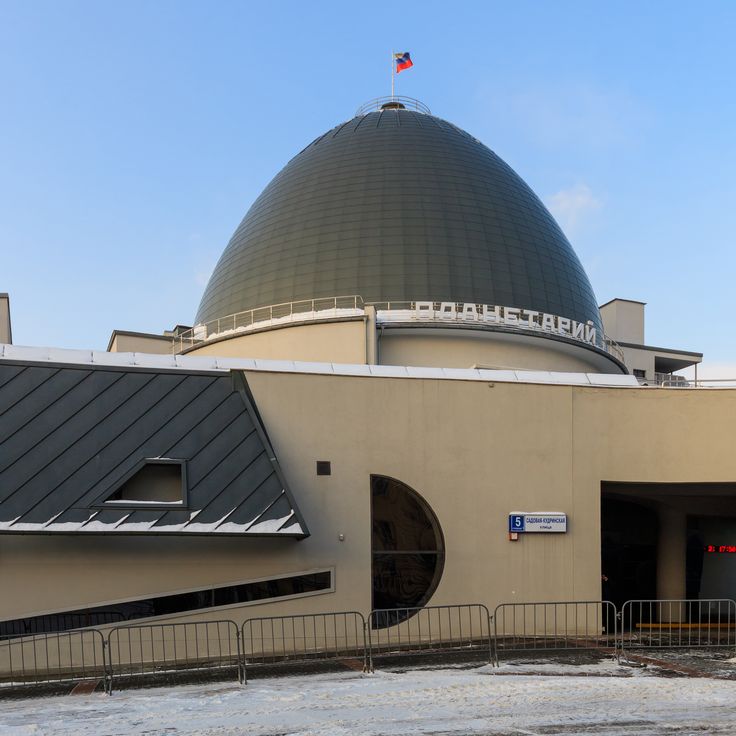
This planetarium projects constellations and astronomical events onto a 37-meter dome using digital technology. It represents one of the places in Moscow where photography can document scientific education and modern architecture. The dome itself forms a photographic subject that shows how the city connects historical astronomy education with contemporary technology.
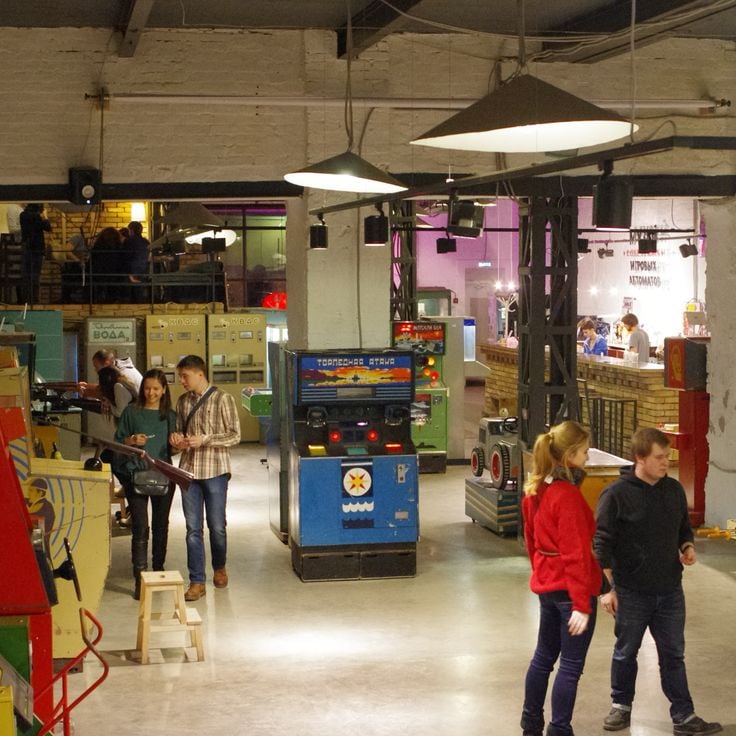
The Museum of Soviet Arcade Machines displays restored gaming devices from the 1970s and 1980s. In a city known for its cathedrals and monumental buildings, this museum offers a different view of everyday Soviet life. Visitors can still play the machines and get a sense of how people spent their free time back then. The devices run on old Soviet coins. For photographers, this place reveals a side of Moscow that goes well beyond churches and palaces, showing what ordinary recreation once looked like.
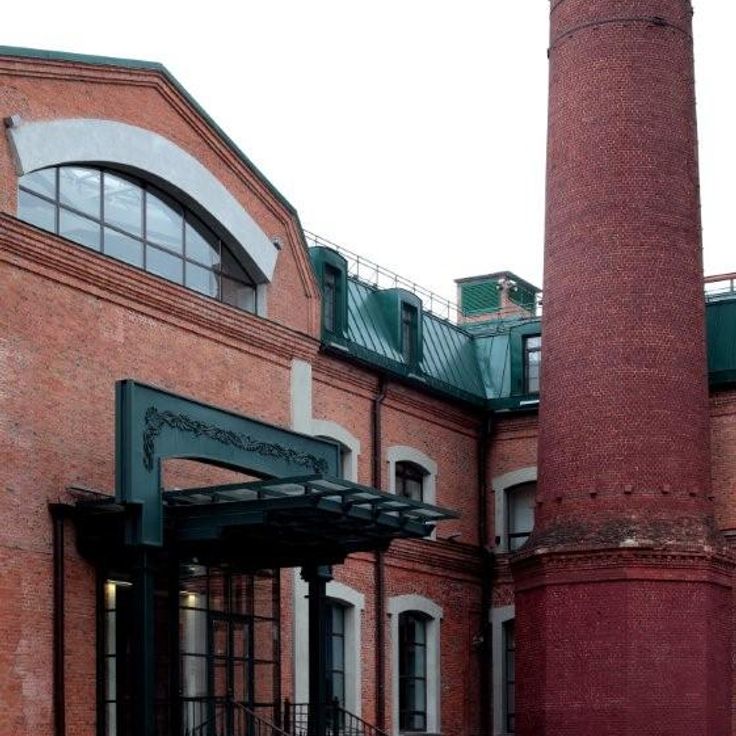
The Jewish Museum and Tolerance Center opened in 2012 inside a former bus depot from the 1920s. Inside, interactive displays and film installations guide visitors through the history of Jews in Russia, from medieval times to the present day. The rooms are arranged in chronological order, showing daily life, religious traditions, and historical events. The old industrial structure stands in direct contrast to the contemporary exhibition design, making it a rewarding place to photograph.
This park combines military history with open green spaces across 135 hectares (334 acres). Photographers find tanks from World War II, monuments and a museum that document Moscow's memory of past conflicts. The collection of historical vehicles and monumental sculptures creates subjects that show the Soviet style of memorial culture and work well for images within the city's contrasts.
The Water Garden in Moscow is a botanical garden with ponds, aquatic plants, and a small lake. Walking through this place, photographers find still water surfaces, water lilies, and shoreline vegetation of many kinds. Within a photo tour of Moscow, the Water Garden offers natural subjects that stand apart from the historical buildings and modern structures of the city.
City Garden is a 19th-century garden in Moscow that brings together theaters, concert stages, and outdoor art exhibitions. It sits in a central part of the city and is home to three theaters that shape the cultural life of the area. Between the trees, performances and exhibitions take place regularly. For photographers, the garden offers subjects drawn from architecture, everyday life, and green spaces that connect historical Moscow with its present cultural life.
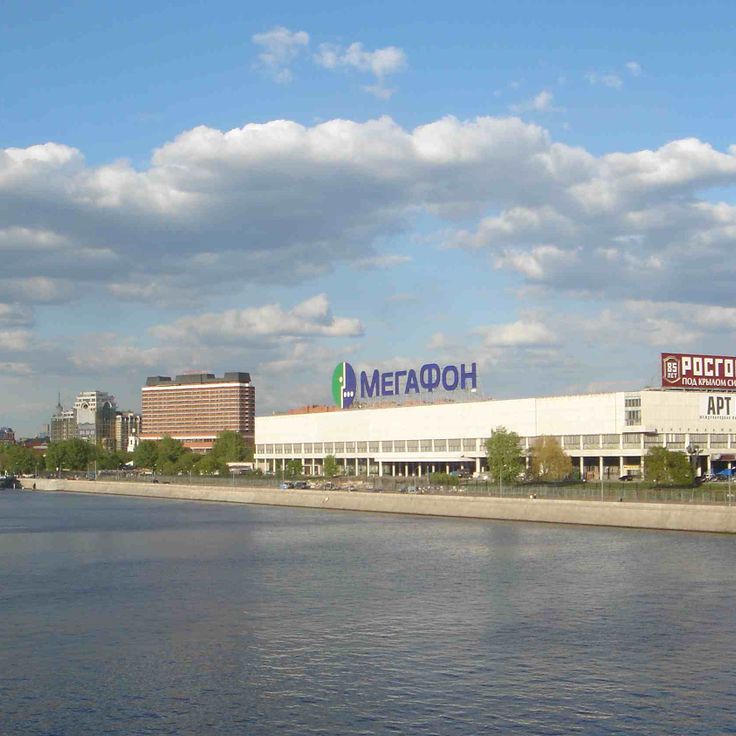
The Art Center in Moscow brings together modern art across ten exhibition halls showing local and international artists. Visitors walk through galleries with rotating displays of contemporary painting, sculpture, and other media. Studios inside the building serve as working spaces where artists create their pieces. For photographers, this place offers subjects ranging from exhibition rooms to artworks and the energy of an active creative space in the heart of Moscow.
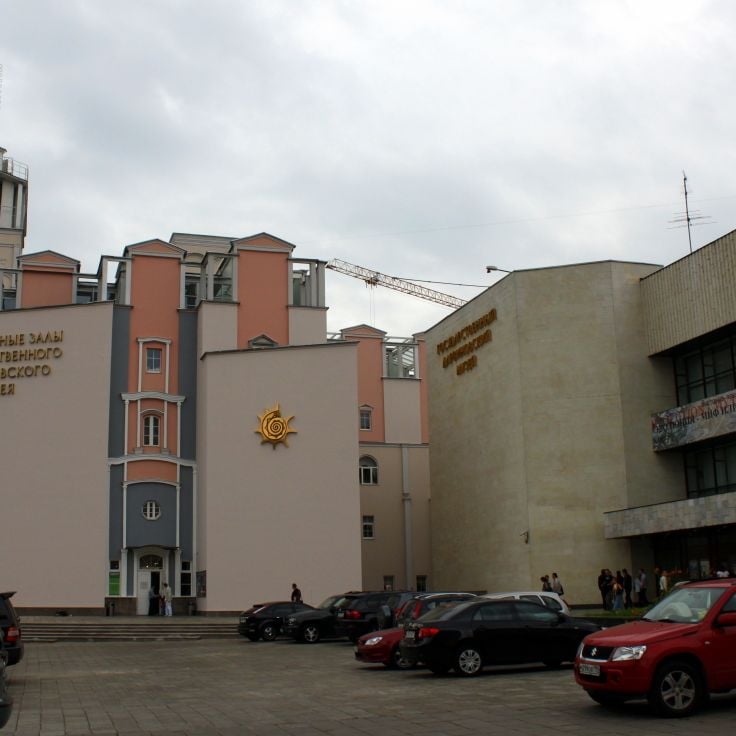
The Institute of Russian Realist Art holds paintings by Russian artists from the 20th century, mostly created between 1900 and 1990. The collection brings together figurative works that depict everyday life, landscapes, and social scenes from across Russia. For photographers exploring Moscow's art world, this museum offers a chance to see a side of Russian painting that sits outside the more familiar canon.
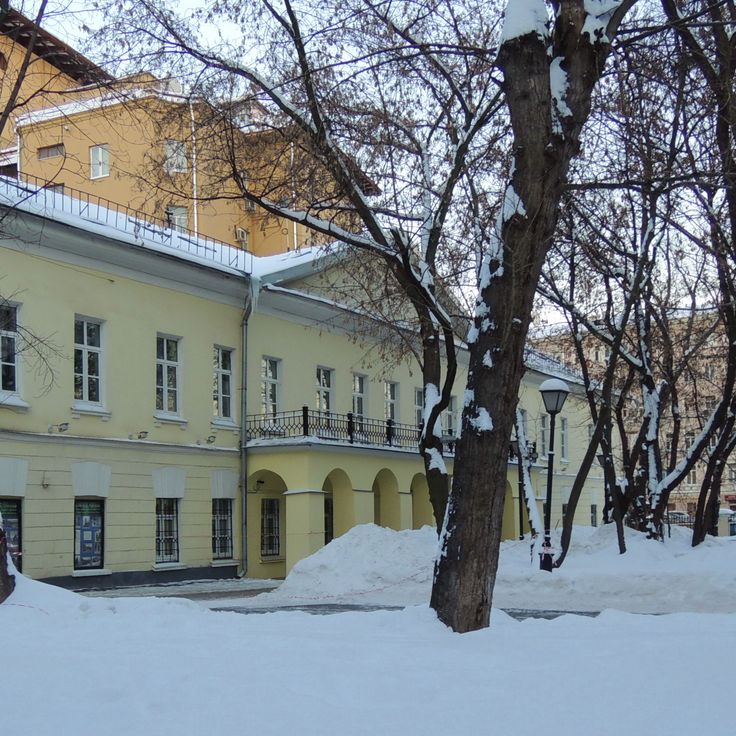
The Gogol House was the last home of writer Nikolai Gogol in Moscow, where he died in 1852. Its rooms are furnished with original pieces and personal objects from the 19th century, giving a sense of the author's daily life in his final years. Manuscripts, letters, and other items connected to his life are also on display. The Gogol House sits in central Moscow near other sites that remember Russian writers, and invites visitors to walk through the rooms and imagine what life in a mid-19th century apartment felt like.
The State Darwin Museum in Moscow is devoted to natural history and the development of life on Earth. Its halls display skeletons, taxidermy specimens, fossils, and interactive stations that walk visitors through the story of evolution. Dioramas show animals in reconstructed habitats, and dedicated sections cover genetics and adaptation. For photographers, the museum offers a wide range of subjects, from aged scientific objects to more recent presentation styles.
The Leo Tolstoy Museum holds manuscripts, letters, photographs, and personal objects from the Russian writer's life in the 19th century. Its rooms display documents and items that bring his work and daily life into focus. For photographers, the house offers historical artifacts and literary objects set within one of Moscow's old manor buildings.
Saint Basil's Cathedral stands on Red Square and is one of the most photographed subjects in Moscow. The nine colored domes date from the 16th century and together form an Orthodox church, known mainly for its range of colors. Each dome has its own pattern. From the outside, the building looks like a cluster of different towers connected by passages. Light shifts with the time of day and season, offering new angles for photography.
The Bolshoi Theatre is one of the most recognized opera and ballet houses in Russia and a natural stop for photographers exploring Moscow. Built in 1825 in a neoclassical style, its white facade with tall columns frames the main entrance. Inside, several levels of boxes are decorated in red and gold. The acoustics carry every voice to the back of the hall.
Gorky Park runs along the Moscow River and is one of the most visited spots in the city. It holds art galleries, restaurants, and sports facilities, and draws people of all ages throughout the day. For photographers exploring Moscow, this park offers a look at everyday urban life, a contrast to the cathedrals and monumental buildings found elsewhere in the city.
The Moscow Kremlin is a 15th century fortress with red brick walls, towers, palaces, cathedrals, and government buildings. For photographers, this complex at the heart of Moscow offers subjects that span centuries of Russian history: golden domes of Orthodox churches, open squares where state ceremonies take place, and architecture where religious life and political power have long stood side by side.
The Cathedral of Christ the Saviour stands in the center of Moscow, close to the Moskva River. It was rebuilt in 2000 following historical plans and rises to 103 meters (338 feet), making it one of the tallest Orthodox churches in the world. The golden domes catch the light differently throughout the day. Inside, there are frescoes, mosaics, and marble in warm tones. For photographers, the cathedral offers many angles: from the nearby bridge, the riverbank, or the surrounding streets. On sunny days, the white facades stand out sharply against a blue sky, and in the evening, floodlights bring the whole building to life.
This gallery preserves Russian art from the 11th to the 20th century, including icons, paintings and sculptures. Photographers find interior spaces with natural light, historic exhibition halls and works that document periods of Russian painting. The collection contains religious images, realist portraits and landscapes. Visitors see how Russian art evolved over centuries and which themes moved artists during different eras.
VDNKh is a large Soviet-era exhibition complex that gives photographers a strong sense of postwar Soviet design. Wide avenues lead past symmetrical pavilions decorated with golden details and large statues. Between the buildings, fountains and gardens fill the open spaces. An amusement park with a Ferris wheel sits on the grounds. The mix of historical architecture and open public space makes VDNKh one of the most photographically rich places in Moscow.
This hill in the southwestern part of the city rises above the river and offers photographers an elevated viewpoint over the panorama of Moscow. Sparrow Hills has been a popular vantage point for centuries, where visitors take in the interplay of historical and modern architecture. The main building of the university stands at the top, one of the seven Stalinist skyscrapers that dominates the view. Walkers and cyclists come here to use the terrace, stand at the railings and look out over the city skyline. The atmosphere is relaxed, with couples taking photos, families sitting on benches, and students meeting after classes. In winter the slope is open for skiing, in summer groups bring picnic blankets.
Patriarch Ponds is a calm spot in central Moscow, surrounded by residential buildings from the 19th century. In summer, people sit on benches by the water; in winter, they skate on the frozen surface. Trees line the paths along the shore, and the water mirrors the facades of the old buildings nearby. The area has restaurants and small green spaces that invite a walk. For photographers, Patriarch Ponds brings together the daily life of the city and the architecture of past centuries in one frame.
This museum gathers paintings, sculptures and archaeological objects from different periods of art history, offering glimpses into European and international traditions.
This palace was Catherine the Great's residence and sits within a large park that includes lakes and gardens. Tsaritsyno Palace offers photographers a mix of historical buildings and natural surroundings. The complex displays Russian architecture from the 18th century with its red brick facades and white decorative elements. The gardens spread around several ponds and create different perspectives for photographs. In summer, the pavilions reflect in the water, while winter transforms the grounds with snow. Paths wind through wooded areas and open spaces that provide room for compositions combining architecture and nature.
Kolomenskoye sits on a hill above the Moskva River in the south of Moscow. This open-air museum preserves wooden structures from the 16th century that recall the era of Russian tsars. The white stone Church of the Ascension rises above the grounds and is one of the oldest stone buildings in the city. Walking through the old tree-lined avenues, visitors discover timber houses with carved windows and get a sense of what it was like when rulers spent their summers here.
This historic pedestrian zone stretches for nearly a mile through central Moscow. Artists sell portraits and caricatures on the street, while musicians perform on benches and in front of doorways. Arbat Street connects old houses with painted facades, small theaters and bookshops. Cafes open their doors to the street, where people sit on terraces and watch the activity. In the evening, the sidewalks fill with locals and visitors who stroll between the shops. Photographers find subjects in the colorful storefronts, the street performers and the architecture from different centuries.
Zaryadye Park sits between the Kremlin and the Moskva River and brings together different Russian landscape types recreated on terraced hills and platforms. The floating bridge appears to hover above the water without visible supports, offering direct views toward the Kremlin walls and towers. The design combines concrete, glass and timber with native plants from different climate zones across Russia. For photographers, the park offers a range of subjects, from the modern bridge to the historical buildings in the background.
This television tower was completed in 1967 and reaches a height of 1,772 feet (540 meters). It offers photographers the chance to document Moscow from an elevated perspective. From the observation deck at 1,106 feet (337 meters) high, you can see the city with its historical buildings, Soviet high-rises, and modern districts. The tower itself appears as a slender concrete needle and stands in contrast to the colored domes or classical facades of the city center. On clear days, the view extends across the entire metropolis to the horizon.
This convent was founded in 1524 and shows the religious architecture of that era. The complex includes a cathedral, six churches and a bell tower with baroque elements. Red and white facades define the look, while golden domes shine above the buildings. Behind thick walls lie gardens and cemeteries where important figures from Russian history rest. For photographers, this place offers historical subjects with towers, gates and chapels reflected in the waters of a pond.
Red Square sits at the heart of Moscow and is one of the main stops for photographers in the city. Saint Basil's Cathedral with its colored domes, the Kremlin walls, and Lenin's Mausoleum all stand close together here. The wide paved space allows shots of the full scene or individual details. In the morning, the sun casts long shadows across the stones. In the evening, the building facades glow in warm light. Tourists pause in front of the large structures, while locals cross the square on their way to the metro.
This park displays more than 700 sculptures from different periods. After the Soviet Union ended, monuments from across the city were gathered here. You find Stalin statues next to contemporary installations. The collection includes socialist reliefs, abstract works and figurative pieces. Artists from Russia and other countries are represented. Visitors walk among the objects, read inscriptions and photograph the contrasts. Muzeon Park of Arts sits along the Moskva River and combines garden spaces with open-air exhibition.
The Lubyanka Building is a yellow structure in central Moscow that served for decades as the headquarters of the Soviet secret police. Today it houses the Russian FSB intelligence service. The plain facade from the early 20th century stands in contrast to the modern buildings nearby. Inside, a museum displays the history of the KGB. The square in front was the site of many events during Soviet times. For photographers documenting Soviet-era Moscow, the Lubyanka Building is an important subject, one that represents a difficult chapter of history.
This 18th century estate opens with a manor house, a French garden and a lake. The property shows the era of Russian aristocracy through its architecture, the trimmed paths between flower beds and the quiet view over the water. Photographers find here historical facades, symmetrical garden patterns and reflections on the surface of the lake, documenting Moscow's architectural variety and its connection to the noble past.
This historic store opened in 1901 and draws visitors with its neo-baroque ceilings and chandeliers. The shelves display a large selection of Russian specialties, from caviar to imported delicacies. The interiors combine the grace of past eras with the function of a modern grocery. Photographers find subjects here in gilded decorations, tall vaults and the colors of displayed products. Gastronom No. 1 sits on Tverskaya Street, one of Moscow's main thoroughfares, and fits into the line of representative buildings in this area.
The Lenin Library is one of the largest libraries in the world and a central part of research life in Moscow. Its grand reading room seats hundreds of readers and is lined with green-shaded lamps that cast a warm glow over the tables. The wooden shelves date to 1862 and give the space a strong sense of history. The building mixes classical architecture with the demands of a working institution. For photographers, the long rows of books, tall ceilings, and reading desks where visitors study manuscripts and texts offer a wealth of subjects.
This bathhouse opened in 1808 and preserves the old tradition of the Russian banya to this day. The neoclassical facade hides steam rooms with marble columns, wooden benches and pools with varying temperatures. Photographers will find both the ornate halls with stucco and chandeliers and the humid, steam-filled spaces where visitors use birch branches to treat their skin. Those documenting Moscow's architectural contrasts will discover in this place a piece of past times amid the modern metropolis.
The Taganka Bunker sits 65 meters (213 feet) below ground and dates from the 1950s, when Moscow built shelters in case of a nuclear attack. The facility preserves military equipment from that era, communication devices, documents, and rooms that show how people were meant to live here in an emergency. Corridors lead through different sections with original furnishings. You see ventilation systems, radios, and maps on the walls. The light is dim, the air cool and damp. For photographers, this bunker offers subjects in concrete, metal, and historical objects that document the years of the Cold War.
This museum displays contemporary art by international artists in a renovated 1960s building within Gorky Park. The space connects Moscow's artistic tradition with modern forms of expression and documents the development of present-day art. The building's architecture reflects Soviet post-war construction and creates a contrast with the exhibited works, which often follow experimental approaches. The location within the park makes this museum part of a larger cultural landscape in the city.
The VDNKh ice skating rink sits inside the Exhibition of Achievements of National Economy park and becomes one of the largest ice surfaces in the city each winter. From November to March, families, couples, and sports enthusiasts glide across the ice, surrounded by Soviet-era pavilions and wide parkways. In the evenings, lights shine over the surface and music accompanies the skaters. Stalls sell hot drinks and snacks, and rental skates are available on site.
This park covers a large area with sports fields, cafes, a concert hall and botanical gardens. Sokolniki Park is one of Moscow's older green spaces and serves residents as a place for relaxation and physical activities. In summer, families come here to picnic and jog, in winter ice rinks are set up. The paths lead through pine forests and past ponds. The park offers photographers subjects ranging from tree-lined avenues and wooden pavilions to sculptures, as well as scenes of urban life between nature and architecture.
Novospassky Monastery has stood above the Moskva River since the 14th century and is one of the oldest monasteries in Moscow. Behind its walls lie courtyards, chapels, and a cemetery where members of Russian noble families were buried. The white cathedral with golden domes is visible from a distance and reflects in the river. Photographers will find subjects ranging from painted frescoes and crypts to the outline of the complex rising above the water.
The seven skyscrapers from the 1940s and 1950s shape Moscow's skyline with their vertical architecture. These monumental buildings combine residential and office spaces. Several towers rise over 500 feet (150 meters) and carry gilded spires. The facades show Soviet ornaments and sculptures. These high-rises spread across the city and each has a different function: a hotel, a university building, ministries, apartments. From different points in Moscow you see their distinctive silhouettes. As a photographic subject, these structures represent Soviet architectural language and the ambitious construction program of that era.
This planetarium projects constellations and astronomical events onto a 37-meter dome using digital technology. It represents one of the places in Moscow where photography can document scientific education and modern architecture. The dome itself forms a photographic subject that shows how the city connects historical astronomy education with contemporary technology.
The Museum of Soviet Arcade Machines displays restored gaming devices from the 1970s and 1980s. In a city known for its cathedrals and monumental buildings, this museum offers a different view of everyday Soviet life. Visitors can still play the machines and get a sense of how people spent their free time back then. The devices run on old Soviet coins. For photographers, this place reveals a side of Moscow that goes well beyond churches and palaces, showing what ordinary recreation once looked like.
The Jewish Museum and Tolerance Center opened in 2012 inside a former bus depot from the 1920s. Inside, interactive displays and film installations guide visitors through the history of Jews in Russia, from medieval times to the present day. The rooms are arranged in chronological order, showing daily life, religious traditions, and historical events. The old industrial structure stands in direct contrast to the contemporary exhibition design, making it a rewarding place to photograph.
This park combines military history with open green spaces across 135 hectares (334 acres). Photographers find tanks from World War II, monuments and a museum that document Moscow's memory of past conflicts. The collection of historical vehicles and monumental sculptures creates subjects that show the Soviet style of memorial culture and work well for images within the city's contrasts.
The Water Garden in Moscow is a botanical garden with ponds, aquatic plants, and a small lake. Walking through this place, photographers find still water surfaces, water lilies, and shoreline vegetation of many kinds. Within a photo tour of Moscow, the Water Garden offers natural subjects that stand apart from the historical buildings and modern structures of the city.
City Garden is a 19th-century garden in Moscow that brings together theaters, concert stages, and outdoor art exhibitions. It sits in a central part of the city and is home to three theaters that shape the cultural life of the area. Between the trees, performances and exhibitions take place regularly. For photographers, the garden offers subjects drawn from architecture, everyday life, and green spaces that connect historical Moscow with its present cultural life.
The Art Center in Moscow brings together modern art across ten exhibition halls showing local and international artists. Visitors walk through galleries with rotating displays of contemporary painting, sculpture, and other media. Studios inside the building serve as working spaces where artists create their pieces. For photographers, this place offers subjects ranging from exhibition rooms to artworks and the energy of an active creative space in the heart of Moscow.
The Institute of Russian Realist Art holds paintings by Russian artists from the 20th century, mostly created between 1900 and 1990. The collection brings together figurative works that depict everyday life, landscapes, and social scenes from across Russia. For photographers exploring Moscow's art world, this museum offers a chance to see a side of Russian painting that sits outside the more familiar canon.
The Gogol House was the last home of writer Nikolai Gogol in Moscow, where he died in 1852. Its rooms are furnished with original pieces and personal objects from the 19th century, giving a sense of the author's daily life in his final years. Manuscripts, letters, and other items connected to his life are also on display. The Gogol House sits in central Moscow near other sites that remember Russian writers, and invites visitors to walk through the rooms and imagine what life in a mid-19th century apartment felt like.
The State Darwin Museum in Moscow is devoted to natural history and the development of life on Earth. Its halls display skeletons, taxidermy specimens, fossils, and interactive stations that walk visitors through the story of evolution. Dioramas show animals in reconstructed habitats, and dedicated sections cover genetics and adaptation. For photographers, the museum offers a wide range of subjects, from aged scientific objects to more recent presentation styles.
The Leo Tolstoy Museum holds manuscripts, letters, photographs, and personal objects from the Russian writer's life in the 19th century. Its rooms display documents and items that bring his work and daily life into focus. For photographers, the house offers historical artifacts and literary objects set within one of Moscow's old manor buildings.
Saint Basil's Cathedral stands on Red Square and is one of the most photographed subjects in Moscow. The nine colored domes date from the 16th century and together form an Orthodox church, known mainly for its range of colors. Each dome has its own pattern. From the outside, the building looks like a cluster of different towers connected by passages. Light shifts with the time of day and season, offering new angles for photography.
The Bolshoi Theatre is one of the most recognized opera and ballet houses in Russia and a natural stop for photographers exploring Moscow. Built in 1825 in a neoclassical style, its white facade with tall columns frames the main entrance. Inside, several levels of boxes are decorated in red and gold. The acoustics carry every voice to the back of the hall.
Gorky Park runs along the Moscow River and is one of the most visited spots in the city. It holds art galleries, restaurants, and sports facilities, and draws people of all ages throughout the day. For photographers exploring Moscow, this park offers a look at everyday urban life, a contrast to the cathedrals and monumental buildings found elsewhere in the city.
The Moscow Kremlin is a 15th century fortress with red brick walls, towers, palaces, cathedrals, and government buildings. For photographers, this complex at the heart of Moscow offers subjects that span centuries of Russian history: golden domes of Orthodox churches, open squares where state ceremonies take place, and architecture where religious life and political power have long stood side by side.
The Cathedral of Christ the Saviour stands in the center of Moscow, close to the Moskva River. It was rebuilt in 2000 following historical plans and rises to 103 meters (338 feet), making it one of the tallest Orthodox churches in the world. The golden domes catch the light differently throughout the day. Inside, there are frescoes, mosaics, and marble in warm tones. For photographers, the cathedral offers many angles: from the nearby bridge, the riverbank, or the surrounding streets. On sunny days, the white facades stand out sharply against a blue sky, and in the evening, floodlights bring the whole building to life.
This gallery preserves Russian art from the 11th to the 20th century, including icons, paintings and sculptures. Photographers find interior spaces with natural light, historic exhibition halls and works that document periods of Russian painting. The collection contains religious images, realist portraits and landscapes. Visitors see how Russian art evolved over centuries and which themes moved artists during different eras.
VDNKh is a large Soviet-era exhibition complex that gives photographers a strong sense of postwar Soviet design. Wide avenues lead past symmetrical pavilions decorated with golden details and large statues. Between the buildings, fountains and gardens fill the open spaces. An amusement park with a Ferris wheel sits on the grounds. The mix of historical architecture and open public space makes VDNKh one of the most photographically rich places in Moscow.
This hill in the southwestern part of the city rises above the river and offers photographers an elevated viewpoint over the panorama of Moscow. Sparrow Hills has been a popular vantage point for centuries, where visitors take in the interplay of historical and modern architecture. The main building of the university stands at the top, one of the seven Stalinist skyscrapers that dominates the view. Walkers and cyclists come here to use the terrace, stand at the railings and look out over the city skyline. The atmosphere is relaxed, with couples taking photos, families sitting on benches, and students meeting after classes. In winter the slope is open for skiing, in summer groups bring picnic blankets.
Patriarch Ponds is a calm spot in central Moscow, surrounded by residential buildings from the 19th century. In summer, people sit on benches by the water; in winter, they skate on the frozen surface. Trees line the paths along the shore, and the water mirrors the facades of the old buildings nearby. The area has restaurants and small green spaces that invite a walk. For photographers, Patriarch Ponds brings together the daily life of the city and the architecture of past centuries in one frame.
This museum gathers paintings, sculptures and archaeological objects from different periods of art history, offering glimpses into European and international traditions.
This palace was Catherine the Great's residence and sits within a large park that includes lakes and gardens. Tsaritsyno Palace offers photographers a mix of historical buildings and natural surroundings. The complex displays Russian architecture from the 18th century with its red brick facades and white decorative elements. The gardens spread around several ponds and create different perspectives for photographs. In summer, the pavilions reflect in the water, while winter transforms the grounds with snow. Paths wind through wooded areas and open spaces that provide room for compositions combining architecture and nature.
Kolomenskoye sits on a hill above the Moskva River in the south of Moscow. This open-air museum preserves wooden structures from the 16th century that recall the era of Russian tsars. The white stone Church of the Ascension rises above the grounds and is one of the oldest stone buildings in the city. Walking through the old tree-lined avenues, visitors discover timber houses with carved windows and get a sense of what it was like when rulers spent their summers here.
This historic pedestrian zone stretches for nearly a mile through central Moscow. Artists sell portraits and caricatures on the street, while musicians perform on benches and in front of doorways. Arbat Street connects old houses with painted facades, small theaters and bookshops. Cafes open their doors to the street, where people sit on terraces and watch the activity. In the evening, the sidewalks fill with locals and visitors who stroll between the shops. Photographers find subjects in the colorful storefronts, the street performers and the architecture from different centuries.
Zaryadye Park sits between the Kremlin and the Moskva River and brings together different Russian landscape types recreated on terraced hills and platforms. The floating bridge appears to hover above the water without visible supports, offering direct views toward the Kremlin walls and towers. The design combines concrete, glass and timber with native plants from different climate zones across Russia. For photographers, the park offers a range of subjects, from the modern bridge to the historical buildings in the background.
This television tower was completed in 1967 and reaches a height of 1,772 feet (540 meters). It offers photographers the chance to document Moscow from an elevated perspective. From the observation deck at 1,106 feet (337 meters) high, you can see the city with its historical buildings, Soviet high-rises, and modern districts. The tower itself appears as a slender concrete needle and stands in contrast to the colored domes or classical facades of the city center. On clear days, the view extends across the entire metropolis to the horizon.
This convent was founded in 1524 and shows the religious architecture of that era. The complex includes a cathedral, six churches and a bell tower with baroque elements. Red and white facades define the look, while golden domes shine above the buildings. Behind thick walls lie gardens and cemeteries where important figures from Russian history rest. For photographers, this place offers historical subjects with towers, gates and chapels reflected in the waters of a pond.
Red Square sits at the heart of Moscow and is one of the main stops for photographers in the city. Saint Basil's Cathedral with its colored domes, the Kremlin walls, and Lenin's Mausoleum all stand close together here. The wide paved space allows shots of the full scene or individual details. In the morning, the sun casts long shadows across the stones. In the evening, the building facades glow in warm light. Tourists pause in front of the large structures, while locals cross the square on their way to the metro.
This park displays more than 700 sculptures from different periods. After the Soviet Union ended, monuments from across the city were gathered here. You find Stalin statues next to contemporary installations. The collection includes socialist reliefs, abstract works and figurative pieces. Artists from Russia and other countries are represented. Visitors walk among the objects, read inscriptions and photograph the contrasts. Muzeon Park of Arts sits along the Moskva River and combines garden spaces with open-air exhibition.
The Lubyanka Building is a yellow structure in central Moscow that served for decades as the headquarters of the Soviet secret police. Today it houses the Russian FSB intelligence service. The plain facade from the early 20th century stands in contrast to the modern buildings nearby. Inside, a museum displays the history of the KGB. The square in front was the site of many events during Soviet times. For photographers documenting Soviet-era Moscow, the Lubyanka Building is an important subject, one that represents a difficult chapter of history.
This 18th century estate opens with a manor house, a French garden and a lake. The property shows the era of Russian aristocracy through its architecture, the trimmed paths between flower beds and the quiet view over the water. Photographers find here historical facades, symmetrical garden patterns and reflections on the surface of the lake, documenting Moscow's architectural variety and its connection to the noble past.
This historic store opened in 1901 and draws visitors with its neo-baroque ceilings and chandeliers. The shelves display a large selection of Russian specialties, from caviar to imported delicacies. The interiors combine the grace of past eras with the function of a modern grocery. Photographers find subjects here in gilded decorations, tall vaults and the colors of displayed products. Gastronom No. 1 sits on Tverskaya Street, one of Moscow's main thoroughfares, and fits into the line of representative buildings in this area.
The Lenin Library is one of the largest libraries in the world and a central part of research life in Moscow. Its grand reading room seats hundreds of readers and is lined with green-shaded lamps that cast a warm glow over the tables. The wooden shelves date to 1862 and give the space a strong sense of history. The building mixes classical architecture with the demands of a working institution. For photographers, the long rows of books, tall ceilings, and reading desks where visitors study manuscripts and texts offer a wealth of subjects.
This bathhouse opened in 1808 and preserves the old tradition of the Russian banya to this day. The neoclassical facade hides steam rooms with marble columns, wooden benches and pools with varying temperatures. Photographers will find both the ornate halls with stucco and chandeliers and the humid, steam-filled spaces where visitors use birch branches to treat their skin. Those documenting Moscow's architectural contrasts will discover in this place a piece of past times amid the modern metropolis.
The Taganka Bunker sits 65 meters (213 feet) below ground and dates from the 1950s, when Moscow built shelters in case of a nuclear attack. The facility preserves military equipment from that era, communication devices, documents, and rooms that show how people were meant to live here in an emergency. Corridors lead through different sections with original furnishings. You see ventilation systems, radios, and maps on the walls. The light is dim, the air cool and damp. For photographers, this bunker offers subjects in concrete, metal, and historical objects that document the years of the Cold War.
This museum displays contemporary art by international artists in a renovated 1960s building within Gorky Park. The space connects Moscow's artistic tradition with modern forms of expression and documents the development of present-day art. The building's architecture reflects Soviet post-war construction and creates a contrast with the exhibited works, which often follow experimental approaches. The location within the park makes this museum part of a larger cultural landscape in the city.
The VDNKh ice skating rink sits inside the Exhibition of Achievements of National Economy park and becomes one of the largest ice surfaces in the city each winter. From November to March, families, couples, and sports enthusiasts glide across the ice, surrounded by Soviet-era pavilions and wide parkways. In the evenings, lights shine over the surface and music accompanies the skaters. Stalls sell hot drinks and snacks, and rental skates are available on site.
This park covers a large area with sports fields, cafes, a concert hall and botanical gardens. Sokolniki Park is one of Moscow's older green spaces and serves residents as a place for relaxation and physical activities. In summer, families come here to picnic and jog, in winter ice rinks are set up. The paths lead through pine forests and past ponds. The park offers photographers subjects ranging from tree-lined avenues and wooden pavilions to sculptures, as well as scenes of urban life between nature and architecture.
Novospassky Monastery has stood above the Moskva River since the 14th century and is one of the oldest monasteries in Moscow. Behind its walls lie courtyards, chapels, and a cemetery where members of Russian noble families were buried. The white cathedral with golden domes is visible from a distance and reflects in the river. Photographers will find subjects ranging from painted frescoes and crypts to the outline of the complex rising above the water.
The seven skyscrapers from the 1940s and 1950s shape Moscow's skyline with their vertical architecture. These monumental buildings combine residential and office spaces. Several towers rise over 500 feet (150 meters) and carry gilded spires. The facades show Soviet ornaments and sculptures. These high-rises spread across the city and each has a different function: a hotel, a university building, ministries, apartments. From different points in Moscow you see their distinctive silhouettes. As a photographic subject, these structures represent Soviet architectural language and the ambitious construction program of that era.
This planetarium projects constellations and astronomical events onto a 37-meter dome using digital technology. It represents one of the places in Moscow where photography can document scientific education and modern architecture. The dome itself forms a photographic subject that shows how the city connects historical astronomy education with contemporary technology.
The Museum of Soviet Arcade Machines displays restored gaming devices from the 1970s and 1980s. In a city known for its cathedrals and monumental buildings, this museum offers a different view of everyday Soviet life. Visitors can still play the machines and get a sense of how people spent their free time back then. The devices run on old Soviet coins. For photographers, this place reveals a side of Moscow that goes well beyond churches and palaces, showing what ordinary recreation once looked like.
The Jewish Museum and Tolerance Center opened in 2012 inside a former bus depot from the 1920s. Inside, interactive displays and film installations guide visitors through the history of Jews in Russia, from medieval times to the present day. The rooms are arranged in chronological order, showing daily life, religious traditions, and historical events. The old industrial structure stands in direct contrast to the contemporary exhibition design, making it a rewarding place to photograph.
This park combines military history with open green spaces across 135 hectares (334 acres). Photographers find tanks from World War II, monuments and a museum that document Moscow's memory of past conflicts. The collection of historical vehicles and monumental sculptures creates subjects that show the Soviet style of memorial culture and work well for images within the city's contrasts.
The Water Garden in Moscow is a botanical garden with ponds, aquatic plants, and a small lake. Walking through this place, photographers find still water surfaces, water lilies, and shoreline vegetation of many kinds. Within a photo tour of Moscow, the Water Garden offers natural subjects that stand apart from the historical buildings and modern structures of the city.
City Garden is a 19th-century garden in Moscow that brings together theaters, concert stages, and outdoor art exhibitions. It sits in a central part of the city and is home to three theaters that shape the cultural life of the area. Between the trees, performances and exhibitions take place regularly. For photographers, the garden offers subjects drawn from architecture, everyday life, and green spaces that connect historical Moscow with its present cultural life.
The Art Center in Moscow brings together modern art across ten exhibition halls showing local and international artists. Visitors walk through galleries with rotating displays of contemporary painting, sculpture, and other media. Studios inside the building serve as working spaces where artists create their pieces. For photographers, this place offers subjects ranging from exhibition rooms to artworks and the energy of an active creative space in the heart of Moscow.
The Institute of Russian Realist Art holds paintings by Russian artists from the 20th century, mostly created between 1900 and 1990. The collection brings together figurative works that depict everyday life, landscapes, and social scenes from across Russia. For photographers exploring Moscow's art world, this museum offers a chance to see a side of Russian painting that sits outside the more familiar canon.
The Gogol House was the last home of writer Nikolai Gogol in Moscow, where he died in 1852. Its rooms are furnished with original pieces and personal objects from the 19th century, giving a sense of the author's daily life in his final years. Manuscripts, letters, and other items connected to his life are also on display. The Gogol House sits in central Moscow near other sites that remember Russian writers, and invites visitors to walk through the rooms and imagine what life in a mid-19th century apartment felt like.
The State Darwin Museum in Moscow is devoted to natural history and the development of life on Earth. Its halls display skeletons, taxidermy specimens, fossils, and interactive stations that walk visitors through the story of evolution. Dioramas show animals in reconstructed habitats, and dedicated sections cover genetics and adaptation. For photographers, the museum offers a wide range of subjects, from aged scientific objects to more recent presentation styles.
The Leo Tolstoy Museum holds manuscripts, letters, photographs, and personal objects from the Russian writer's life in the 19th century. Its rooms display documents and items that bring his work and daily life into focus. For photographers, the house offers historical artifacts and literary objects set within one of Moscow's old manor buildings.
Saint Basil's Cathedral stands on Red Square and is one of the most photographed subjects in Moscow. The nine colored domes date from the 16th century and together form an Orthodox church, known mainly for its range of colors. Each dome has its own pattern. From the outside, the building looks like a cluster of different towers connected by passages. Light shifts with the time of day and season, offering new angles for photography.
Moscow gives photographers endless subjects across different centuries and styles. You can photograph medieval fortress walls in the morning, then move to Soviet-era buildings in the afternoon. The city moves between past and present as you walk through it. Religious architecture with bright domes contrasts with grand theaters and modern galleries. Green spaces like Gorky Park and Zaryadye Park break up the urban landscape. Each neighborhood tells a different story through its buildings and streets. Take time to explore side streets and residential areas away from major landmarks. You'll find ordinary Moscow life here, which often makes for more genuine photographs than the famous spots. Local people go about their routines, children play in parks, and street artists work on Arbat Street. These moments reveal the real rhythm of the city.