Vlakhernskoye-Kuzminki, Historic estate in Kuzminki District, Moscow, Russia
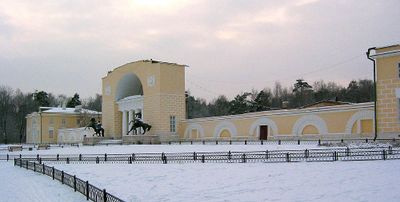
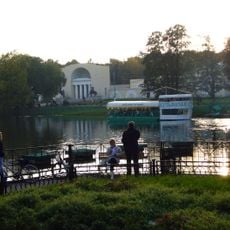
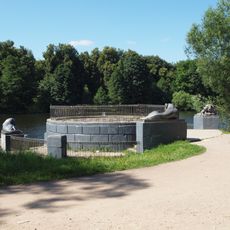
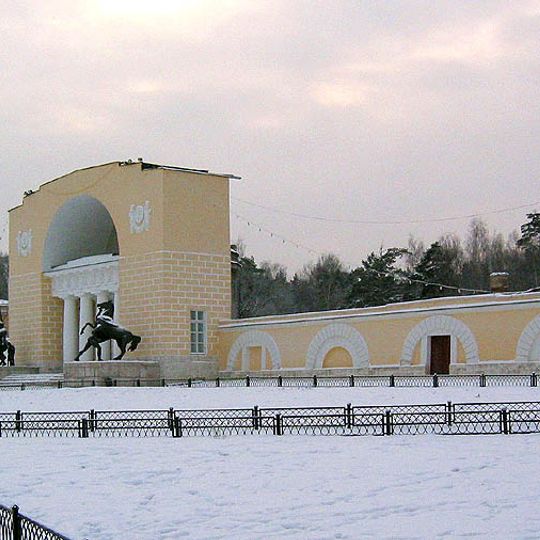
Vlakhernskoye-Kuzminki is an estate on both banks of the Churilikh River, whose cascade of four ponds survives from the Golitsyn era. The manor house, rebuilt several times in the second half of the 18th century, has side wings joined to the main house by two semi-circular galleries. In the 1830s the entrance to the manor court was decorated with iron candelabra and griffins designed by J. Colombo. The estate church stands at its heart.
Peter the Great granted this land to Grigory Stroganov in 1704, beginning its development as a noble residence. The estate changed hands several times afterward, with buildings and gardens evolving over the following centuries.
The estate takes its name from the Vlakhernskaya Icon of the Theotokos, a copy of which was kept in the estate church. The church was closed in 1929 and restored in 1995 under Yelena Vorontsova. In 1866 Fyodor Dostoevsky visited Kuzminki while renting a dacha in neighbouring Lyublino, where he worked on Crime and Punishment.
The estate is reached by Moscow Metro to Kuzminki station, followed by a 10-minute walk through parkland. Weekdays offer a more peaceful experience, as fewer visitors are present on the grounds.
The cast-iron entrance gates on Lipovaya Alley were made at the Golitsyns' Ural factories in the mid-19th century; the street they stand on is now called Chugunnye Vorota, "Cast-Iron Gates". The estate's park furniture, benches and metal monuments were scrapped after 1917.
The community of curious travelers
AroundUs brings together thousands of curated places, local tips, and hidden gems, enriched daily by 94,594 contributors worldwide.