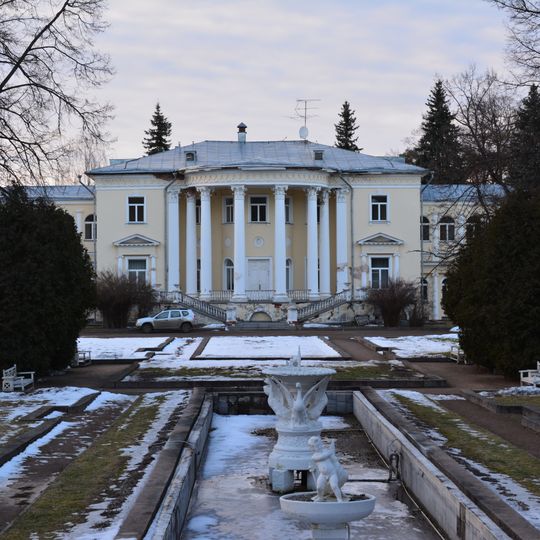
Vvedenskoe Estate, Noble estate in Zvenigorod, Russia.
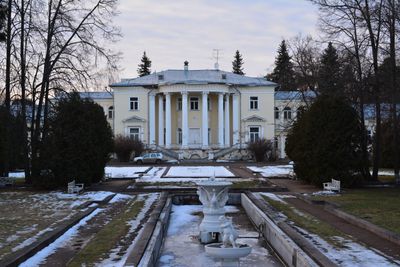
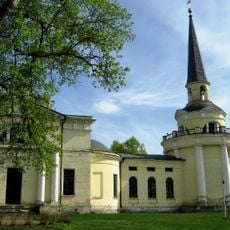
Vvedenskoe Estate is a nobleman's residence in Zvenigorod built across multiple construction periods in classical style. The structure features symmetrical wings extending from the central building with formal gardens surrounding the property.
Until the mid-18th century the village belonged to the Golovin boyars and voivodes. When Anna Lopukhina became favourite of Paul I, her father Pyotr Lopukhin had the estate rebuilt, engaging the Palladian architect N. A. Lvov in 1798–99. After 1884 Count S. D. Sheremetev owned it and gave it as dowry to his daughter, wife of Count A. V. Gudovich; the decayed wooden house was replaced in 1912 by a brick two-storey building in the same forms.
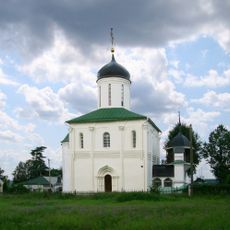
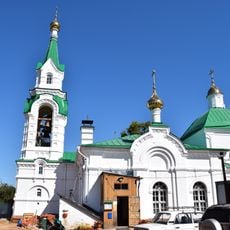
The estate's name comes from its Vvedenskaya church, built in 1812 and linked to its bell tower by a covered passage added in 1907 by architect S. M. Ilyinsky. In 1919 the manor housed an art and craft school colony with woodworking, engraving and painting workshops; since 1923 the grounds have served as a sanatorium.
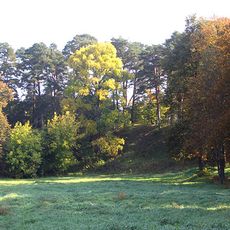
The estate lies 3 km southeast of Zvenigorod's centre, on the bank of the Moskva River, and now houses the Vvedenskoye sanatorium of the Moscow city administration. Access to the grounds for outsiders is restricted, so check admission before travelling; the 1912 main house, the 1812 Vvedenskaya church and the lime park are best seen from outside the fence.
The residence preserves building elements from different eras, revealing how Russian architectural style transformed over decades. This layering of styles lets you read the history of aristocratic tradition directly in the walls.
The community of curious travelers
AroundUs brings together thousands of curated places, local tips, and hidden gems, enriched daily by 93,786 contributors worldwide.