Cidadela, cidade velha e fortificações de Derbent, Ancient fortress complex in Derbent, Russia
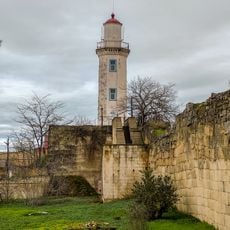
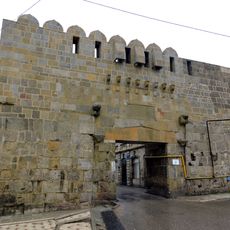
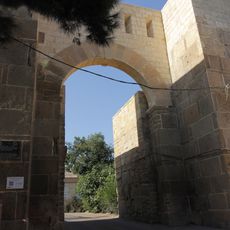
The Derbent citadel is the pre-Arab fortress Naryn-kala, built on a hill in the upper town and joined to the Caspian Sea by two parallel walls. The citadel is irregular in plan, about 280 m long and 180 m wide, covering 4.5 ha, with walls 2.5–3.5 m thick and 20–25 m high, reinforced by small bastions set 20–30 m apart. Its Sasanian masonry is visible as two rows of precisely cut stone blocks fitted without mortar, with rubble and lime mortar between them.
Derbent guarded a 3 km gap between the Caspian Sea and the Caucasus slopes on the north-south trade route from the 1st millennium BC. The Sasanian ruler Yazdegerd I began the fortress and mud-brick walls in the 5th century; Khosrow I (531-579) rebuilt them in stone blocks. The defenses stayed in use for 15 centuries, until the Russian annexation in the 19th century.
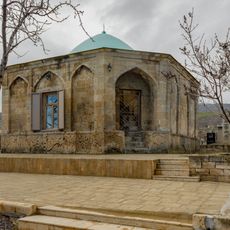
The citadel's Cross Water Tank, cut into the rock, was probably a Christian church before being converted into a reservoir for water collected from the surrounding mountains. The Khan's Bathhouse from the 16th–17th centuries, partly sunk into the ground, and the 18th-century Khan's Palace, whose main portal survives, show how later rulers built within the fortress.
Walking through the fortress is the best way to explore its different levels and sections at your own pace. Take time to navigate the narrow passages and climb the various parts to understand how the defenses were arranged.
Inside the citadel is the Cross Water Reservoir, a chamber cut into the rock that was probably a Christian temple before being turned into a cistern for water channelled down from the surrounding mountains. Nearby, a medieval dungeon 11 m deep and 25 m² in area has walls sloped so that escape by climbing is impossible.
The community of curious travelers
AroundUs brings together thousands of curated places, local tips, and hidden gems, enriched daily by 93,427 contributors worldwide.