Hegra, Archaeological site in Al-Ula Governorate, Medina Province, Saudi Arabia
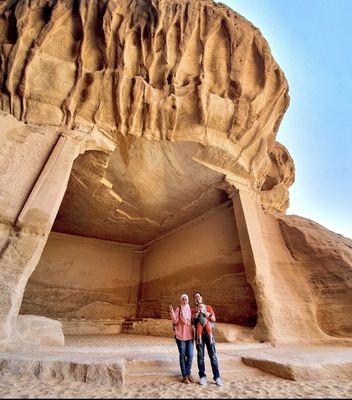
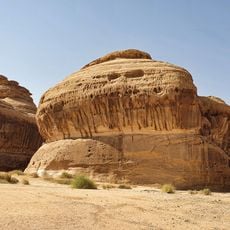
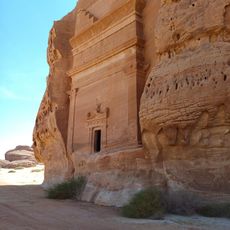
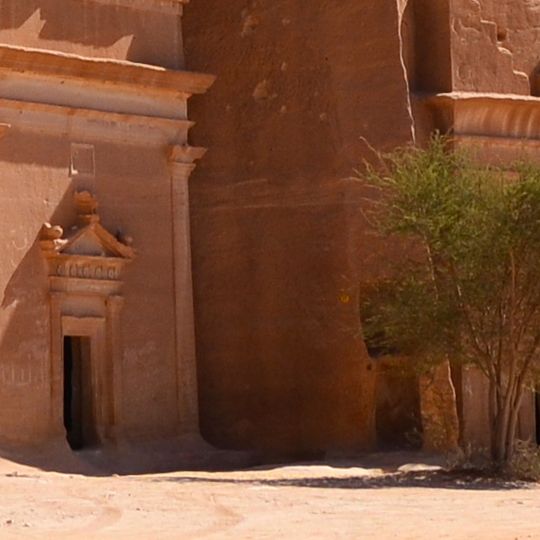
Hegra is an archaeological site featuring sandstone cliffs with 111 Nabatean burial chambers carved into the rock. These chambers were created between the first century BC and the first century AD and display varying sizes and decorative designs.
Hegra was founded by the Nabataeans and served as their southern capital, second only to Petra, from the 1st century BC. It was a key stop on the trade route linking southern Arabia with the Levant and Mesopotamia. After the Roman annexation in 106 AD, the site continued under Lihyanite and later Roman influence until the 4th century.
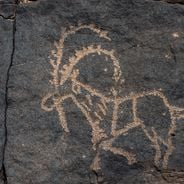
The burial chambers bear inscriptions in Nabatean, Greek, Latin, and Thamudic left by merchants and travelers passing through. These writings reveal how important the place was as a meeting point for different peoples traveling along trade routes.
The site lies about 30 kilometers from AlUla and is best reached by vehicle. Visitors should wear sun protection and bring plenty of water, as the area is exposed with limited shade.
The sandstone at Hegra was shaped by intense erosion in the late Miocene, and its fine grain made it suited to carving, though some layers crumble from wind and salt crystallisation. Istakhri noted that the mountains around the site look continuous but are separated by sand dunes.
The community of curious travelers
AroundUs brings together thousands of curated places, local tips, and hidden gems, enriched daily by 92,164 contributors worldwide.