Al-Ukhdud, Archaeological site in Najran Province, Saudi Arabia.
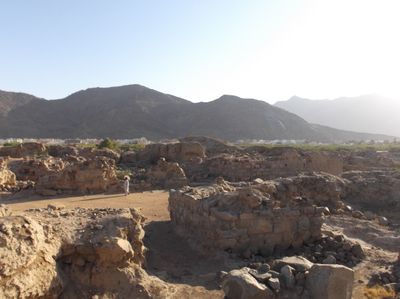
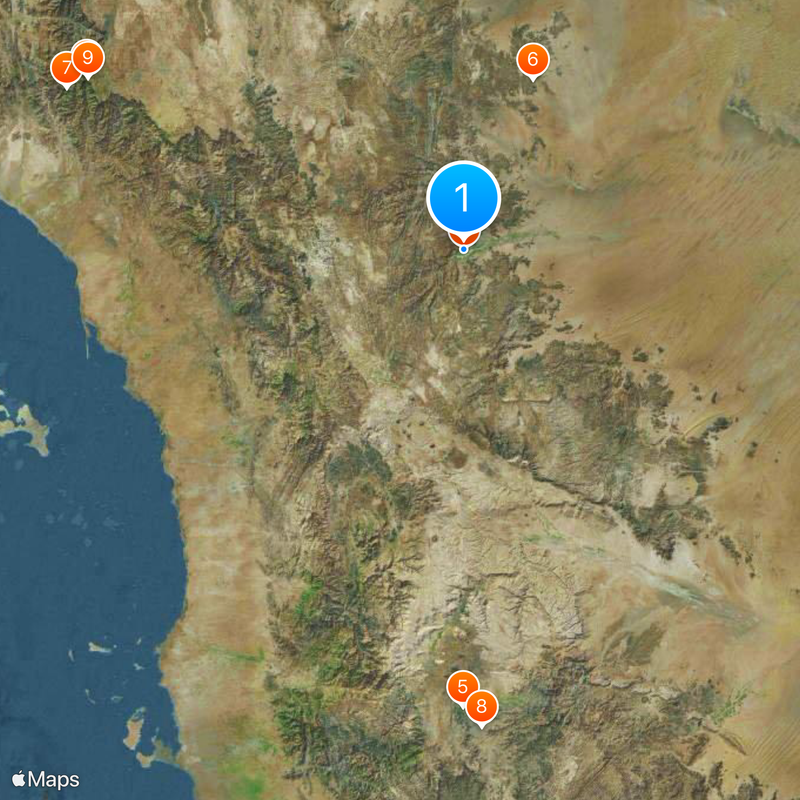
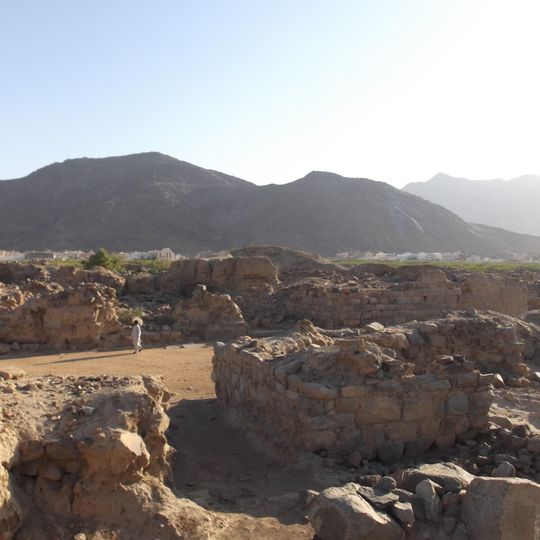
Al-Ukhdud is a ruined walled city on the southern edge of Wadi Najran, about 25 km from Najran between the villages of al-Qabil and al-Jarba. Its square, four-square-kilometre site holds only the foundations and walls of its buildings, with low mounds of rough tan and pale-brown stone blocks, broken wall segments and a bare dirt surface between them. A stone wall with a decorated top once enclosed the city.
Al-Ukhdud, earlier called Raqmat, was settled mainly between 500 BC and the mid-first millennium AD, when its castle was built. The Himyarite king Dhu Nuwas burned the region's Christians in the trench in 520, an event recorded in the Quran. After the rise of Islam the town lost its role as Najran's centre and settlement declined by the fourth Hijri century.
The name al-Ukhdud means a long trench or deep pit dug in the ground, referring to the burning ditch of the Quranic story of the People of the Ditch (Surat al-Buruj). The site is also called Raqmat. Visitors can see traces of ash and charred bones scattered across the area, and a bronze lion's head is displayed in the regional museum.
The nearby Najran Regional Museum serves as the visitor center and provides access to the ruins with information panels. Visitors should wear comfortable clothing and bring water, as the site is open and exposed to the sun.
In February 2023 the Heritage Commission announced finds at al-Ukhdud including three rings, a bronze bull's head and Sabaean inscriptions; the largest is a single line on granite 230 cm long with letters up to 32 cm high, the longest such inscription at the site.
The community of curious travelers
AroundUs brings together thousands of curated places, local tips, and hidden gems, enriched daily by 94,048 contributors worldwide.