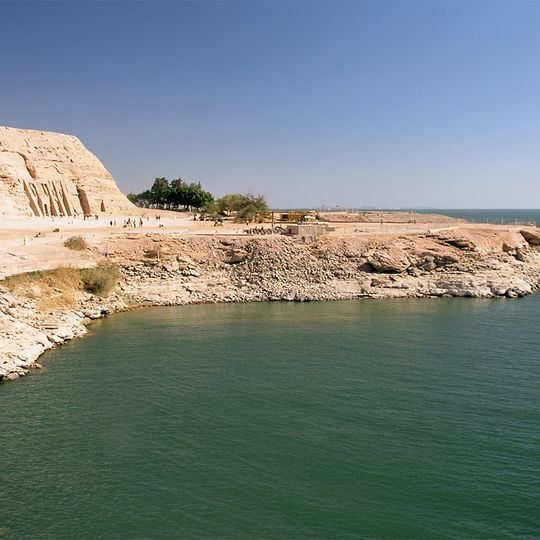
Lake Nasser, Man-made reservoir between southern Egypt and northern Sudan
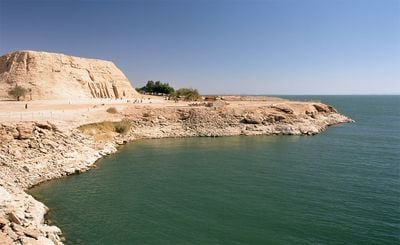
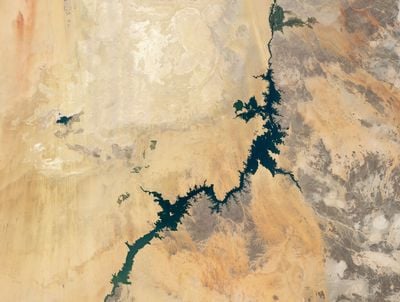
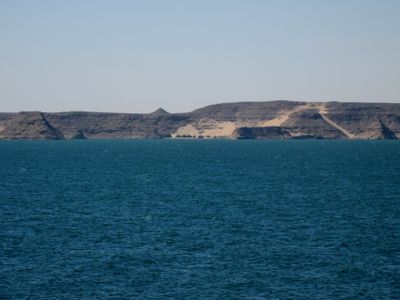
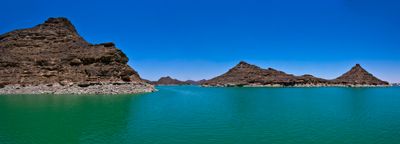
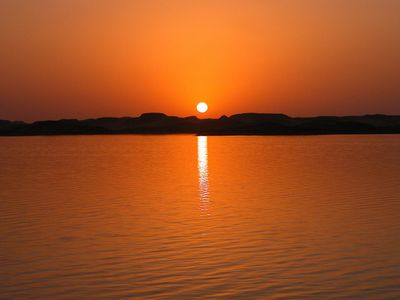
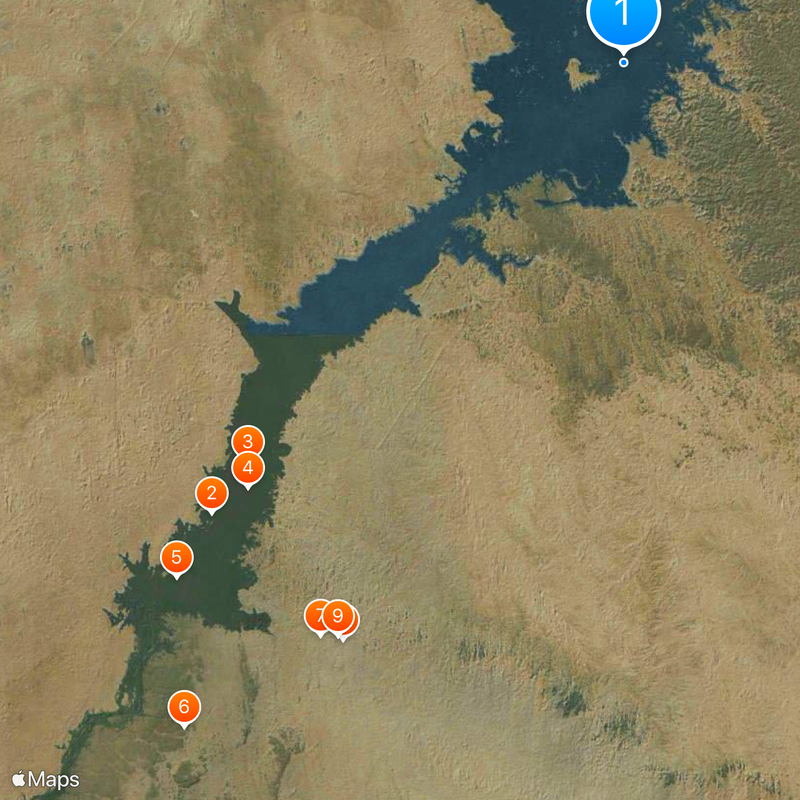
Lake Nasser is a reservoir in southern Egypt and northern Sudan formed by the Aswan High Dam, stretching across nearly 290 kilometers. In places the water reaches a width of almost nine kilometers, covering areas that were once Nile valley floor and Nubian settlements.
The dam was built between 1960 and 1970 to control Nile flooding and generate hydroelectric power. As the basin filled, ancient temple complexes such as Abu Simbel and Philae were relocated to higher ground to save them from submersion.
The name Nasser honors Gamal Abdel Nasser, the Egyptian president when the lake began filling. In Sudan the same body of water carries the name Lake Nubia, acknowledging the region whose villages disappeared beneath the rising water.
The shoreline is best accessed from Aswan, where boat excursions depart along the waterfront and to relocated temples. Outside the summer months the heat is less intense, and visibility across the water remains clear and far-reaching.
More than 50 species of fish live in the water, some discovered only after the flooding. The border between Egypt and Sudan runs straight through the middle, so fishing boats from both countries share the same waters.
The community of curious travelers
AroundUs brings together thousands of curated places, local tips, and hidden gems, enriched daily by 90,752 contributors worldwide.