Buhen, Egyptian fortress in Northern State, Sudan
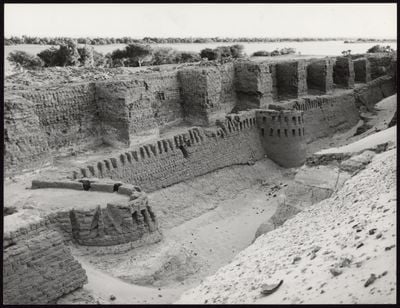
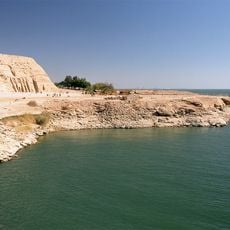
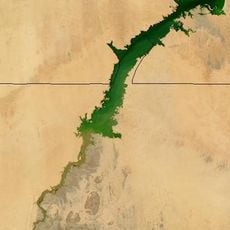
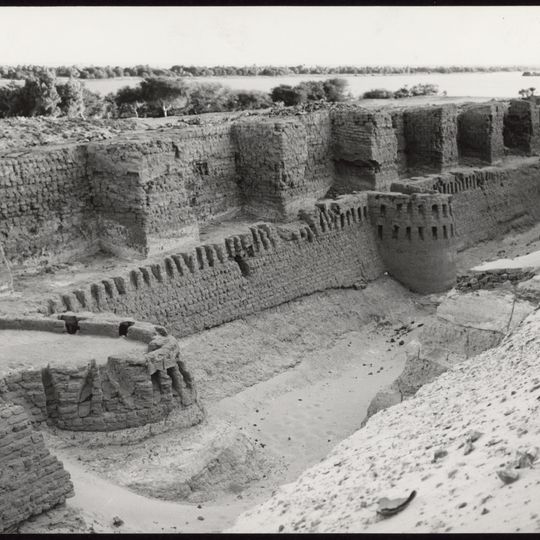
Buhen was a fortress on the west bank of the Nile below the Second Cataract, built around 1860 BCE under Senusret III. Its walls, about 5 m thick and 10 m high, were made of rough stone rather than the usual mud-brick, and enclosed a grid-planned town of some 3,500 people. Defences included a 3 m moat, drawbridges, bastions, battlements and a double row of arrow loops. The site now lies under Lake Nasser.
The fortress was established during Egypt's Middle Kingdom to control the southern border and protect trade routes. It served as a key military outpost for centuries before eventually being abandoned.
Buhen's name survives in Ancient Greek as Βοὥν (Bohón). The site was a colonial Egyptian town before it became a fortress, and its temple of Horus was embellished by Hatshepsut, Thutmose III and Amenhotep II. Reliefs from that temple were moved to the National Museum of Sudan in Khartoum before the flooding.
Buhen lies beneath the waters of Lake Nasser, submerged since the Aswan Dam was completed in 1964, so the fortress itself cannot be visited on foot. The reliefs from its temple of Horus were moved to the National Museum of Sudan in Khartoum, where they can be seen today. Plan around the reservoir rather than the original site.
The Buhen horse, a skeleton found during Emery's 1958-59 excavations, lay where it fell between two bastions of the main wall during the fortress's sacking around 1675 BC. Later rubble and New Kingdom rebuilding sealed it inside the walls, giving a firm date. It is now in the Khartoum Museum, on loan to University College London.
The community of curious travelers
AroundUs brings together thousands of curated places, local tips, and hidden gems, enriched daily by 94,155 contributors worldwide.