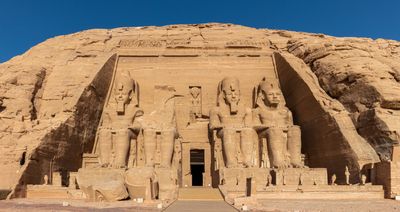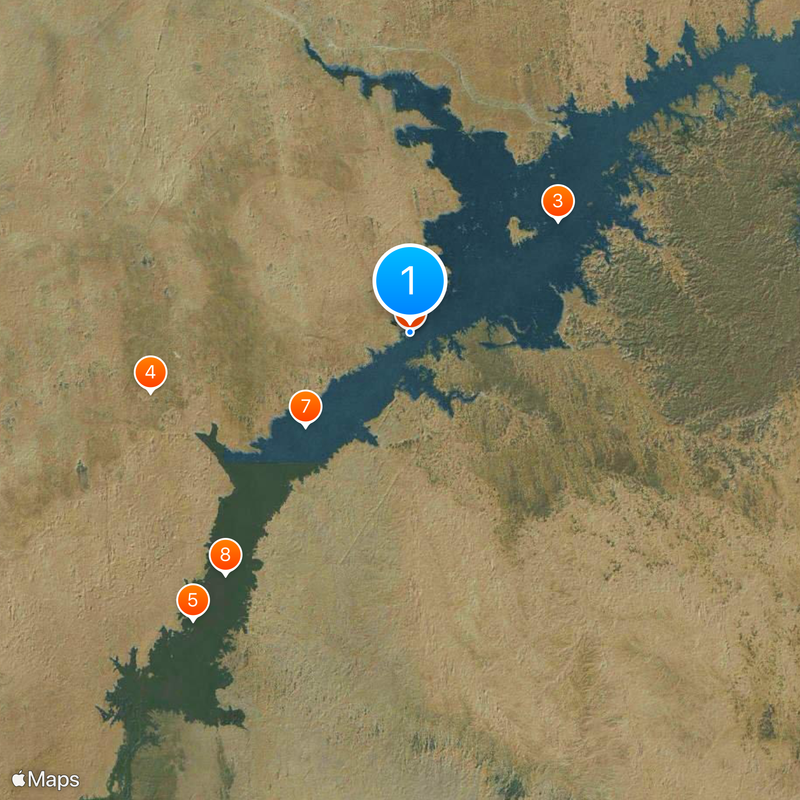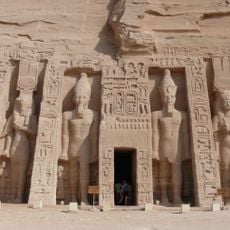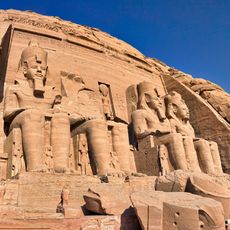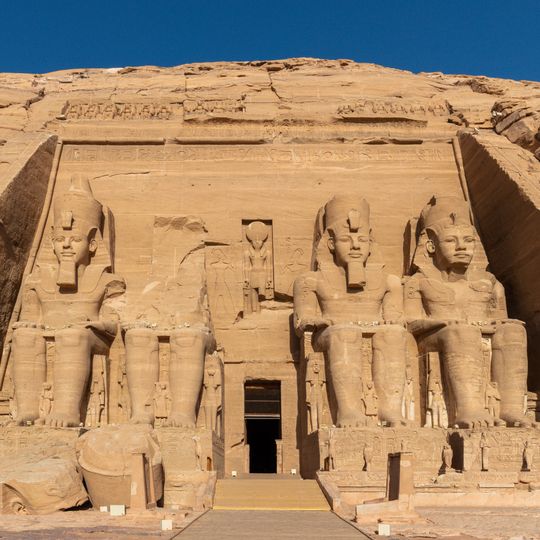
Great Temple of Abu Simbel, Egyptian temple in Abu Simbel, Egypt.
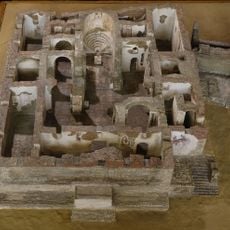
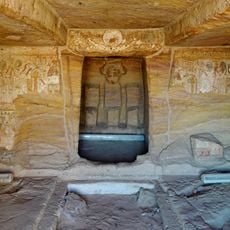
The Great Temple of Abu Simbel is a rock-cut temple carved into a sandstone cliff that extends about 56 meters deep, containing multiple consecutive chambers with massive stone columns and detailed wall carvings throughout. The interior spaces are decorated with hieroglyphic inscriptions and reliefs depicting religious and military scenes.
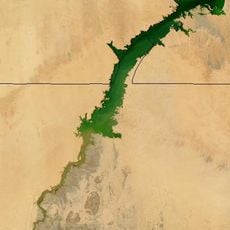
King Ramesses II ordered the construction of this monumental temple around 1264 BC to establish Egyptian dominance over the Nubian region near the southern border. The temple was later relocated in the 1960s to protect it from the rising waters of the Aswan High Dam.
The sanctuary displays four carved deity figures—Amun Ra, Ra Horakhty, Ptah, and a deified Ramesses II—that reflect the religious beliefs of ancient Egypt. These representations show which gods held the greatest importance for people of that era.
The temple can be visited daily and is best reached in early morning hours when temperatures are cooler and crowds are fewer. Bring water and sun protection with you, as the area is exposed and offers little shade.
The temple's precise architectural design allows sunlight to illuminate the inner sanctuary statues directly on two specific dates each year. This phenomenon was likely intentionally planned to connect the pharaoh's power with celestial light.
The community of curious travelers
AroundUs brings together thousands of curated places, local tips, and hidden gems, enriched daily by 92,180 contributors worldwide.