Temples of Abu Simbel, Temple complex in southern Egypt
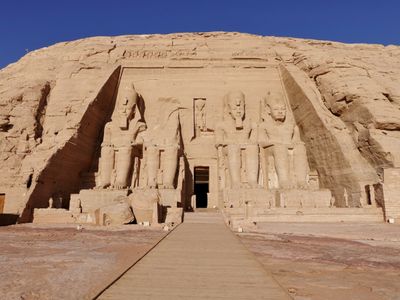
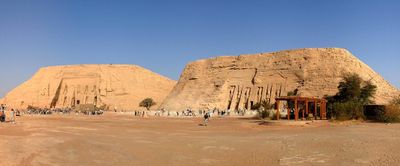
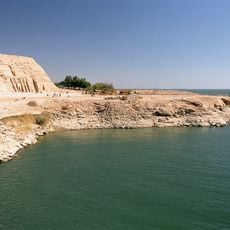
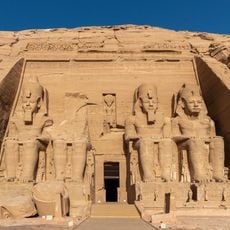
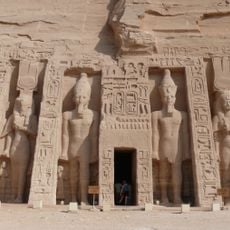
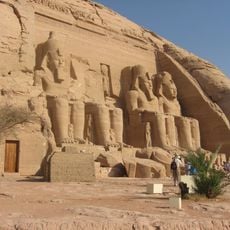
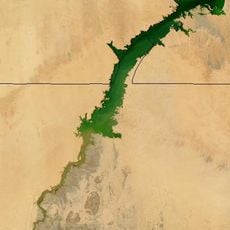
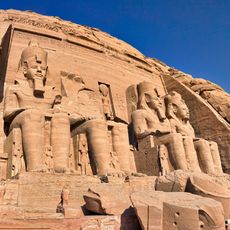
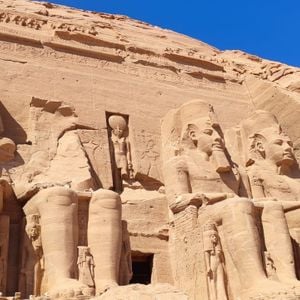
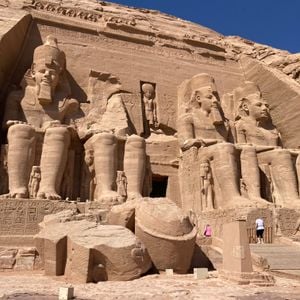
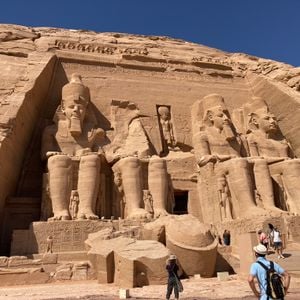
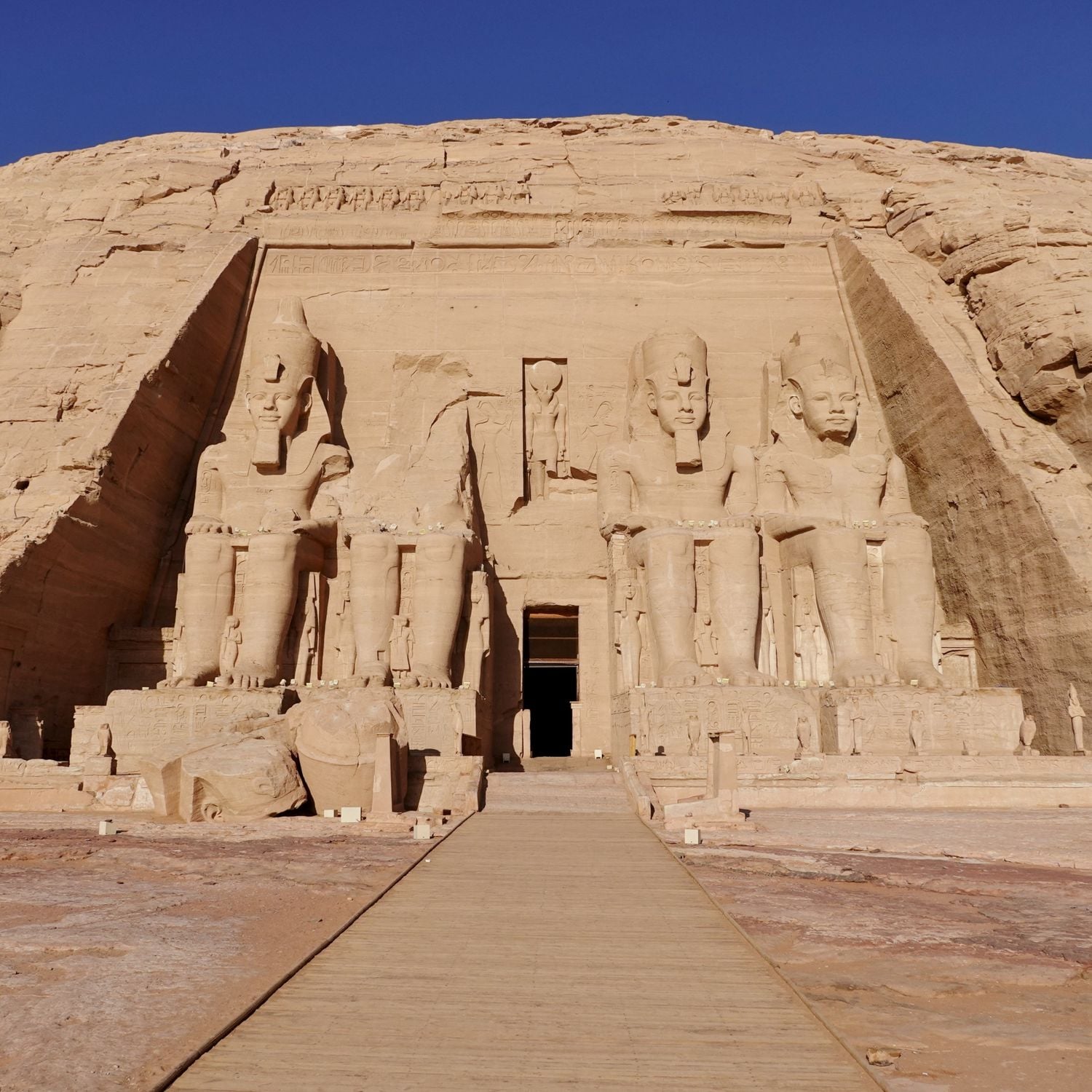
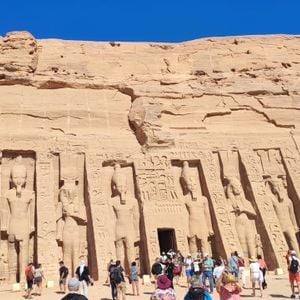
Abu Simbel is an ancient temple complex in southern Egypt consisting of two rock-cut sanctuaries that stand beside the shore of Lake Nasser. The towering facade of the main temple features four seated colossal statues of Ramesses II, each roughly 20 meters (66 feet) high, while the smaller temple displays six standing figures dedicated to Queen Nefertari and the pharaoh.
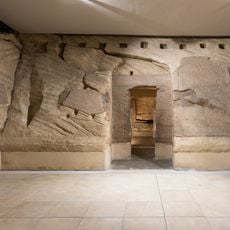
King Ramesses II ordered the construction of both temples around 1264 BC to mark the southern border of Egypt and demonstrate his power over Nubia. In the 1960s, the structures were relocated about 65 meters (213 feet) higher and 200 meters (656 feet) inland because of the Lake Nasser project to protect them from rising waters.
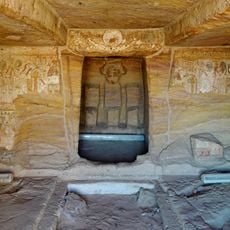
The temple walls display elaborate hieroglyphs showing military victories, religious rituals, and scenes from ancient Egyptian mythology and everyday life. Visitors can examine the finely carved reliefs that offer insight into the worldview and symbolic systems of pharaonic Egypt.
The complex is accessible every day, with morning hours offering cooler temperatures and softer light for photography. The site is well developed, but the grounds require some walking over uneven paths and steps in places, so sturdy footwear is recommended.
The main temple was designed so that sunlight illuminates the statues in the inner sanctuary only on February 22 and October 22, dates of astronomical importance. After the relocation, the phenomenon shifted by one day, now occurring on February 21 and October 21, revealing how precise the original alignment was.
Location: Aswan Governorate
Inception: 1274 BCE
Part of: Nubian Monuments from Abu Simbel to Philae
Address: Abu Simbel, Aswan Governorate 1211501, Egypt
Opening Hours: Monday-Sunday 05:00-18:00
Website: https://egymonuments.gov.eg/ar/archaeological-sites/abu-simbel
GPS coordinates: 22.33694,31.62556
Latest update: December 15, 2025 01:42
This collection presents sculptures and statues from many different periods and cultures across the world. From the Great Sphinx of Giza to the Terracotta Army in Xi'an, these works show how various civilizations carved and shaped stone and other materials to depict their gods, rulers, and stories. ...
These archaeological sites document the development of human civilizations across thousands of years. They range from the earliest known temple structures like Göbekli Tepe in Turkey, dated to around 9500 BCE, to the preserved remains of Pompeii, frozen in time by a volcanic eruption in 79 CE. Each...
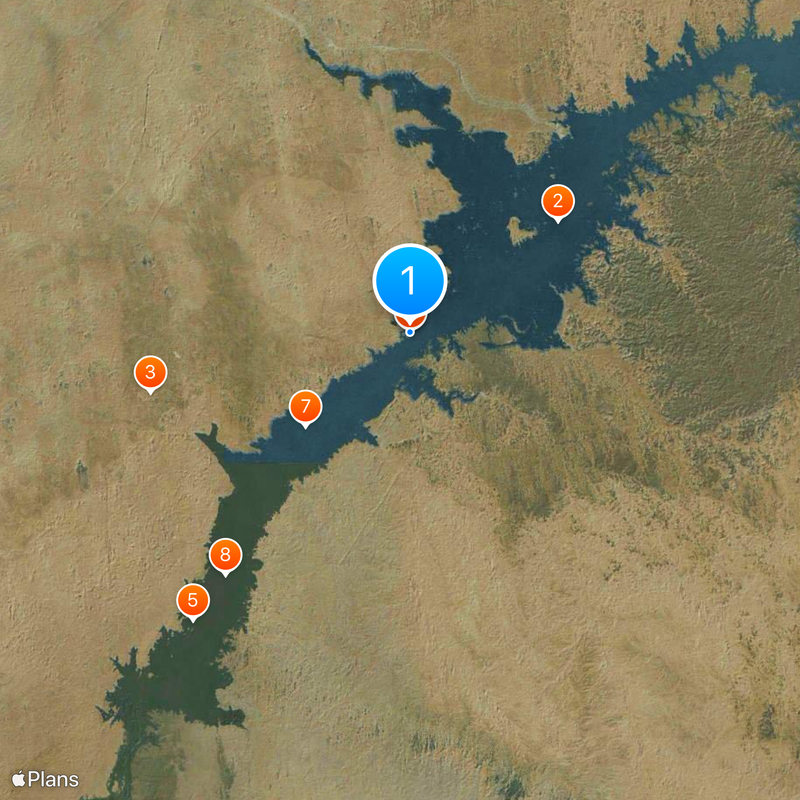
Lake Nasser
30.2 km
Nabta Playa
43.2 km
Great Temple of Abu Simbel
8 m
Buhen
58.6 km
Faras
22.9 km
Cemetery 117
49.6 km
Small Temple of Abu Simbel
147 m
Nubian Monuments from Abu Simbel to Philae
84 m
Temple of Ellesyia
47.1 km
Faras Cathedral
21.8 km
Qustul
11.6 km
Aniba
58.5 km
Lake Nubia
52.6 km
Sayala
41.9 km
Cathédrale de Qasr Ibrim
51.3 km
Derr
5.8 km
Ballana
9.9 km
Temple of Amun Ra
2.7 km
Tamit
10.4 km
Arminna
18.5 km
Nefertari's Temple of Hathor
142 m
ط
66.8 km
ط
65 km
ط
66.7 km
ش
66.9 km
حرامي
65.2 km
Great Temple
31 m
Memorial
1.4 kmReal people, real opinions — but not verified.
Visited this place? Tap the stars to rate it and share your experience / photos with the community! Try now! You can cancel it anytime.
Discover hidden gems everywhere you go!
From secret cafés to breathtaking viewpoints, skip the crowded tourist spots and find places that match your style. Our app makes it easy with voice search, smart filtering, route optimization, and insider tips from travelers worldwide. Download now for the complete mobile experience.
A unique approach to discovering new places❞
— Le Figaro
All the places worth exploring❞
— France Info
A tailor-made excursion in just a few clicks❞
— 20 Minutes