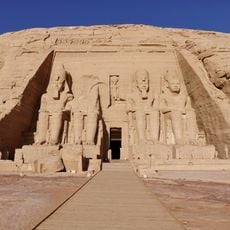
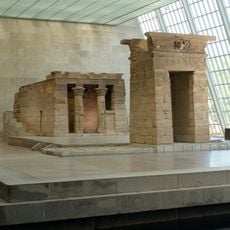
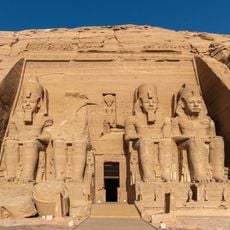
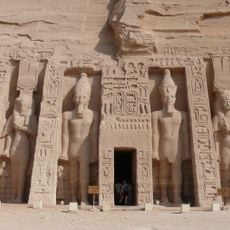
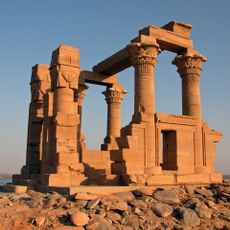
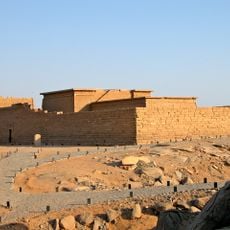
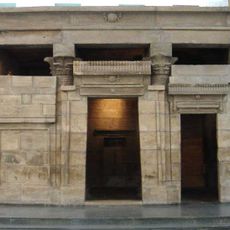
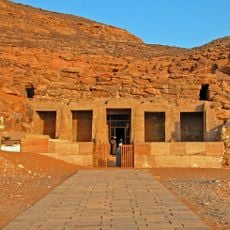
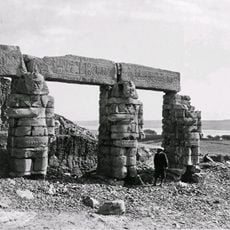
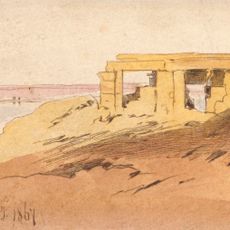
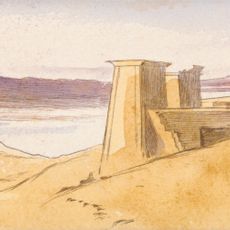
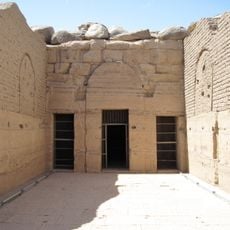
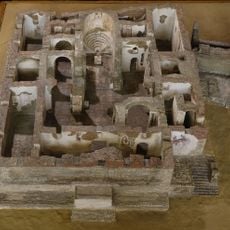
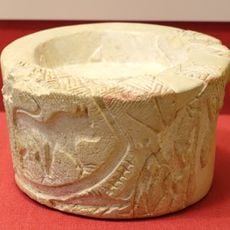
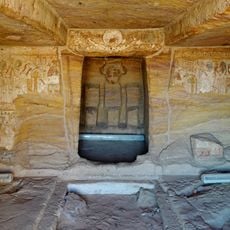
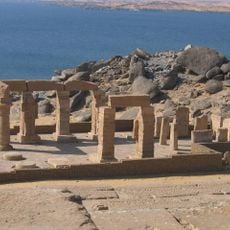
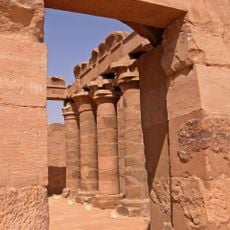
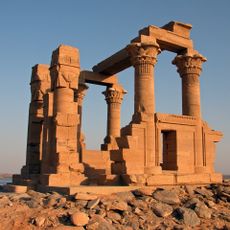
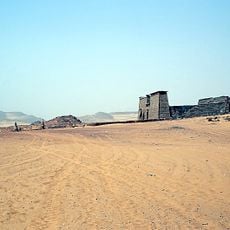
Temple of Dakka, Egyptian temple in Wadi El Seboua, Egypt.
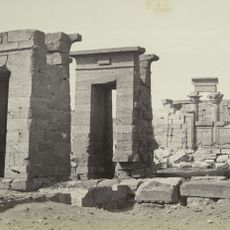
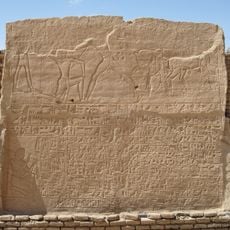
The Temple of Dakka is a Greco-Roman sanctuary dedicated to Thoth, begun as a one-room chapel in the 3rd century BC by the Meroitic king Arqamani. Its 12-metre pylon, decorated in high relief and covered with Greek, Demotic and Meroitic graffiti, now stands apart from the rest of the building because the enclosure walls of the open court are missing.
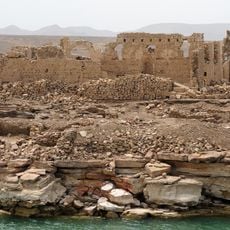
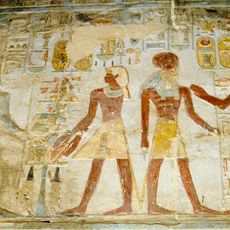
Begun in the 3rd century BC as a one-room shrine by the Meroitic king Arqamani, who left his cartouches alongside those of Ptolemy IV. Ptolemy IX added a pronaos with two rows of probably three columns, and Augustus and Tiberius later added a second sanctuary and a granite naos. The Romans turned the temple into a fortress with a 270 by 444 metre wall, and in 1908–1909 it collapsed and was rebuilt by Alessandro Barsanti.
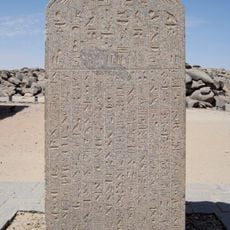
The pylon towers carry numerous graffiti left by ancient visitors, mostly in Greek but some in Demotic and Meroitic script. The Greek name Pselchis may derive from the local cult of the scorpion goddess Selket. The temple was dedicated chiefly to Thoth of Pnubs, and also to Amun, Hapy, Isis, Osiris, Selket and Arensnufis.
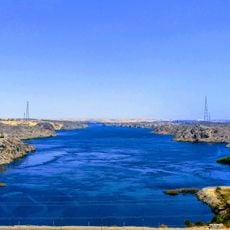
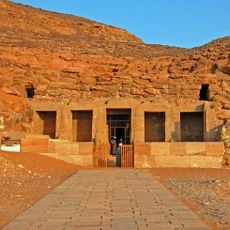
The temple now stands at New Wadi es-Sebua, about 56 km south of Aswan, moved here between 1962 and 1968 during the Aswan Dam works. Its pylon is separated from the rest of the building because the open court's enclosure walls are missing, so expect to view the parts as separate structures.
When the temple was dismantled between 1962 and 1968, reused blocks from a Middle Kingdom fortress at Quban and from Thutmose III, Seti I and Merneptah came to light. The pylon now stands apart from the rest of the temple because the open court's enclosure walls were not rebuilt.
The community of curious travelers
AroundUs brings together thousands of curated places, local tips, and hidden gems, enriched daily by 94,718 contributors worldwide.