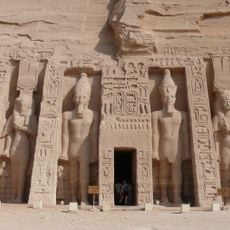
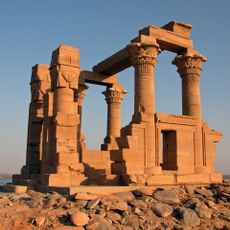
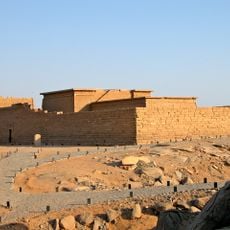
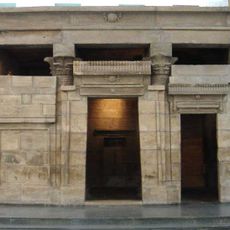
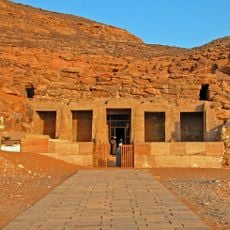
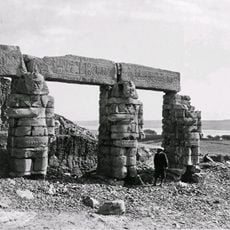
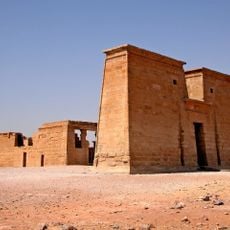
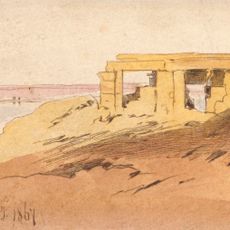
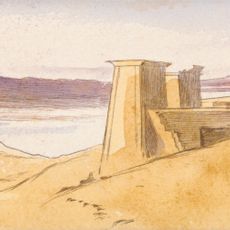
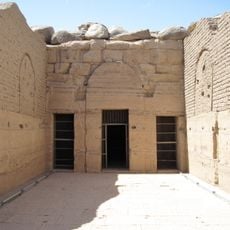
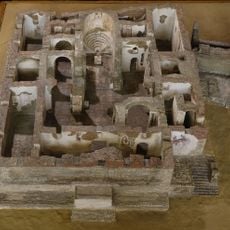
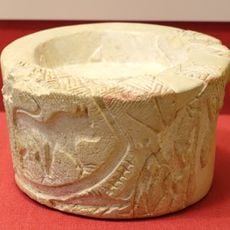
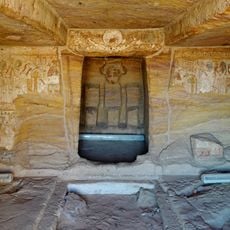
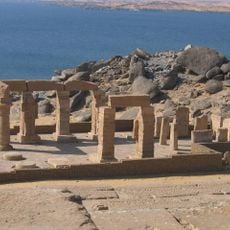
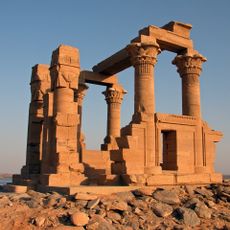
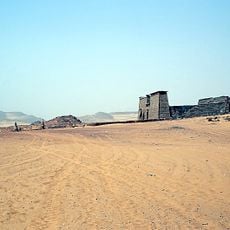
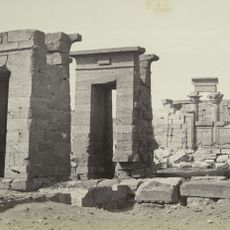
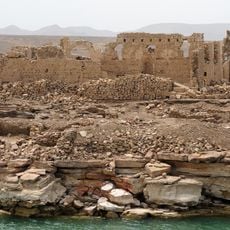
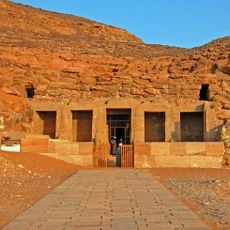
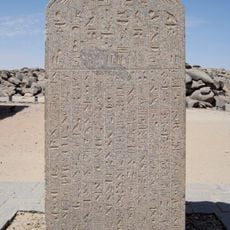
Temple of Maharraqa, Archaeological site in Lower Nubia, Egypt.
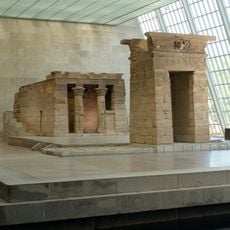
The Temple of Maharraqa is an archaeological structure in Lower Nubia, Egypt, with a courtyard measuring about 13.56 meters wide and 15.69 meters long, surrounded by columns on three sides. A spiral staircase inside leads upward and forms the core of the building.
The temple was never finished or inscribed, so it cannot be securely tied to any emperor's reign; because temple building in Nubia declined after Augustus, it may date to his rule. After the Kushite raid of 23 BCE, the Roman prefect Petronius defeated the Meroitic army and a permanent frontier was set at Maharraqa, the southern limit of Roman Egypt. In the 6th century, after Nobatia's Christian conversion, the temple became a church.
The temple was dedicated to Isis and Serapis, and after Nobatia's conversion to Christianity in the 6th century it became a church. In the mid-19th century the traveller Edward William Lane still saw wall paintings of Christian saints on the north wall, showing the fall of man arranged in one line like a procession of men and angels, along with many Christian inscriptions.
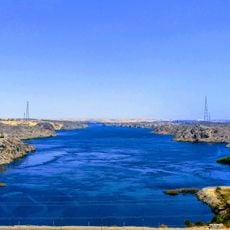
The temple was relocated in 1961 from its original site about 4 kilometers away to protect it from flooding caused by the Aswan Dam. Visitors should know that the structure was restored in its new location at New Wadi Sebua and is accessible for viewing.
The structure has an unusual spiral staircase leading to the roof, making it the only known Egyptian temple with this architectural feature. This staircase likely provided access to areas that other temples in the region lacked.
The community of curious travelers
AroundUs brings together thousands of curated places, local tips, and hidden gems, enriched daily by 94,220 contributors worldwide.