Växjö Cathedral, Lutheran cathedral in Växjö, Sweden
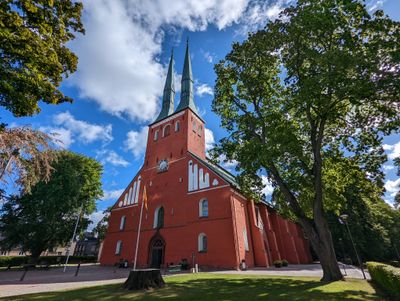
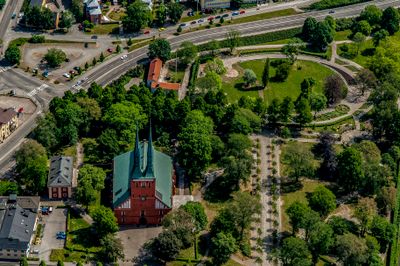
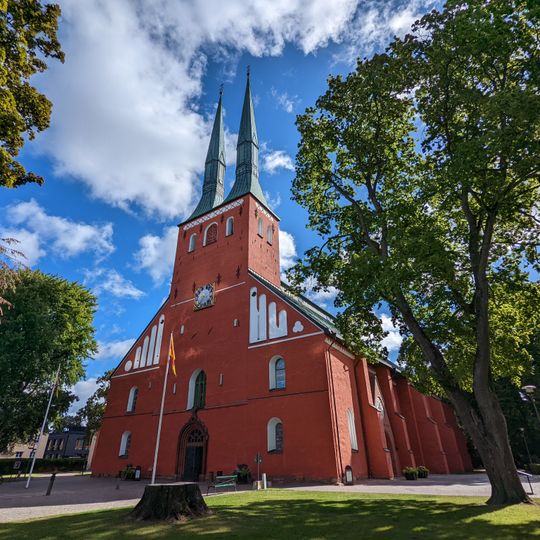
Växjö Cathedral is a hall church with a western tower and a square choir, built of red brick. The tower carries two slender green copper spires, and the facade has a pointed-arched doorway, a round clock face, and tall windows with white tracery. The building stands near Stortorget and Växjösjön.
A wooden church stood here in the 11th century; the first stone church was built in the 1160s, when the Diocese of Växjö was formed. The tower was damaged in 1276–77 during fighting between King Valdemar and his brother Magnus, and Valdemar later paid for its repair. In the 15th century the church became a hall church with uniform rib vaults, finished in 1509 by a mason from Linköping. After a lightning strike on 29 May 1740, it was rebuilt in a Neoclassical style.
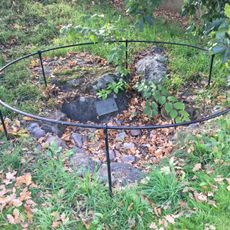
The cathedral is dedicated to Saint Sigfrid and John the Baptist, and Sigfrid's grave is still marked in the middle of the church. His reliquary was kept here until the 17th century, when it was destroyed on episcopal orders. The medieval altarpiece from Tolg Church was borrowed while the glass altar piece was being made.
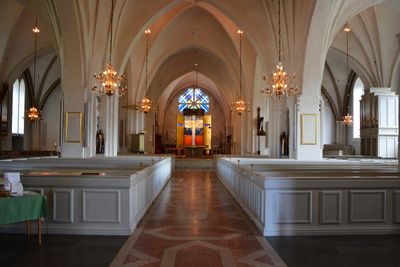
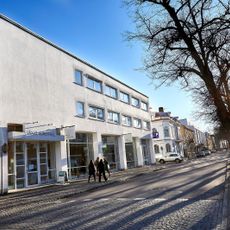
The cathedral stands near Stortorget and Växjösjön in central Växjö, with the main entrance through the pointed-arch doorway at the base of the west tower. The 1958–1960 restoration replaced fixed pews with loose chairs, so seating can be rearranged. The church is a working parish and diocesan cathedral, so visits may coincide with services.
The altar piece is not a screen but Bertil Vallien's glass altarpiece Fiat Lux ("From Darkness to Light"), consecrated in 2002. Until then the medieval altarpiece of Tolg Church stood here on loan. Behind the new altarpiece a small chapel has been arranged.
The community of curious travelers
AroundUs brings together thousands of curated places, local tips, and hidden gems, enriched daily by 93,582 contributors worldwide.