Sturefors Castle, Castle in Östergötland, Sweden.
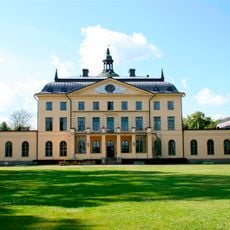
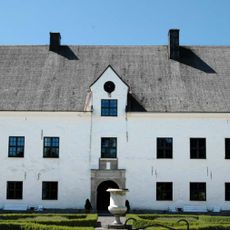
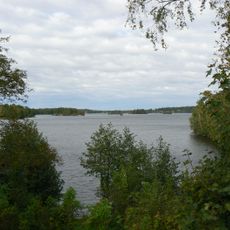
Sturefors Castle is a three-storey stone main building with a high säteri roof and a bell tower, flanked by single-storey wings that are firmly joined to it. It stands by lake Ärlången in Östergötland, a few kilometres from the Sturefors locality. The design is by Nicodemus Tessin the Younger and was built from 1704 for Carl Piper; only parts of the north wing survive of the earlier castle.
Ture Nilsson Bielke, a riksråd executed at the Linköping bloodbath in 1600, is named as the first owner and builder of the original castle in the 16th century; only parts of its north wing remain. The present three-storey stone main building, with a high säteritak roof, clock tower and attached single-storey wings, was designed by Nicodemus Tessin the Younger and built in 1704 for Carl Piper. After Christina Piper's death in 1752 it passed to her grandson Nils Adam Bielke and has stayed with the Bielke family.
The two-storey great hall has a ceiling painted by Johan Pasch after designs by Jean Eric Rehn, with a plafond by Tessin the Younger. The name Sturefors comes from Margareta Sture, wife of councillor Ture Nilsson Bielke, who was executed at the Linköping bloodbath in 1600. Count Nils Adam Bielke laid out the English park and built a memorial temple to his grandmother Christina Piper.
The property is privately owned by the Bielke family and is not open for casual visits without prior arrangement. Those interested in viewing the castle should contact the owners in advance to request permission to visit.
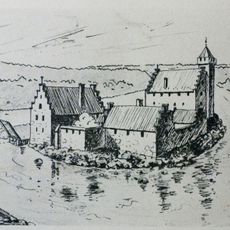
The estate's name comes from Margareta Sture, wife of council lord Ture Nilsson Bielke, who was executed at the Linköping Bloodbath in 1600; the earlier spelling was Thurefors. The first castle is pictured in Erik Dahlbergh's Suecia Antiqua et Hodierna, and only parts of its north wing survive.
The community of curious travelers
AroundUs brings together thousands of curated places, local tips, and hidden gems, enriched daily by 93,649 contributors worldwide.