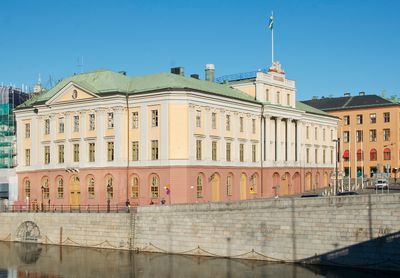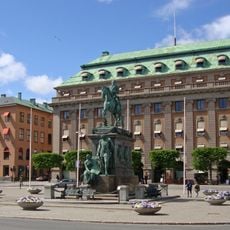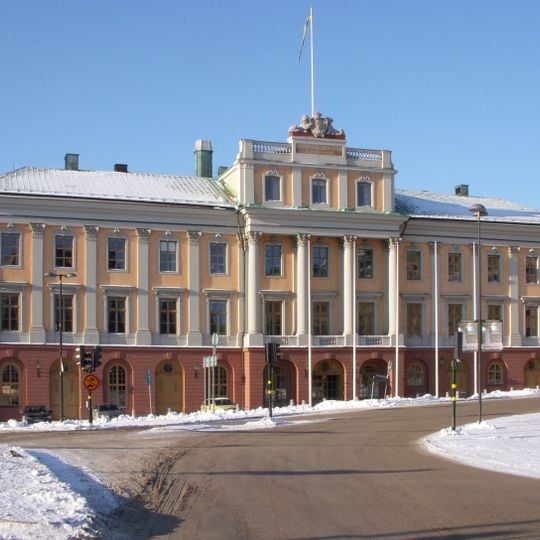
Arvfurstens palats, Gustavian palace at Gustav Adolfs torg, Stockholm, Sweden
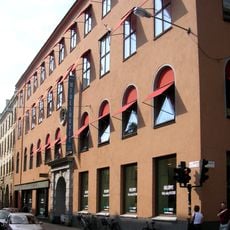
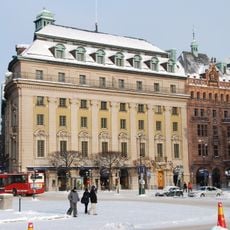
Arvfurstens palats is a palace built in the late 1700s in central Stockholm at Gustav Adolfs torg. The structure displays gustavian architectural features with carefully proportioned facades, classical detailing, and a design that combines elements of both baroque and neoclassical styles.
Field Marshal Lennart Torstensson built a German-Dutch Renaissance palace on the site in 1646–1651; one room from it survives as the Chief of Protocol's office. Princess Sophia Albertina bought the property in 1783 and had Erik Palmstedt design the present palace, built 1783–1794 as a pendant to the opera house across Gustav Adolfs torg. The state acquired it in 1902, and the Ministry for Foreign Affairs moved in in 1906. Ivar Tengbom restored it in 1948–1952.
The name means "Palace of the Hereditary Prince", from the heir-presumptive role given it by Sophia Albertina's 1829 will. The Audience Room, or Red Salon, has a princess crown and the Swedish coat of arms carved over its four doors by Jean Baptiste Masreliez, with woodwork by Gottlieb Iwersson. The dining room table is set with the ministry's Swedish Grace porcelain from Rörstrand, showing the Three Crowns.
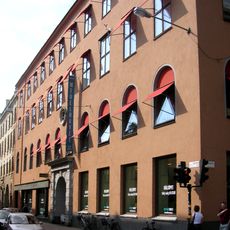
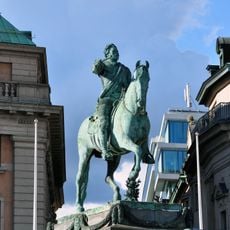
The palace sits at a prominent location downtown near the Royal Swedish Opera and other government buildings that make up the administrative quarter. Visitors can view the exterior from Gustav Adolfs torg and explore the surrounding architecture, though the interior is not open for tourist visits.
The building gained protected monument status in 1935, securing official recognition of its architectural value. This designation ensured that its original architectural details and materials would be preserved for future generations.
The community of curious travelers
AroundUs brings together thousands of curated places, local tips, and hidden gems, enriched daily by 93,501 contributors worldwide.