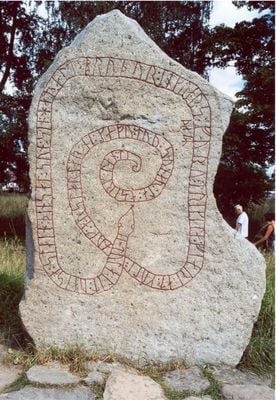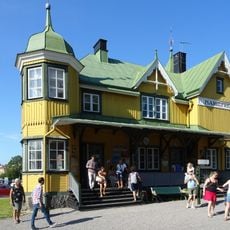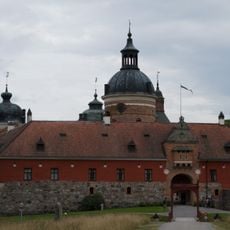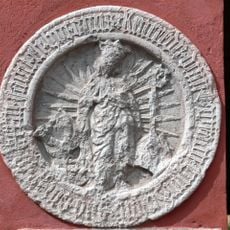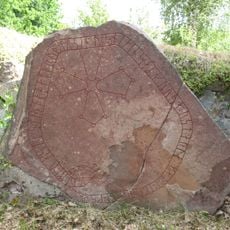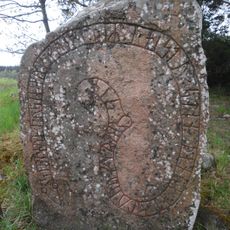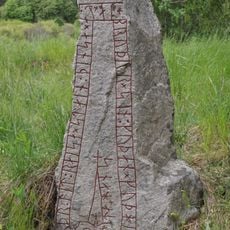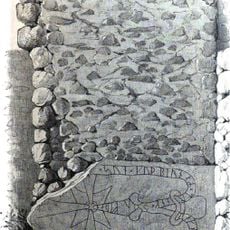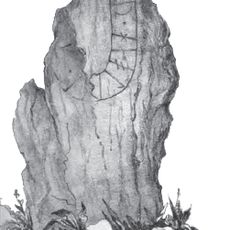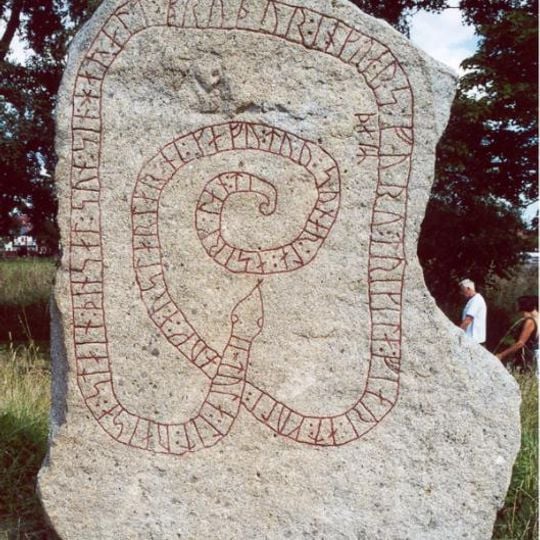
Gripsholm stone, 11th century runic inscription at Gripsholm Castle, Sweden.
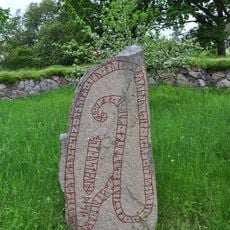
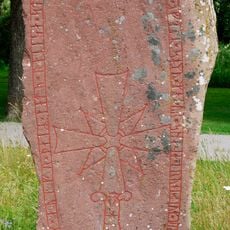
Gripsholm stone is a granite block from the 11th century displaying two intertwined serpents surrounding a central cross with runic text carved into their bodies. The inscription records a journey to Serkland, the medieval name for eastern territories, and mentions the names of those who undertook this expedition.
The stone was discovered in 1730 during excavations at Gripsholm Castle and relocated to its current position near the entrance in 1926. The inscription belongs to an era when Scandinavian travelers regularly set up runes to commemorate major expeditions.
The inscription remembers brothers who traveled east together seeking fortune, showing how people honored family members through such stones. It reflects how important these distant journeys were to the society of that time.
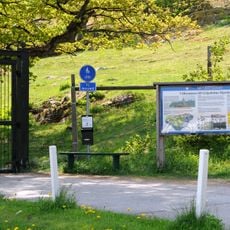
The stone sits beside the castle drive and can be viewed by visitors at any time, even when the castle is closed. Daylight is best for photographing the carved runes clearly.
The stone mentions feeding eagles in the east, a hint of battles fought during expeditions led by Ingvar the Far-Travelled. This is a rare description of violence in runic texts and offers insight into the kind of adventures these travelers pursued.
The community of curious travelers
AroundUs brings together thousands of curated places, local tips, and hidden gems, enriched daily by 91,631 contributors worldwide.