Haga dolmen, Neolithic dolmen in Orust Municipality, Sweden
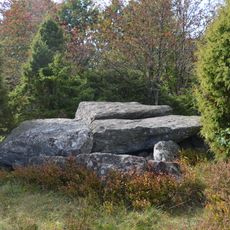
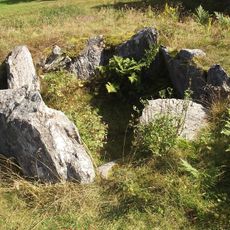
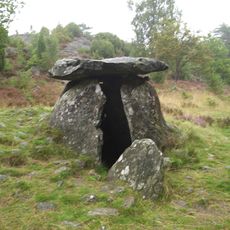
The Haga dolmen is a Neolithic stone grave made of four upright stones supporting a large roof stone, with a threshold and step at the entrance. The interior chamber is surprisingly spacious compared to the modest exterior appearance.
The dolmen was probably built around 3400 BCE, during the early Neolithic, and is among the largest of its kind on Sweden's west coast. It was excavated in 1915 by Vilhelm Ekman and Arvid Enqvist. The finds, including an amber ring bead, a shaft-hole axe, a slate pendant, flint scrapers, a flint dagger and two blades, mostly date to the late Neolithic, showing the chamber was reused for burials long after it was built. The objects are kept at the Swedish History Museum.
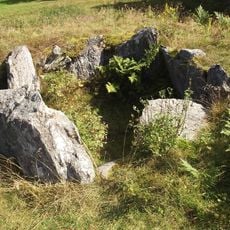
The name Hagadösen is used for the upper of two dolmens here, both excavated in 1915; the lower one lies close by. The chamber held a carefully laid stone floor with a round pit covered by a flat slab, and below it a second pit filled with dark, charcoal-like soil. The finds, including an amber ring bead, are kept at the Swedish History Museum in Stockholm.
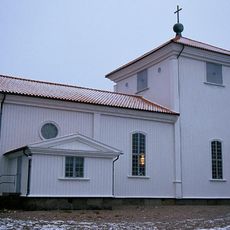
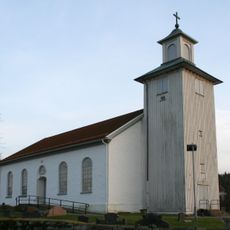
The dolmen sits about one kilometer east of Tegneby Church and is best visited during daylight hours. The site is freely accessible and can be visited independently by anyone interested in ancient monuments.
The chamber measures 2.1 by 1.7 metres inside and stands 1.7 metres high, while the whole monument rises only about 1.3 metres above the ground. The roof slab alone is 3 by 2.2 metres and 0.4 metres thick. A second dolmen lies close by, and both were excavated in 1915.
The community of curious travelers
AroundUs brings together thousands of curated places, local tips, and hidden gems, enriched daily by 93,470 contributors worldwide.