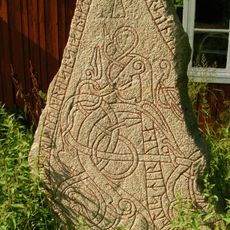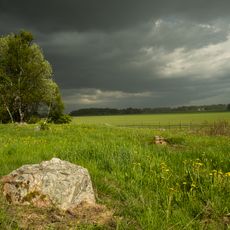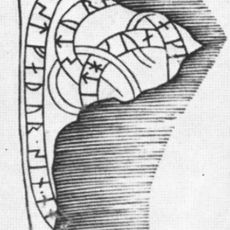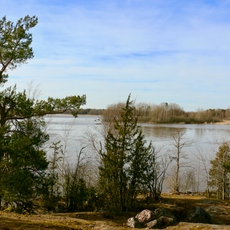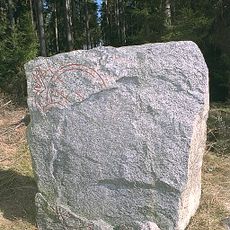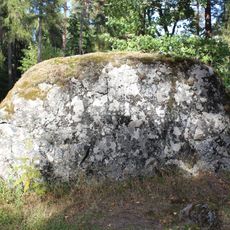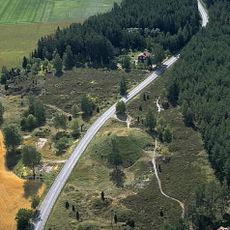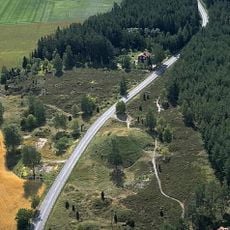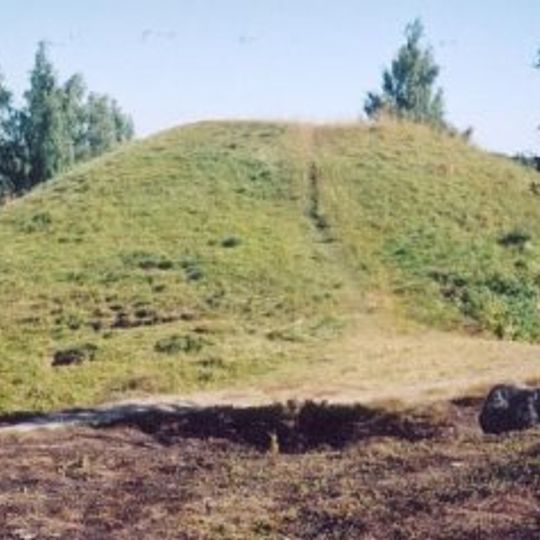
Ottar's mound, Archaeological burial mound in Husby, Sweden.
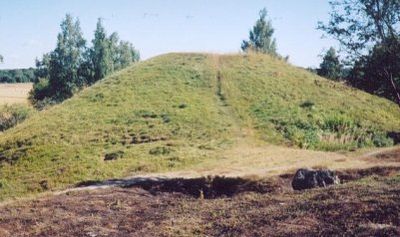
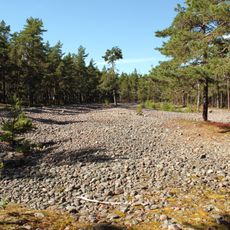
Ottar's mound is a circular burial mound at Vendel in Tierp Municipality, Uppland, 37 metres in diameter and 6 metres high, which classifies it as a royal mound. It sits on the slope of a ridge running through Vendel parish, visible from the north and east, and a gravel pit at its foot deepens the impression of height. Its flattened top is about 10 metres wide.
The mound was excavated in 1914 and 1916. At its centre lay a wooden vessel bound with bronze bands and traces of gilding, holding the cremated bones of a man and a woman along with sacrificed animals. No weapons were found among the grave goods, which include a pierced gold solidus minted no later than 477, a comb with case, and gaming pieces. Sune Lindqvist dated the burial to the early 6th century, but later research places it about 100 years later, at the start of the Vendel Period.
The name Ottarshögen was recorded locally during folklore collection in the 1660s and 1670s, and the mound is linked in tradition to King Ottar Vendelkråka. In Beowulf he appears as Otheres, and Snorri Sturluson tells that he was killed by two Danish jarls in Limfjorden and given the nickname Vendelkråka.
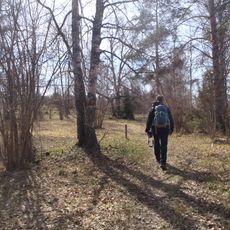
The mound stands beside a road in Tierp municipality, making it easy to reach. Wear comfortable shoes if you plan to walk across or climb the mound itself.
Snorri Sturluson wrote in the 1200s that Ottar was killed by two Danish jarls in Limfjorden, Denmark, and left on a mound for animals and birds; a wooden raven was sent to Uppland and he was nicknamed Vendelkråka. The Vendel mound was recorded as "Ottars högen" during folklore collection in the 1660s–1670s.
The community of curious travelers
AroundUs brings together thousands of curated places, local tips, and hidden gems, enriched daily by 93,361 contributors worldwide.