Örbyhus Castle, Medieval castle in Tierp Municipality, Sweden
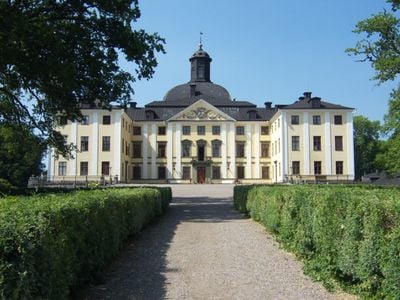
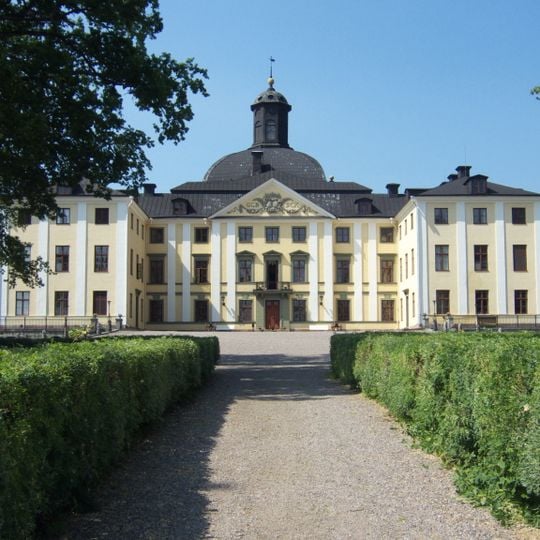
Örbyhus Castle is a three-storey, pale-yellow plastered building with white pilasters and dark grey roofs, its central block crowned by a rounded dome with a lantern and finial. The entrance has a decorated pediment and columns; two lower wings with rows of rectangular windows flank it. The medieval keep forms the core, and a gravel path between low hedges leads to the door.
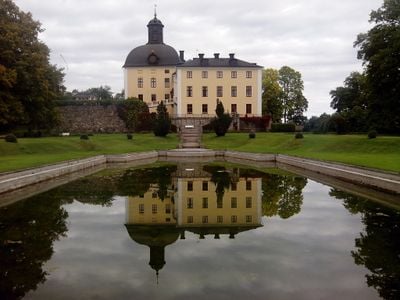
The estate is first mentioned in 1352 and was bought in 1451 by Johan Kristensson Vasa, who built the stone keep that still forms the core. Gustav Vasa acquired it in 1538 and strengthened it with walls and casemates. From 1574 to 1577 Johan III held Erik XIV prisoner here. In the 1660s Gustaf Carlsson Banér had it rebuilt as a Baroque palace; the architect is possibly Erik Dahlbergh. Carl Christoffer Gjörwell led a reconstruction in 1825–32.
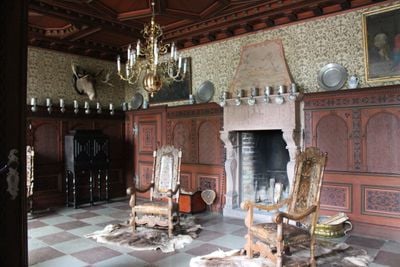
The name Örbyhus comes from the old estate name Örby, recorded in 1352. The Banér family, owners from 1641 to 1729, left their mark: the east facade still carries the coats of arms of Gustaf Carlsson Banér and his wife Sofia Christina Cruus, with the letters GCB and SCK. Inside, the Vasa-style hall and the Vasa rooms in the tower display paintings by masters such as Anthony van Dyck and Thomas Gainsborough.
The castle lies about 12 km east of the E4, roughly halfway between Uppsala and Gävle. The medieval keep, the partly preserved wall with cannon openings and the park with Gjörwell's 1820s orangery are best seen on foot; the interior is shown on guided tours. Allow time to walk the grounds.
King Eric XIV of Sweden was imprisoned here and died in 1577 under mysterious circumstances, connecting the castle to a dramatic chapter of royal Swedish history. This episode marks the site as witness to power struggles and personal tragedies of the Renaissance period.
The community of curious travelers
AroundUs brings together thousands of curated places, local tips, and hidden gems, enriched daily by 93,326 contributors worldwide.