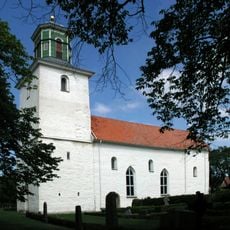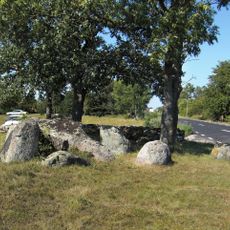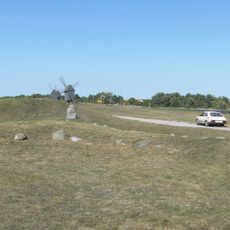
Southern Öland cultural landscape, Cultural landscape in Mörbylånga Municipality, Sweden
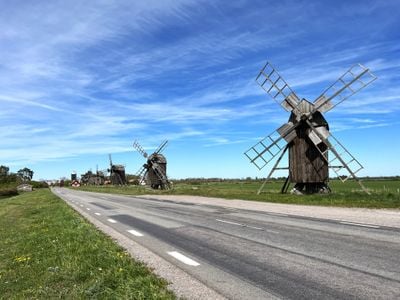
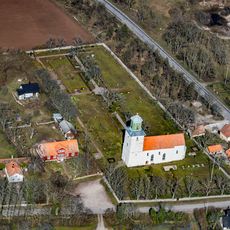
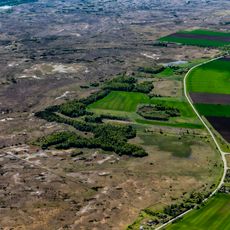
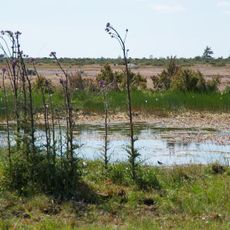
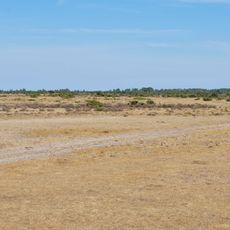
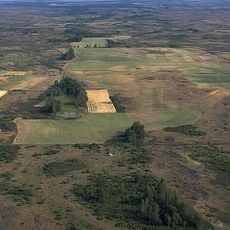
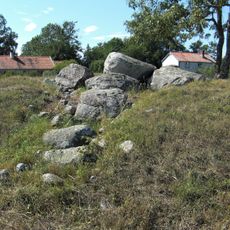
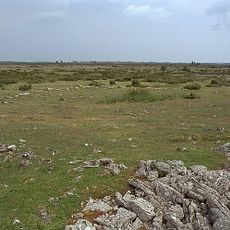
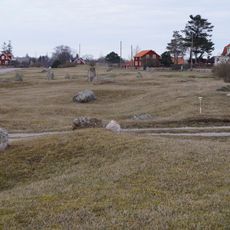
The agricultural landscape of southern Öland covers more than 56,000 hectares on a limestone plateau. At its centre lies Stora alvaret, a dagger-shaped plain almost 40 km long and about 10 km wide at its north end, covering roughly a quarter of the island. The land is divided into medieval-style linear villages, cultivated fields and grazing grounds.
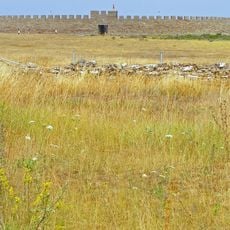
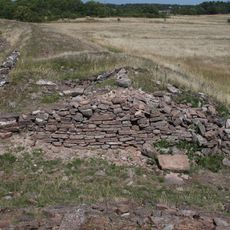
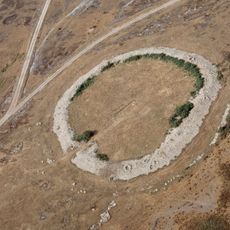
The limestone plateau of Stora alvaret formed about 500 million years ago from a sea to the south and later drifted north, leaving fossils such as Orthoceras. The Palaeolithic settlement at Alby on the east coast has yielded traces of wooden huts around a small prehistoric lake, along with spears and harpoons made of antler and flint. Later ringforts such as Eketorp were built, and Viking settlements appeared around 800–1000. UNESCO listed the agricultural landscape as a World Heritage Site in 2000.
The landscape reflects traditional farming practices where families have divided land into cultivated fields near homes and distant pastures, a pattern still visible in how the terrain is organized. Walking through the region, visitors notice how livestock continues to graze on the exposed limestone areas just as it has for centuries.
A bridge from Kalmar provides access to the site, and marked trails guide visitors through the landscape at a leisurely pace. The flat terrain makes walking easy, though visitors should prepare for changing weather and wear appropriate footwear for exploring the exposed ground.
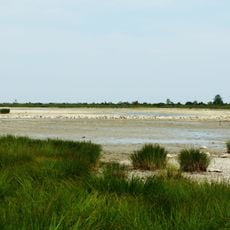
The Stora Alvaret is an unusual limestone plain with minimal soil cover that supports only specialized plants and traditional grazing animals adapted to harsh conditions. This sparse environment has preserved a singular plant community that exists in few other places on the continent.
The community of curious travelers
AroundUs brings together thousands of curated places, local tips, and hidden gems, enriched daily by 94,457 contributors worldwide.