Hovdala Castle, Medieval castle in Hässleholm Municipality, Sweden
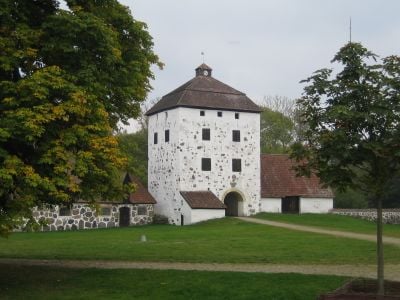
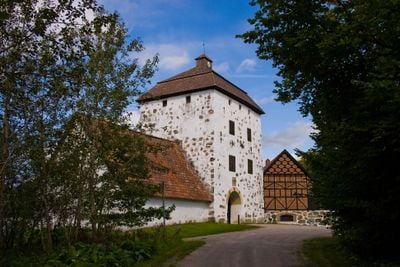
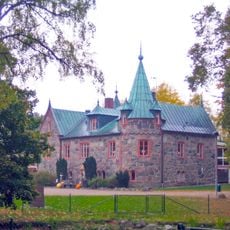
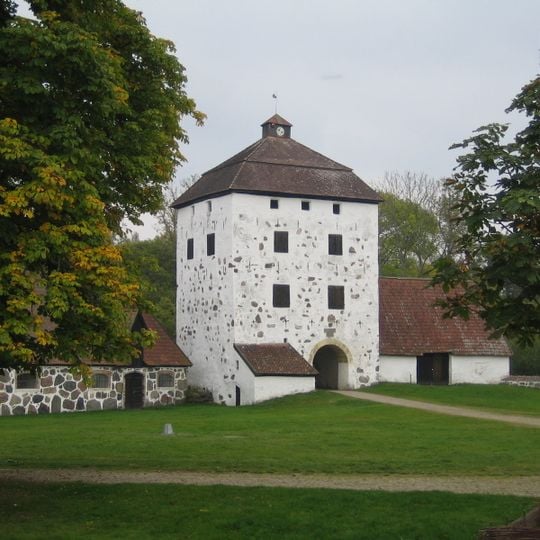
Hovdala Castle is a castle complex in Hässleholm Municipality, Scania, southern Sweden, with three buildings set in a U-shape around a courtyard. The oldest, to the north, is from the early 16th century and bears the date 1511 on its façade; a defensive tower south of the complex was erected in 1600. The tower house has a steep shingled roof topped by a small clock cupola, and its rough white-rendered walls are studded with grey boulders.
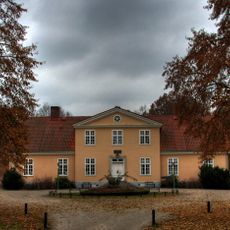
Hovdala is first mentioned in 1130, and the Laxmand family built the oldest surviving structures at the end of the 15th century. The north wing carries the date 1511 on its facade. Under Sigvard Grubbe the castle withstood two Swedish sieges during the Kalmar War, and on 7 August 1678 pro-Danish guerrillas burned it. The Ehrenborg family held it until 1944, when the state expropriated the estate.
The name Hovdala appears as 'Howdale' in a mid-17th-century document. The restored library and main rooms show the household of the lower aristocracy rather than the highest nobility. The castle has been open to the public since 1998, and in summer guided tours and a restaurant are available.
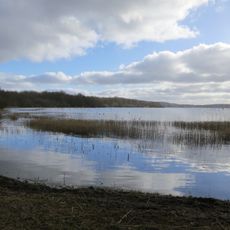
The castle is south of Hässleholm by Lake Finjasjön, with the main representative rooms shown on guided tours. A kitchen garden and an orangery from 1763 lie north of the buildings. The surrounding land became a nature reserve in 2022, with trails through forest and along the Hovdalaån river.
The 1993 renovation earned the Europa Nostra award in 2004 for what the jury called sensitive and intelligent restoration work. The castle stayed in the Ehrenborg family until 1944, when the Swedish state expropriated it; the last owners continued living there until 1981.
The community of curious travelers
AroundUs brings together thousands of curated places, local tips, and hidden gems, enriched daily by 93,444 contributors worldwide.