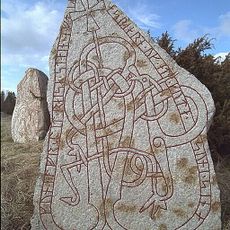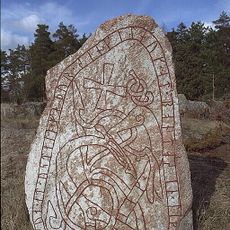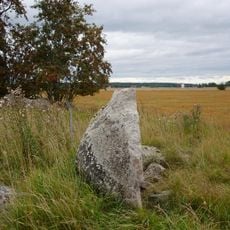
Valsgärde, Archaeological burial ground in Uppsala Municipality, Sweden.
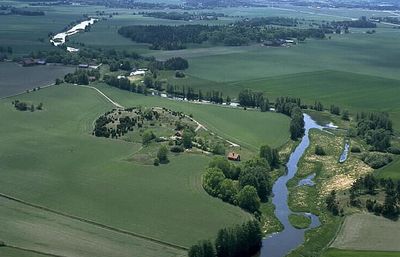
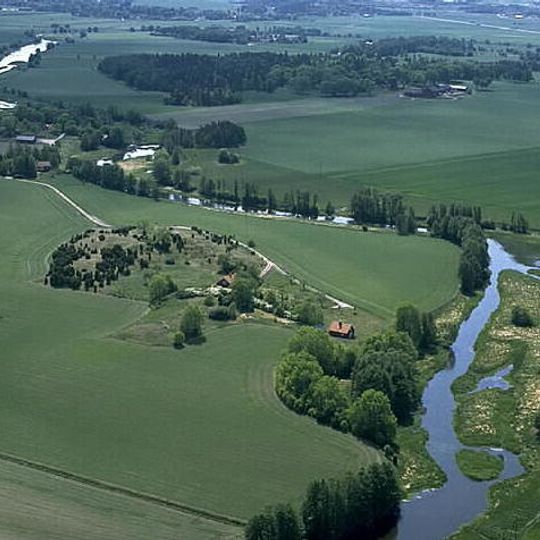
Valsgärde is a grave field near Uppsala containing roughly a hundred burials built in different styles across several centuries. The landscape displays visible mounds and sunken areas where boat graves, cremation sites, and chamber tombs were once constructed.
The site was used as a burial ground already in the centuries around the birth of Christ. The first of the fifteen boat graves was laid out in the late 6th or early 7th century, and the cemetery remained in use into the 11th century. Uppsala University excavated the field annually from 1928 to the mid-1950s, uncovering about 80 graves.
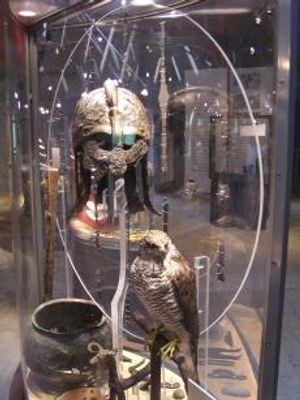
The name Valsgärde is first recorded in 1541 as 'Valdzgierde', though the present farm has no link to the site's earlier standing. The fifteen boat graves held men laid out in clinker-built vessels with shields, swords and feasting gear, while a woman cremated in a boat in the first half of the 10th century received beads of carnelian, rock crystal and glass, a bronze arm ring and a carved beast-head staff of bone with carnelian eyes.
The grave field lies on a moraine hill beside the Fyris river, about three kilometres north of Gamla Uppsala. The farm track that passes the mound gives access on foot or by bicycle. The long, narrow depressions in the hill mark the boat graves.
Weapons, jewelry, and sometimes animal remains were placed inside the boat graves with the deceased. These artifacts match items discovered at other Norse burial sites across Scandinavia and England, suggesting far-reaching trade networks.
The community of curious travelers
AroundUs brings together thousands of curated places, local tips, and hidden gems, enriched daily by 93,901 contributors worldwide.