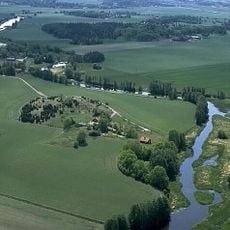
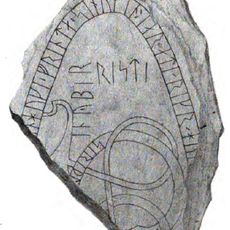
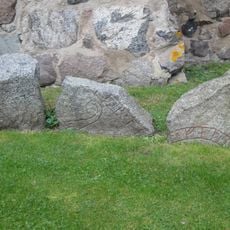
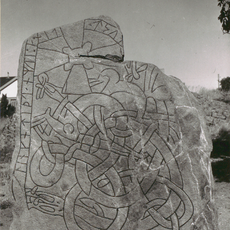
Old Uppsala archaeological area, Royal burial mounds in Uppsala, Sweden
Gamla Uppsala Högar consists of three royal mounds—Västhögen, Mitthögen and Östhögen—on Uppsalaåsen, 55–70 m in diameter and 7–11 m high. The ridge was dug away to make them look taller. Around them lie about 300 remaining graves of a field that once held around 2,000.
The mounds were created in the 6th century as burial sites for powerful rulers of the Svea kingdom during the Vendel Period. Excavations in the 1800s uncovered bronze helmets and gold artifacts that proved the high social status of those buried here.
The three mounds were long linked to the gods Thor, Odin and Freyr, and in the 19th and 20th centuries to the Yngling kings Aun, Egil and Adils; today they are named Västhögen, Mitthögen and Östhögen by position. Gustav Vasa is said to have used Tingshögen, the flat mound by the church, as a symbolic setting for speeches about ten times.
The site is easily reached on foot and connected by walking trails that lead to a medieval church and museum nearby. Wear sturdy shoes since the terrain is hilly and can become slippery in wet weather.
The great hall on the royal plateau measured about 500 square metres, not 600: 50–60 m long and 12 m wide, with 3 m-wide doors on both long sides. Excavations in 2011–2012 found iron spiral offerings in the postholes, suggesting the building was burned deliberately rather than by accident.
The community of curious travelers
AroundUs brings together thousands of curated places, local tips, and hidden gems, enriched daily by 93,490 contributors worldwide.