Arbottna, Manor house in Muskö, Haninge Municipality, Sweden
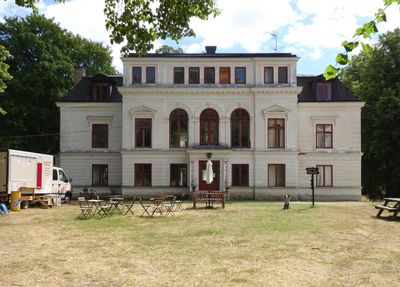
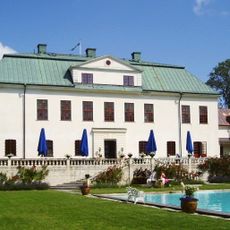
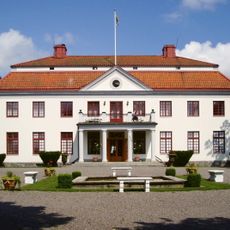
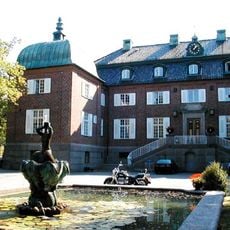
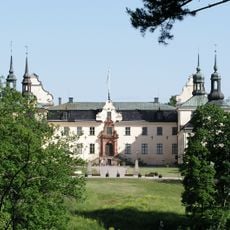
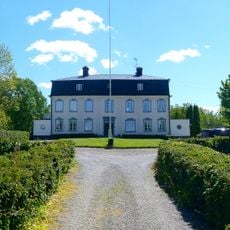
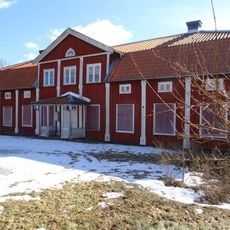
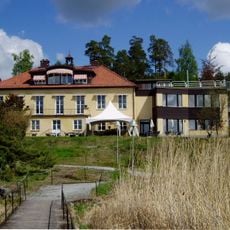
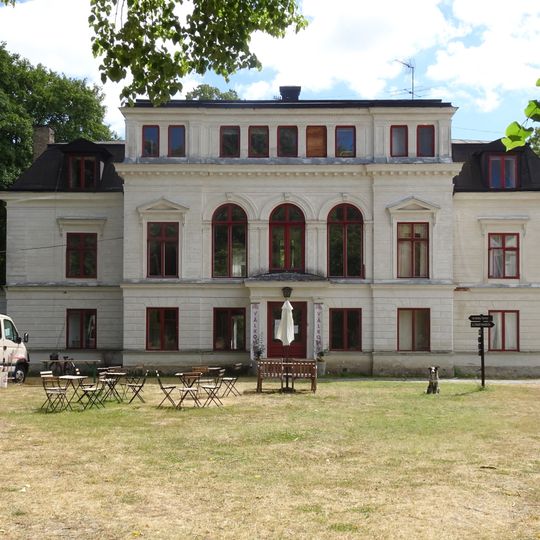
Arbottna is a manor house at Arbottnavägen 21 on the island of Muskö in Haninge Municipality. The main building is a whitewashed two-storey brick house under a mansard roof, given its Swedish Neo-Baroque appearance in the 1870s. It forms a courtyard with two detached wings and two further buildings, with a park to the east and farm buildings to the north.
The manor house underwent multiple renovations over centuries while retaining its original structure as a significant example of Swedish residential architecture. Repeated adaptations reflect changing building styles and uses without destroying the historical foundations.
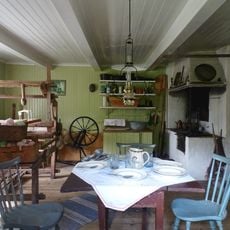
The name Arbottna appears in writing for the first time in 1544 as Arbonen, when the village consisted of a church outland and three mantal of crown land worked by fishing farmers. Anna Christina Bååt inherited the village in 1669, evicted the farmers and turned it into an estate. Several cottages belonged to Arbottna, among them Grytholmen, which today forms the core of the Grytholmen open-air museum run by Muskö Hembygdsförening since 1982.
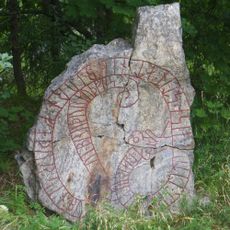
Arbottna lies at Arbottnavägen 21 on Muskö in Haninge kommun, reachable by road via the Muskö road link; the estate is private and its buildings are let, so visits are limited to the surroundings. The burial ground with about 15 mounds lies roughly 525 m north of the manor. The Grytholmen open-air museum, run by Muskö Hembygdsförening since 1982, is nearby.
Arbottna's main building and remaining west wing were declared a state building monument in 1995, but that legal protection was revoked in 2012. The estate was managed by the state through Fortifikationsverket until March 2012, when the company Drömgården acquired what remained.
The community of curious travelers
AroundUs brings together thousands of curated places, local tips, and hidden gems, enriched daily by 94,706 contributors worldwide.