Blue door, Governmental gate at Royal Djurgården, Stockholm, Sweden
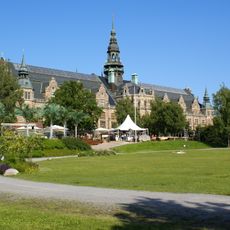
The Blue Door is a formal gateway to Djurgården featuring 19th-century architectural details and design. It connects the city with a large park that holds museums, gardens, and waterfront areas.
The gateway was built in 1848 as a new entrance after an older structure further south no longer served the purpose. This occurred during a period when the park was being modernized in the 1800s.
The gate's name comes from a wooden pavilion of Queen Christina nearby, from which spectators watched staged fights between lions and bulls in the 17th century. The cast-iron gate later gave its name to a tavern that burned down in 1869 and to the Restaurant Blå porten, open in Liljevalchs konsthall since 1916.
The gate stands on Djurgårdsvägen just south of Djurgårdsbron, on the route into Djurgården; trams and buses cross the bridge and stop nearby. The portal is a freestanding structure you can walk up to and around at any time, and it is the only preserved gateway of its kind in the area, so it works as a landmark for meeting or orienting yourself before continuing along the road.
The cast-iron gate was moved three times: in 1882 to what is now Nobelparken, where two villas took its name, in 1916 to Frescati, and back near its original spot in 1967–68 on the initiative of King Gustaf VI Adolf. It was cast at Brevens Bruk and put up on 23 November 1848.
The community of curious travelers
AroundUs brings together thousands of curated places, local tips, and hidden gems, enriched daily by 93,380 contributors worldwide.