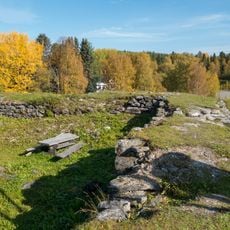
Fröå gruva, Copper mining site in Åreskutan, Sweden
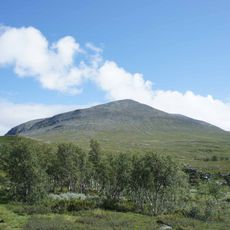
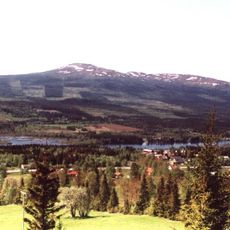
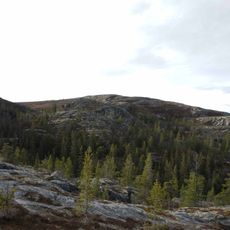
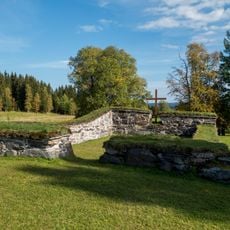
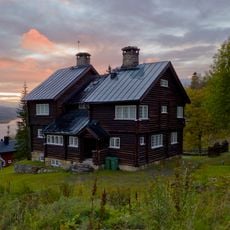
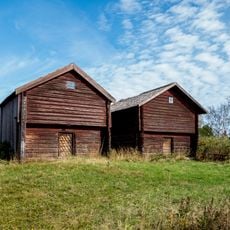
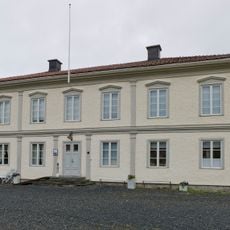
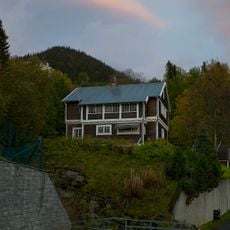
Fröå gruva is a former copper mine on the eastern slope of Åreskutan, about 10 km east of Åre and near the village of Huså. The preserved mining village holds the mine workings, a water-powered hoisting and pumping system, and the torp cottages built for mining families, each with 3–4 tunnland of land for a cow, sheep and goats.
Copper ore was first found at Fröå in summer 1744, when Anna Larsdotter picked up ore samples at the fäbod pastures and showed them to inspector Anders Floor, who began mining. Work ran in four periods until 1919: 1748–1808 with primitive tools, 1836–1881 under Gustafs och Carlbergs Kopparverk, 1893–1895 defence mining, and 1910–1919, when a one-million-dollar share capital funded roads, a telephone network and power stations.
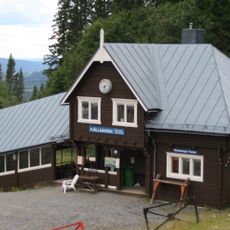
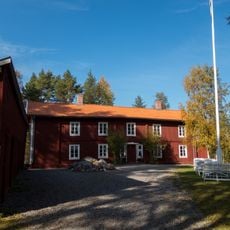
The name Fröå belongs to the mountain pasture where Anna Larsdotter picked up copper ore samples in 1744 and showed them to inspector Anders Floor. The mining company built cottages for the miners' families, each with 3–4 tunnland of land for a cow, sheep and goats, and gave workers a five-day week so they could farm. The last residents, a brother and sister, left in 1971; their cottage is now a museum.
The site is accessible by walking trails that lead through the different areas of the mining complex. Sturdy footwear and warm clothing are recommended, especially during colder months, due to the mountain elevation and exposed terrain.
The mine's water-powered lifting gear was driven by a 10-metre-diameter wheel linked to a rod line over 950 metres long, built in the 18th century. The last residents, a brother and sister, left the mining village in 1971 after generations there; their cottage now serves as a museum.
The community of curious travelers
AroundUs brings together thousands of curated places, local tips, and hidden gems, enriched daily by 94,087 contributors worldwide.