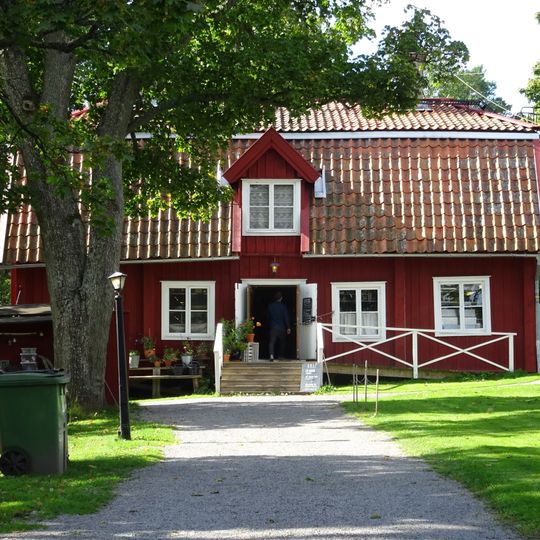
Långängens gård, Lidingö, Farm and recreation area in Lidingö, Sweden
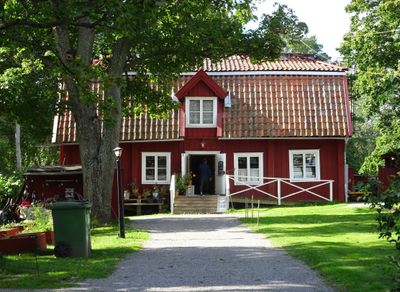
Långängens gård is a single-storey red-painted wooden manor house with a steep pitched roof of red clay tiles, built in the 1770s with the six-part plan typical of 18th-century Swedish vicarages. A central gable with a four-pane white-framed window projects above the entrance, reached by wooden steps between white railings. The buildings now hold a café, restaurant and function rooms.
Långängen is first mentioned in writing in the 14th century, when it was for a time owned by Birger Ulfsson, son of Saint Bridget. The present main building was erected in the 1770s in the six-room plan typical of 18th-century vicarages; in 1774–1775 it was held by Mathias Revaldt. Lidingö town bought the farm in 1947.
The poet Wilhelm von Braun lived in an upper room and wrote his verses here between 1851 and 1855. The house thus connects everyday life with literary history on a personal scale.
The 30 km Lidingöloppet course passes the farm and continues east up to the top of Killingeberget. The open meadows are used in winter for cross-country skiing and the paths suit long walks. A privately owned sheep flock grazes the meadows at times, and the sheep are used for herding-dog training.
The house preserves two original Rococo tile stoves from the 1770s and a large masonry fireplace in the main hall. These elements showcase the craftsmanship and wealth that once characterized the estate.
The community of curious travelers
AroundUs brings together thousands of curated places, local tips, and hidden gems, enriched daily by 93,685 contributors worldwide.