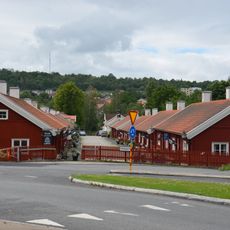
Rumlaborg, Medieval castle ruins in Huskvarna, Sweden.
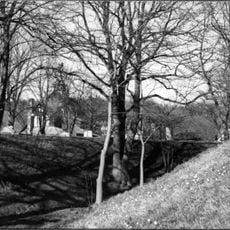
Rumlaborg is a castle ruin at the mouth of the Huskvarna River, enclosed by three substantial earthen ramparts and moats. The hill itself forms the most prominent feature of the site and dominates the surrounding terrain.
Rumlaborg began as Humlaborg, named after the bishop's estate of Humblarum founded in the 1200s or early 1300s. In 1366 Albrecht of Mecklenburg had a fortified house built here to guard the Holaved roads against Danish troops. Burned in 1434, it was rebuilt in 1448 by Karl Knutsson, besieged in 1452 and 1464, then left to decay under Sten Sture the Elder.
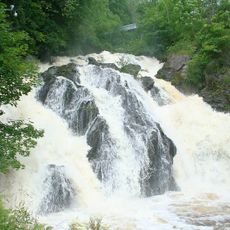
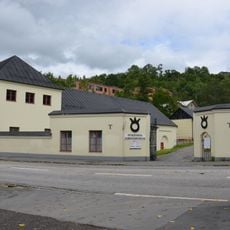
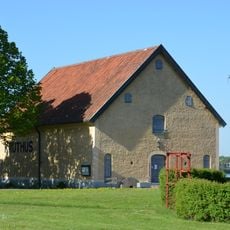
The name comes from the bishop's residence Humblarum, founded in the 1200s or early 1300s; the fortress was first called Humlaborg. The Huskvarna River just west of the site was earlier known as Humlarumlaån. Excavation finds from the castle are kept at Huskvarna stadsmuseum in the old Kruthuset by the Vätter shore.
The site is accessible via the E4 motorway, with parking available near the Huskvarnaån river. The hill itself is easy to explore on foot and provides good views of the earthworks and surrounding landscape.
The bridge over the Huskvarna River at Rumlaborg was called Kavlabron and was made of cross-laid logs. The river itself was formerly known as Humlarumlaån and Huusån. The two outworks Varpa skans and Garpa skans stood north and south of the main castle.
The community of curious travelers
AroundUs brings together thousands of curated places, local tips, and hidden gems, enriched daily by 93,430 contributors worldwide.