Great Pit, Mining collapse site in Falun, Sweden
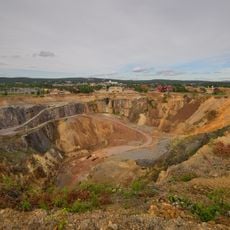
The Great Pit is the large collapse crater of the Falun copper mine, measuring 300 to 400 metres in diameter and just under 100 metres deep according to 1995 figures. Its steep walls show the reddish rock of the mined area, and paths around the rim allow visitors to view the hole from several sides.
On 25 June 1687, Midsummer Day, parts of the Falun copper mine collapsed, forming the Great Pit. The collapse resulted from intensive mining and the haphazard driving of galleries. Because the miners had the day off, no one died. The pit appears on a 1973 stamp in the series I Dalom.
The path around the pit shows how mining shaped life in this town and how people used the landscape for their livelihood. The structures and markers you see tell the story of work that formed this place over centuries.
The best way is to take time walking around the pit and visiting the different viewpoints set up for you. QR code markers along the paths give you extra information about different parts of the mining area.
The collapse struck on Midsummer's Day, 25 June 1687, when the miners had the day off, so nobody was underground. The pit was later depicted on a Swedish postage stamp in the "I Dalom" series issued in 1973.
The community of curious travelers
AroundUs brings together thousands of curated places, local tips, and hidden gems, enriched daily by 94,492 contributors worldwide.