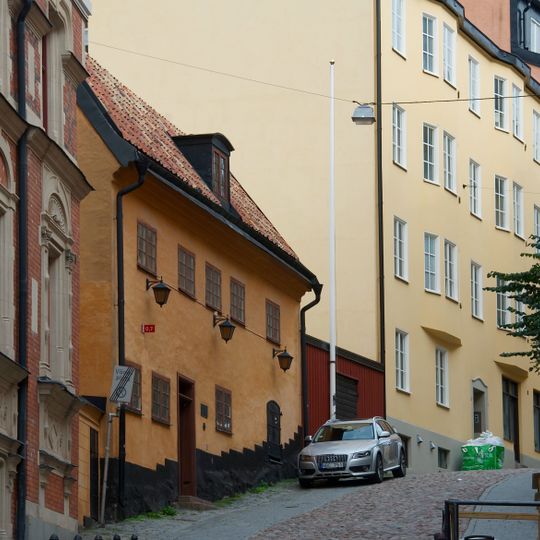
Urvädersgränd, Stone stairs in Södermalm, Stockholm, Sweden
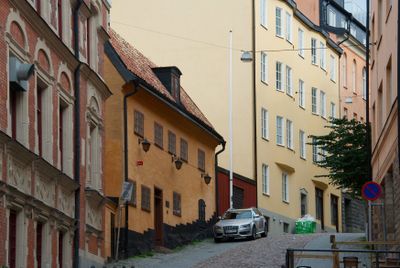
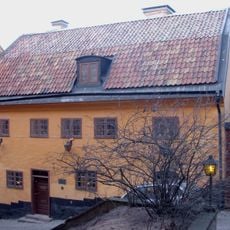
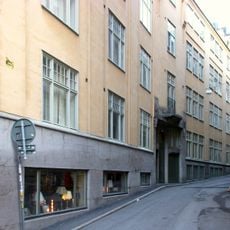
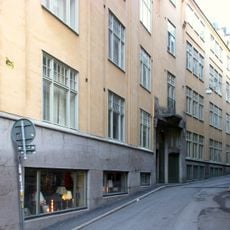
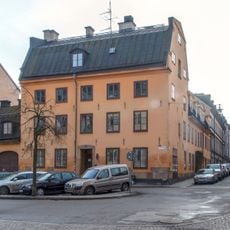
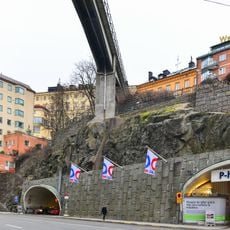
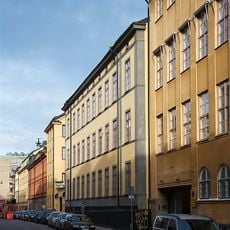
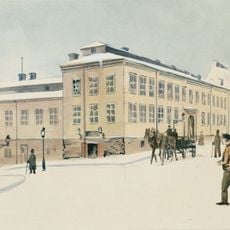
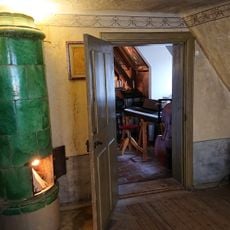
Urvädersgränd is a curved alley on Södermalm in Stockholm that starts at the northwest corner of Mosebacke torg and ends in a staircase down to Götgatan at the level of Sankt Paulsgatan. The street and the Urvädersklippan block are named after the burgher Simon Uhrwäder, who owned a house here in the mid-1600s. At number 3 stands the Bellman House, where the poet Carl Michael Bellman lived from 1770 to 1774; his two attic rooms are furnished in period style and shown by the Par Bricole society.
The stairway developed as Södermalm grew into an urban neighborhood and served as a key passage for local people over centuries. It was built in stone to address the steep slope of the terrain, with its layout remaining largely unchanged.
The stairs are part of Södermalm, a neighborhood that transformed from a working-class area into a creative hub for artists and musicians. The district attracts people who value history and artistic expression.
The stairs are steep and require good footwear and careful footing, especially during wet or icy weather. Cafes and restaurants are located nearby at both ends of the stairway.
The name comes from burgher Simon Uhrwäder, who owned a house on the street in the mid-1600s; he was a descendant of the Nils Månsson Uhrwäder who gave his name to the older Urvädersgränd in Gamla stan, now Stenbastugränd. At number 9, the painter Sven X:et Erixson had his home and studio from 1931 to 1934, and Inge Schiöler lived in the flat below in 1932–1933. Stieg Trender's novel I dag röd… is partly set in an apartment at number 9.
The community of curious travelers
AroundUs brings together thousands of curated places, local tips, and hidden gems, enriched daily by 93,462 contributors worldwide.