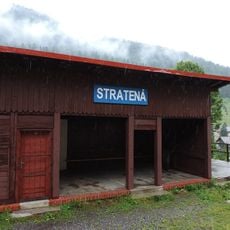
Dobšinská Ice Cave, Ice cave in Stratená, Slovakia
Dobšinská Ice Cave is a cave in the Slovak Paradise whose front sections hold layered ice up to 25 m thick, covering about 11,200 m². The entrance descends 30–40° into a 180 m wide, 70 m deep pocket. The Great Hall, 72 m long and 42 m wide, contains the 9 m ice column called Studňa and the Niagara icefall.
A mining engineer named Eugen Ruffinyi discovered the cave in 1870, and it opened to the public the following year. Electric lighting was later installed to illuminate the underground ice formations for visitors to explore.
Local herders and hunters already knew the draught of cold air at the "Ice Hole" and cooled themselves there, and nearby residents carried ice away; the first written mention is by János Hunfalvy in 1863. Ice formations in the upper cave carry names such as Gravestones, Tree Trunk, Waterfall and Bedouin Tent, and in the lower cave Hell, Lucifer and the 10 by 15 m Organ. Mór Jókai visited soon after the opening and used his impressions in his novel A lőcsei fehér asszony.
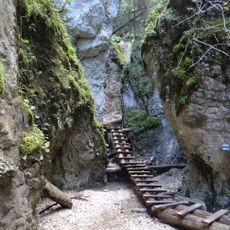
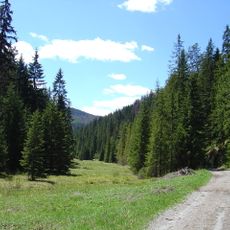
The path to the entrance involves walking uphill through the forest, and sturdy shoes with good grip are essential for safe footing. Plan to take your time on the approach since the climb requires steady effort over uneven terrain.
The cave's ice is layered in sheets about 3–5 mm thick, and in spring, when surface water seeps through cracks and freezes inside, a coating of hoarfrost forms in places. The cave also lost its connection to the Stratená cave system when a roof collapse sealed it off, creating the sack-shaped void that traps cold air.
The community of curious travelers
AroundUs brings together thousands of curated places, local tips, and hidden gems, enriched daily by 93,557 contributors worldwide.