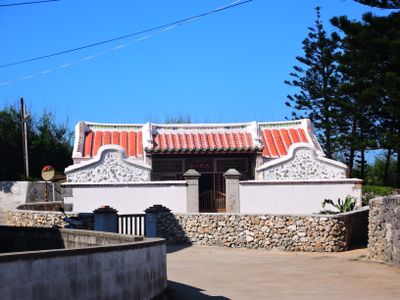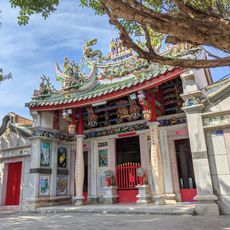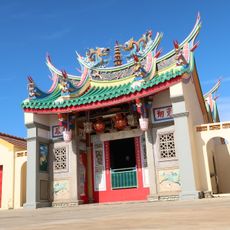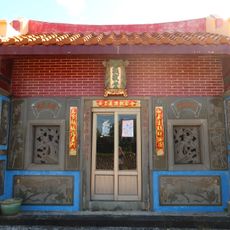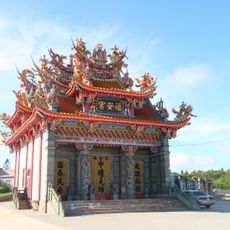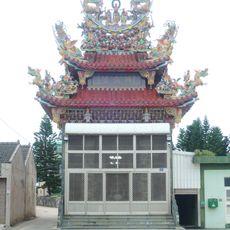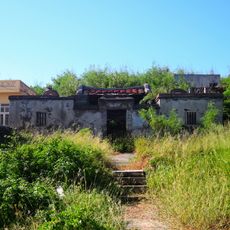
Xiaochi Lin Family Ancestral Temple, Ancestral hall in Xiaochi Village, Taiwan
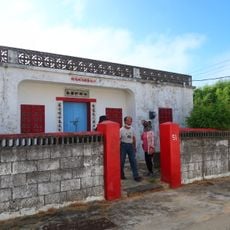
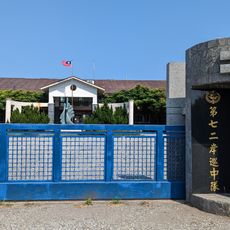
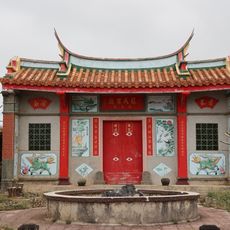
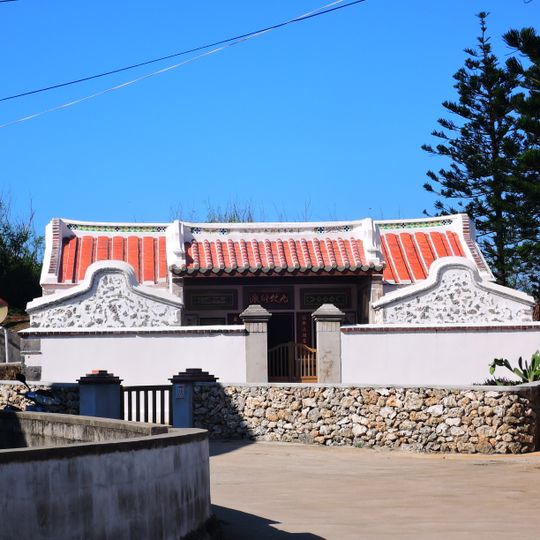
The Xiaochi Lin Family Ancestral Temple is a traditional ancestral hall built in 1932 in Xiaochi Village, Baisha Township. Its inner and outer wall bases are laid with coral stone (laogu stone), a feature of Baisha's traditional houses. Decorative tile paintings, longevity-character window frames and skirt and window panels ornament the walls, and the front courtyard is enclosed by a wall whose gate pillars have a distinctive shape. Bed-carving marks left by troops stationed there in the final years of World War II remain on the hall walls.
The Lin lineage traces to Lin Hou, who moved from Haicheng in Zhangzhou to Penghu around the mid-17th century; descendants later settled Fanziwa (today Fangyuan, Changhua). The hall itself was built in 1932, fell out of use and stood abandoned for decades, was registered as a Penghu County historic building on 27 August 2014, and was restored in 2014-2015 with a beam-raising and ridge-completion ceremony.
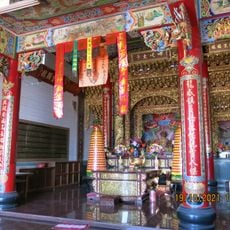
The temple serves as a gathering place where the Lin family conducts regular ceremonies to honor their ancestors through offerings and prayers. These rituals remain an active part of village life and family identity.
The temple is accessible year-round in Xiaochi Village within the Penghu Archipelago, which has regular transportation connections to mainland Taiwan. Visitors can explore the surrounding village to better understand the local context of this family shrine.
The hall's walls still carry bed-fitting marks chiselled by troops stationed there in the final years of World War II, when Taiwan was under Japanese rule. The Lin lineage traces itself to the "Nine Pastures" branch, and its genealogy is recorded in a published Penghu County Lin clan register.
The community of curious travelers
AroundUs brings together thousands of curated places, local tips, and hidden gems, enriched daily by 93,592 contributors worldwide.