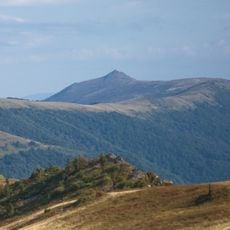
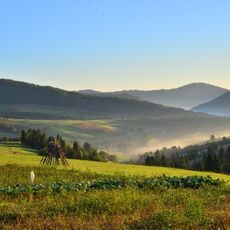
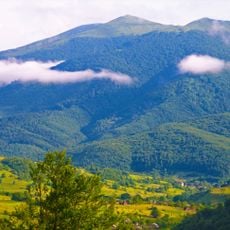
Polonyna Runa, Mountain summit in the Polonynian Beskids, Zakarpattia Oblast, Ukraine
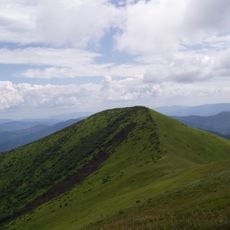
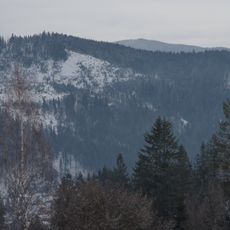
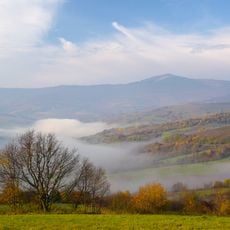
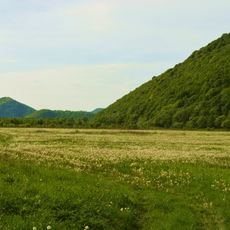
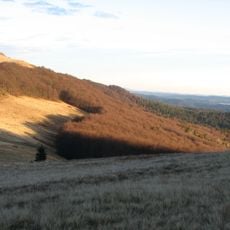
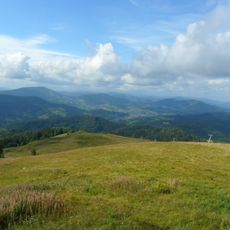
Polonyna Runa is the highest summit of the Runa range in Transcarpathia, reaching 1482 m (some sources give 1479 m). Its broad, gently south-sloping ridge runs about 15 km between the Uzh valley and the Vicha valley, with beech forests below and pasture meadows above roughly 1200 m. Neighbouring tops include Vysokyi Verkh (1413 m) and Menchul (1294 m).
In 1870 a state stud farm was set up on the polonyna for the army, with five farms, staff housing and an inspection house; 800 Hutsul horses, 3,000 cows and 60 breeding bulls grazed here. A herder earned 10 kronen per horse for the season, plus a kilogram of bacon and a loaf of bread, and 5 kronen per cow. Ferenc Kozma, father of the politician Miklós Kozma, directed the stud.
The name Runa comes from a Transcarpathian dialect word meaning "level", which also gave the massif its other name, Polonyna Rivna. Six nearby villages carry the word "tur" in their names — Turia Bystra, Turia Pasika, Turia Poliana, Turi Remety, Turytsia and Turychky — recalling the aurochs, the princely beast of the Carpathians. Agata Turchynska's 1977 children's novella "Runa", published in Kyiv by Veselka, is set on these slopes.
A paved road of concrete slabs leads from the villages of Lumshory and Lypovets to the summit meadow, so the top can be reached by car as well as on foot. The ridge crest runs along the northern edge of the massif, and the northern slopes below it are steep.
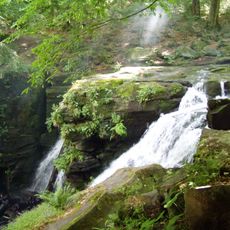
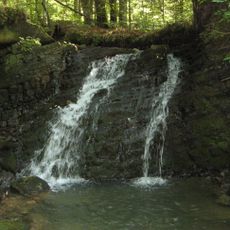
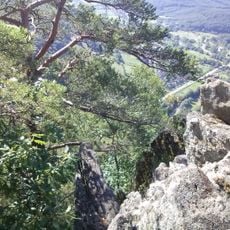
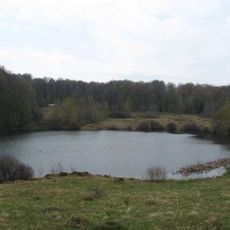
The summit meadow holds abandoned Soviet-era military installations: a rocket base and barracks, reached by a concrete-slab road that allows vehicles to drive up. The ornithological reserve Sokoli Ske li (Sokolovi Skeli) protects birds of prey on the rocky slopes, and the massif also contains the hydrological monument Velyke Trostia, a glacial lake.
The community of curious travelers
AroundUs brings together thousands of curated places, local tips, and hidden gems, enriched daily by 94,400 contributors worldwide.