Crystal Cave, Natural cave in Kryvche, Ukraine
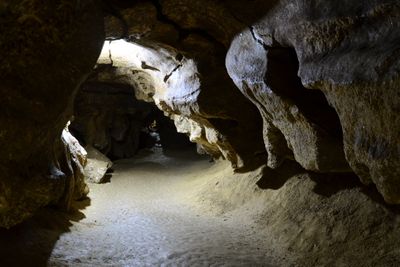
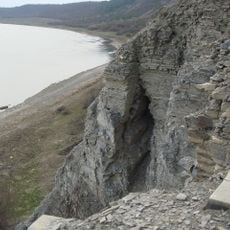
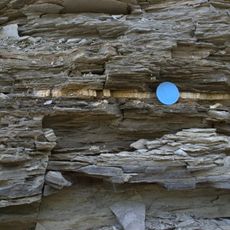
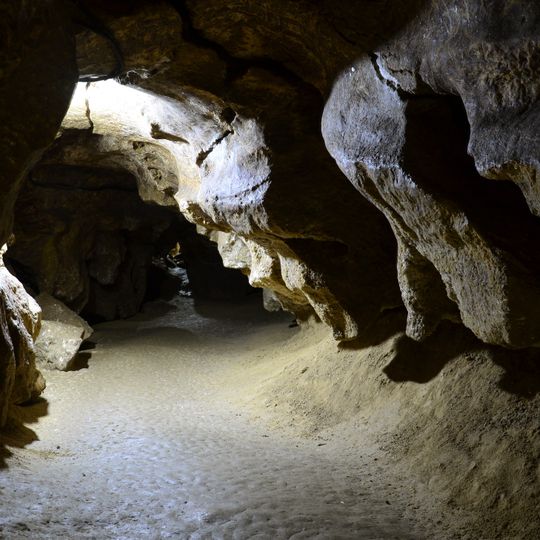
Crystal Cave is a gypsum karst cave in Kryvche, Ternopil Oblast, formed by a labyrinth of passages along vertical tectonic fissures. Its walls are covered with white, cream and pink-amber gypsum crystals, and the first 480 m of the tourist route follow a natural tunnel whose walls glitter with gypsum formations resembling fern leaves. The explored length is about 22.6 km, with an amplitude of 10 m.
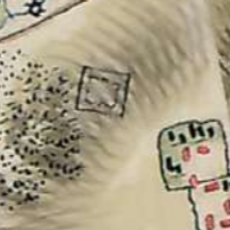
The cave was first mentioned in 1721 in a book by the Jesuit priest Gabriel Rzączyński. In 1908–1914 Klim Gutkowski mapped its passages and gave them names. The entrance was excavated again in 1928 and 1961, and in 1962–1963 V. N. Dublyansky produced the first complete map. On 7 August 1963 the cave was declared a geological monument of national significance.
The name comes from the white, cream and pink-amber gypsum crystals coating the walls. Guides point out named rock shapes along the route, such as a bull's head, a lizard and an elephant. The first 480 m follow a natural washed-out tunnel whose gypsum walls glisten like fern leaves.
Visitors explore an accessible section of the cave under consistently humid conditions, regardless of season or outdoor weather. Comfortable clothing and sturdy footwear are advisable since the surface can be uneven and slippery.
The cave's air is ionised by strontium contained in its gypsum crystals, producing ozone; researchers link this to the cave's reported healing properties. The first full map, made under V. N. Dublyansky in 1962–1963, gave a length of 17.8 km, making it then the longest cave in the Soviet Union and the longest gypsum cave in the world.
The community of curious travelers
AroundUs brings together thousands of curated places, local tips, and hidden gems, enriched daily by 93,614 contributors worldwide.