Lake George, Oligotrophic lake in the Adirondack Mountains, New York, United States
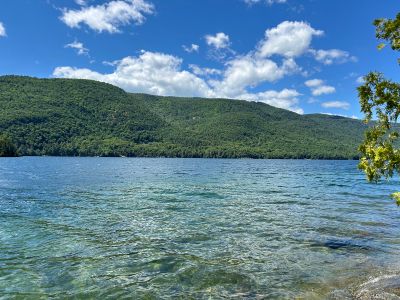
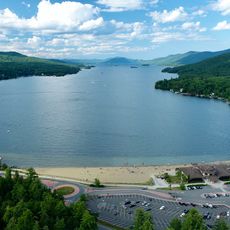
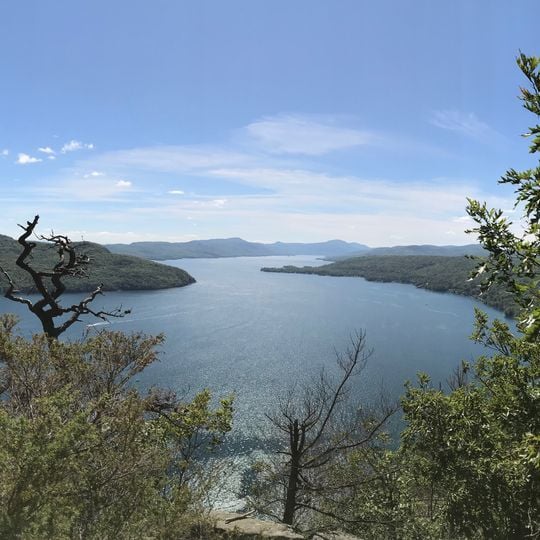
Lake George is a long, narrow lake at the southeast base of the Adirondack Mountains, running about 32.2 miles (51.8 km) north to south, one to three miles wide and up to 187 feet (57 m) deep. Forested slopes and rounded landmasses border a narrow channel, and the water drains north through the La Chute River toward Lake Champlain.
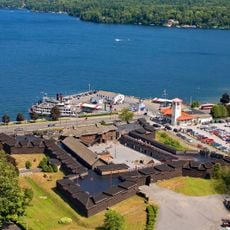
A French missionary gave the body of water a religious name in 1646, before British troops renamed it after their king in 1755. The region witnessed several military confrontations between French and British colonial forces during the Seven Years' War.
The Mohawk name Kaniá:taro’kte, meaning "Lake-End", was replaced in 1755 when William Johnson renamed the lake for King George II; James Fenimore Cooper later called it the Horican in The Last of the Mohicans. Thomas Jefferson wrote to his daughter in 1791 that it was "the most beautiful water I ever saw".
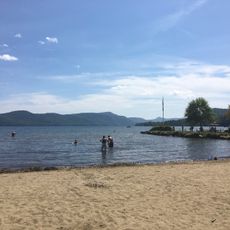
Most islands are accessible by boat and some offer camping sites suitable for multi-day stays. The water is suitable for swimming in summer, while the shoreline areas provide good starting points for hikes into the surrounding mountains.
The lake's Mohawk name, Kaniá:taro’kte ("Lake-End"), was judged too hard to pronounce by James Fenimore Cooper, who called it the Horican in The Last of the Mohicans after a tribe that may have lived there. The Mohawk name is still used today.
The community of curious travelers
AroundUs brings together thousands of curated places, local tips, and hidden gems, enriched daily by 92,505 contributors worldwide.