Bde Maka Ska, Glacial lake in Minneapolis, United States
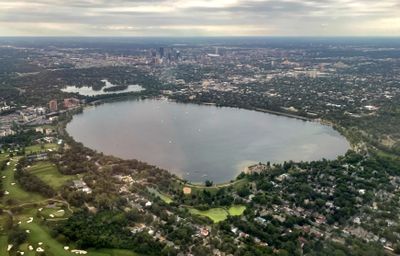
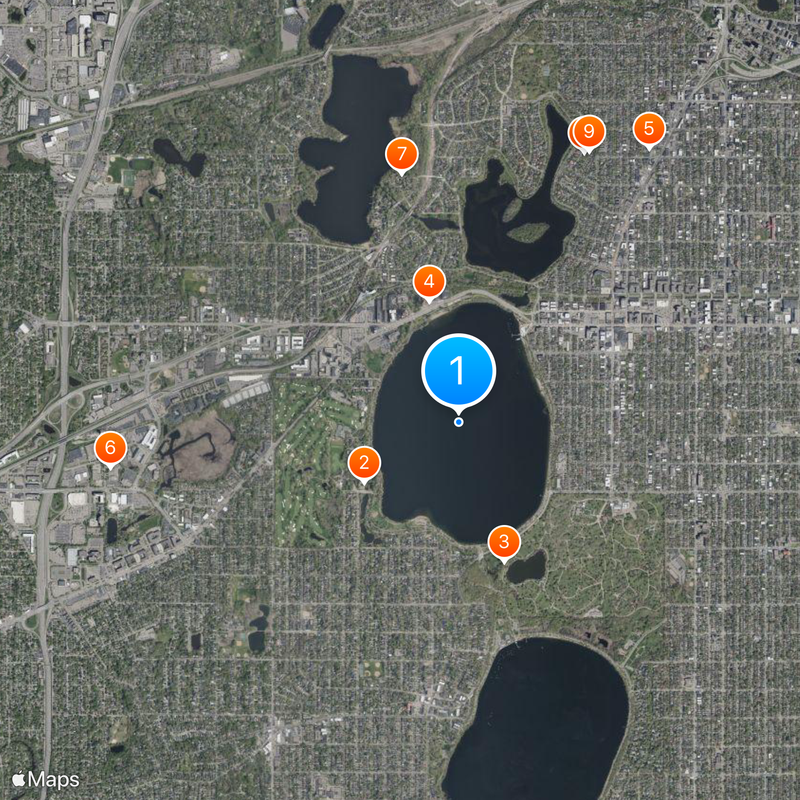
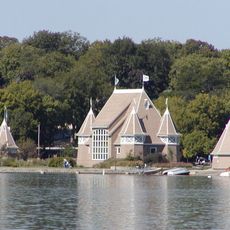
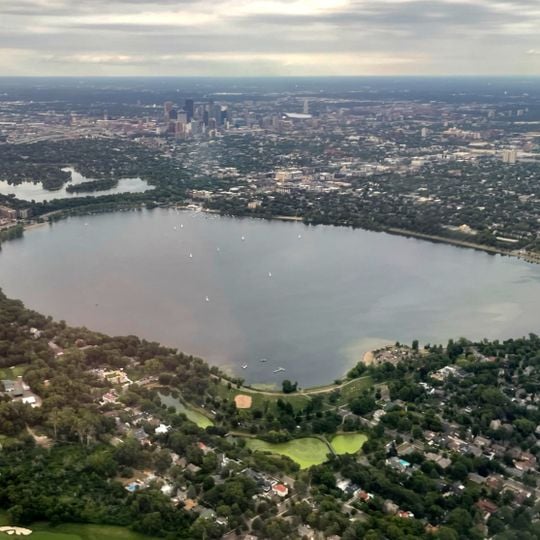
Bde Maka Ska is the largest lake in Minneapolis, a kettle lake formed by glacial activity 10,000 to 12,000 years ago. Its 424-acre surface reaches a maximum depth of 90 feet, the deepest of the city's Chain of Lakes. Channels link it to Cedar Lake and Lake of the Isles, and bike and walking trails circle the shore.
From 1829 to 1839, the Bdewákhathuŋwaŋ Dakota village of Ḣeyate Otuŋwe stood on the lake's shore, led by Chief Cloud Man and promoted by Indian agent Lawrence Taliaferro. By 1832 it grew enough corn to trade with settlers, and from 1835 drew white travelers; George Catlin painted it in 1836. Missionaries Gideon and Samuel Pond built a cabin on the east side in 1834. After Ojibwe attacks and Taliaferro's 1839 resignation, Cloud Man moved the community to Oak Grove on the Minnesota River.
The Dakota name Bde Maka Ska means Lake of the White Earth or Lake of the White Banks, referring to the pale shallow margin visible along the shore. The lake was renamed from Lake Calhoun in 2018 after the Minnesota Department of Natural Resources and the U.S. Board on Geographic Names approved the change; the old name honored John C. Calhoun, whose 1817 survey orders gave the lake its name.
The shoreline has three swimming beaches and several fishing piers for water access. A walking trail of roughly 3 miles circles the lake, accessible throughout the year for strolling or jogging.
The lake's Dakota name, Bde Maka Ska, means White Earth Lake or White Banks Lake, referring to the pale sandy shore visible along the water's edge. The name was restored officially in 2018 after the Minnesota Supreme Court rejected an appeal against it.
The community of curious travelers
AroundUs brings together thousands of curated places, local tips, and hidden gems, enriched daily by 93,356 contributors worldwide.