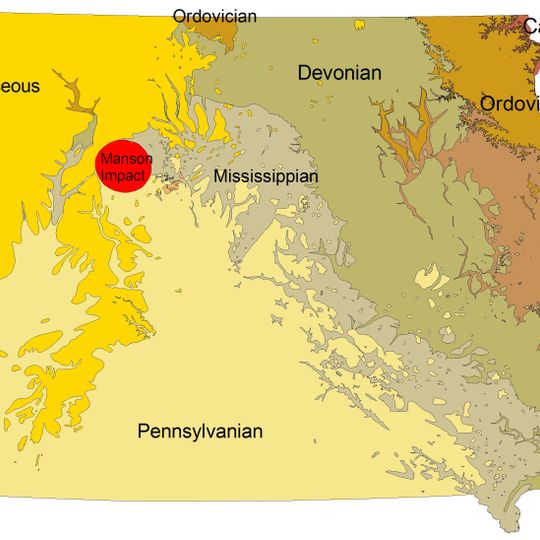
Manson crater, Impact crater in Iowa, US.
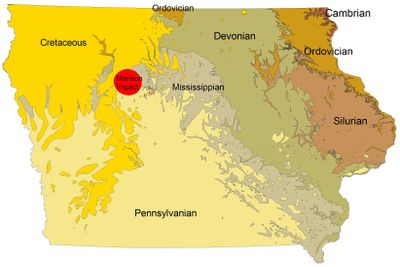
Manson crater is an impact structure in central Iowa that lies completely buried beneath glacial deposits at depths between 20 to 90 meters. The formation spans approximately 35 kilometers in diameter and ranks among the larger crater formations in the United States.
The crater formed 74 million years ago during the Late Cretaceous period when a meteorite roughly two kilometers across struck a shallow inland sea. The impact left traces across multiple rock layers and fundamentally shaped the region's subsurface geology.
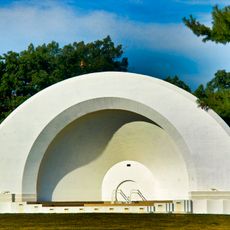
The town of Manson organizes the Greater Crater Days festival to celebrate the geological formation with running events and local vendor exhibitions.
The entire structure lies underground and is not visible at the surface, so scientific drilling studies continue to reveal its characteristics. Visitors can learn about the formation through local museums and information centers rather than visiting the site directly.
The meteorite vaporized significant limestone deposits, resulting in distinct soft water characteristics found in the region today. This geological legacy measurably shapes the water chemistry of the area in ways that persist across millions of years.
The community of curious travelers
AroundUs brings together thousands of curated places, local tips, and hidden gems, enriched daily by 92,781 contributors worldwide.