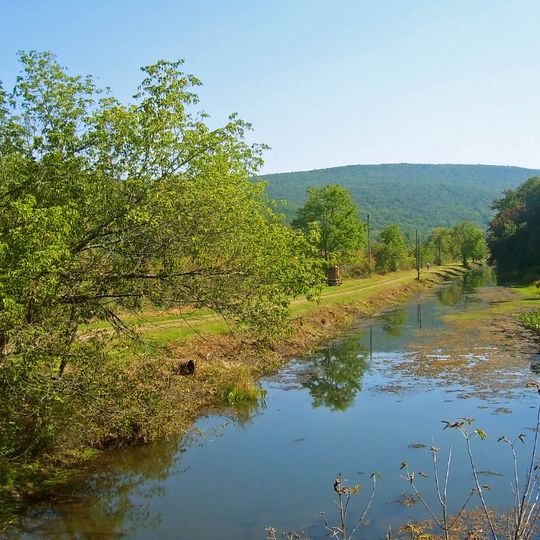
Delaware and Hudson Canal, 19th century transportation canal in New York, United States.
The Delaware and Hudson Canal is a 19th-century transportation waterway in New York that once connected Pennsylvania with the Hudson River. The route covered 108 miles (174 kilometers) and used a system of locks to navigate elevation changes exceeding 1,000 feet (305 meters).
The waterway opened between 1825 and 1828 to move anthracite coal from Pennsylvania mines to New York City. Operations ended in 1898 when railroads took over freight transport and the waterway was abandoned.
The canal corridor transformed local communities, establishing new settlements and industries while attracting immigrant workers who shaped regional development.
Hiking trails follow preserved sections of the route through woodlands and open country. The Delaware & Hudson Canal Museum in High Falls displays artifacts and explains how the system worked.
John A. Roebling designed suspension aqueducts for the waterway that carried water over river valleys. These early structures helped him develop techniques he later used to build the Brooklyn Bridge in New York City.
The community of curious travelers
AroundUs brings together thousands of curated places, local tips, and hidden gems, enriched daily by 60,000 contributors worldwide.