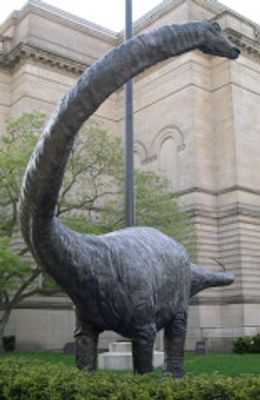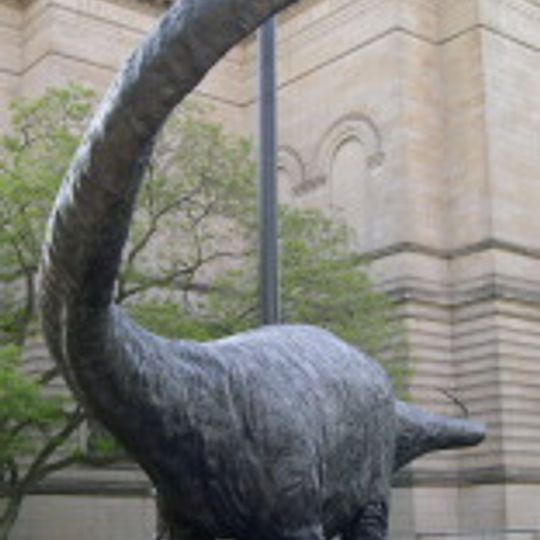
Dippy, Art installation at Carnegie Museum of Natural History in Pittsburgh, United States.
Dippy is a full-size cast of a Diplodocus skeleton originally created in 1905 and now displayed in the Carnegie Museum of Natural History in Pittsburgh. The replica stands in the main hall and shows visitors what this long-necked dinosaur looked like millions of years ago.
The skeleton was created in 1905 from fossils discovered in Wyoming and became the template for casts sent to museums around the world. For many decades, this was the main reference that shaped how people understood what dinosaurs looked like.
This installation reflects the intersection of scientific education and artistic expression, serving as an educational tool for museum visitors.
The museum maintains regular hours, and the main hall where Dippy stands is spacious and easy to navigate. Arriving early in the day or on quieter weekdays gives you the best chance to see and photograph the skeleton without crowds.
The original fossil that Dippy was based on came from one of the richest dinosaur dig sites in the world, and its discovery shocked scientists because this creature was far longer than anyone had expected. Museums around the globe raced to obtain their own casts so they could display this remarkable animal to the public.
The community of curious travelers
AroundUs brings together thousands of curated places, local tips, and hidden gems, enriched daily by 91,289 contributors worldwide.