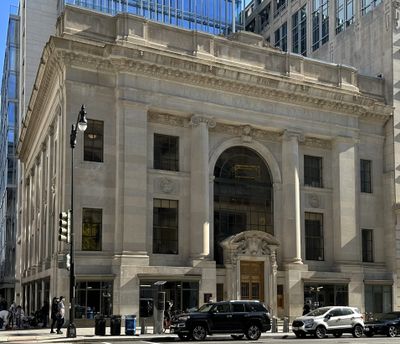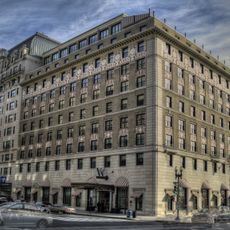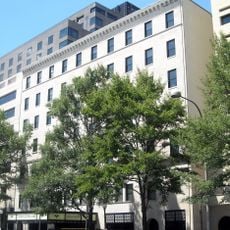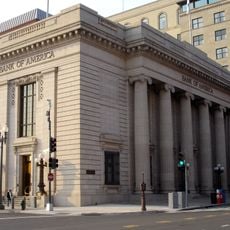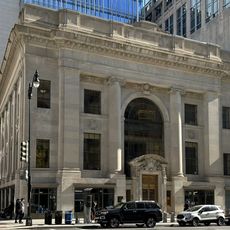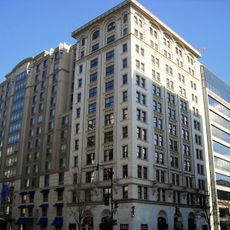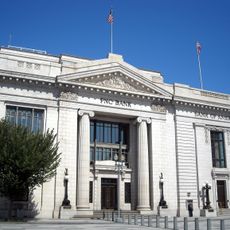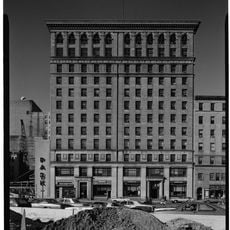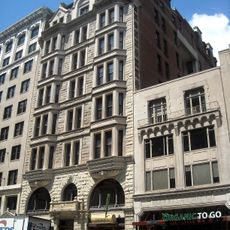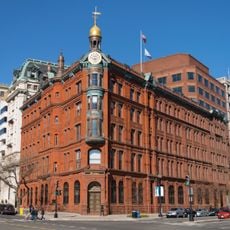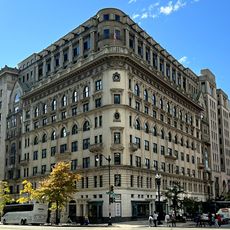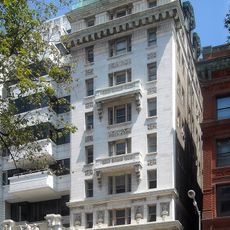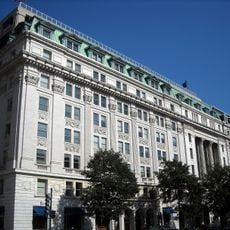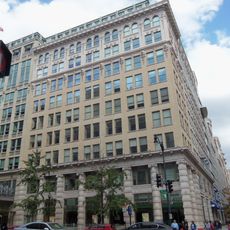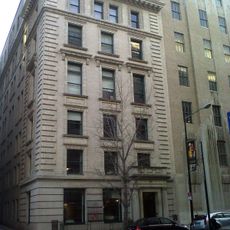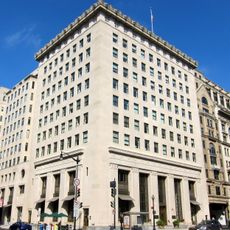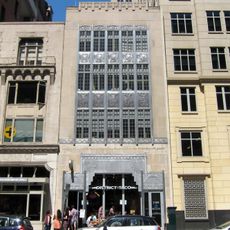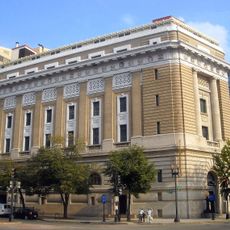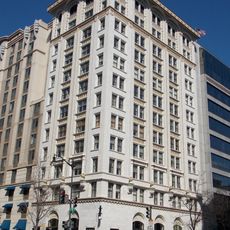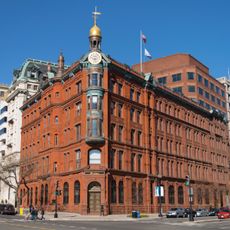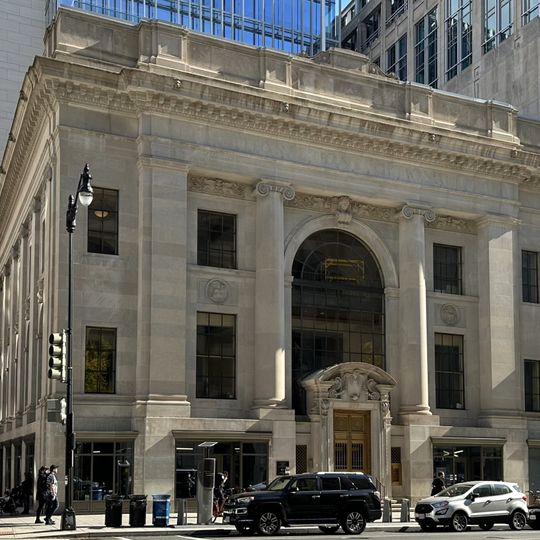
Federal-American National Bank, building in the Downtown neighborhood of Washington, D.C.
The Federal-American National Bank Building is a neoclassical bank building completed in 1926 in downtown Washington, D.C. It features large arched windows, classical columns, and materials including granite, limestone, and bronze, with the main banking hall raised on the second floor above street-level shops.
The bank was created in 1923 from the merger of two banks, with the building completed in 1926 as Washington's financial scene was expanding. The bank failed during the Great Depression in 1933, after which Hamilton National Bank took over the building.
The building's name reflects the merger of two banks and the ambitions of Washington's financial community. Its open counter design was innovative for the time, showing how banks wanted to make customer interactions more welcoming and transparent.
The building sits at the corner of 14th and G Streets downtown and is easy to spot from the street. The main banking hall on the second floor is reached by a marble staircase, while shops occupy the street-level entrance.
The building featured innovative Clear Vision counters designed with low barriers and invented by John Poole. This design idea was so successful that other banks worldwide copied it, and Poole received multiple patents for the concept.
The community of curious travelers
AroundUs brings together thousands of curated places, local tips, and hidden gems, enriched daily by 92,087 contributors worldwide.