Westerplatte, Battle site in Poland
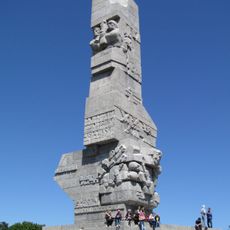
Westerplatte is a forested, sandy peninsula about two kilometres long and up to 600 metres wide, lying between the Bay of Gdańsk and the harbour canal of the Dead Vistula. Its main structures are the ruins of the Military Transit Depot barracks and the 1966 Monument to the Coast Defenders, a 25-metre granite form on a 20-metre mound.
The site was established as an ammunition depot in 1920 and became the location of the first clash between Polish and German forces in 1939. This battle marked the opening of the European theater of World War II.
The name Westerplatte means "western island" in German, distinguishing it from the former Ost Platte that later joined the mainland. Since 1966 the 25-metre Coast Defenders Monument, shaped like a chipped bayonet driven into a 20-metre mound, has been the focus of commemorations held here each 1 September.
Access is easiest by foot or public transport, which connects directly to the peninsula. The site has maintained pathways for exploring the ruins and monument, so comfortable walking shoes are a good idea.
The peninsula was bought for Poland in autumn 1919 with money raised by Father Stanisław Adamski, head of the Union of Earning and Economic Companies. Because Germans refused to sell Danzig property to Poles, the purchases were made through Kashubian buyers with German-sounding surnames.
The community of curious travelers
AroundUs brings together thousands of curated places, local tips, and hidden gems, enriched daily by 92,301 contributors worldwide.