Palace of Ajuda, Neoclassical royal palace in Ajuda, Portugal.
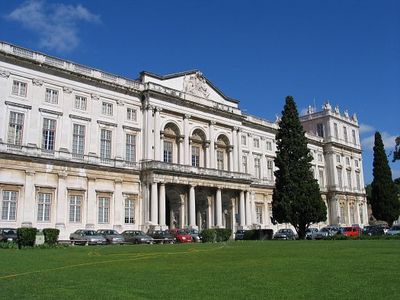
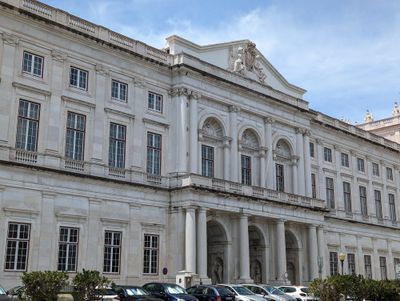
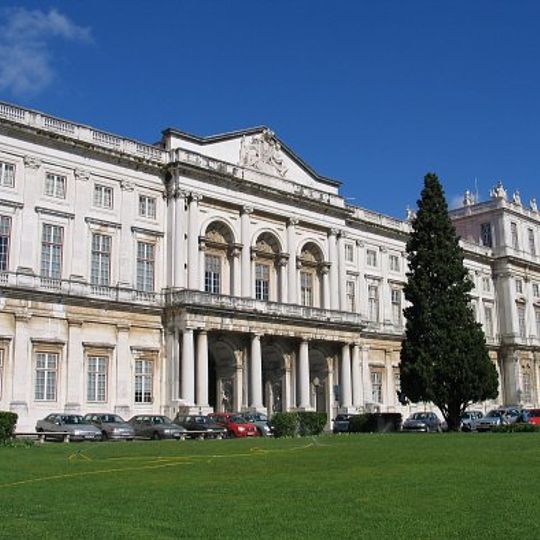
The Palace of Ajuda is a long neoclassical stone building on a hill in western Lisbon, with a projecting central block crowned by a triangular pediment carved with a relief, flanked by two lower wings. A row of tall columns forms a ground-level portico with arches above, and a balustrade runs along the roofline. The vestibule holds 47 statues by Portuguese artists. The west wing was only finished between 2018 and 2020.
King José I ordered a wooden palace on the Ajuda heights after the 1755 earthquake; it burned in 1794. The first stone of the present palace was laid on 9 November 1795 to Manuel Caetano de Sousa's Baroque design, replaced in 1802 by a Neoclassical project by Fabri and Costa e Silva. Luís I settled here permanently from 1861, and the monarchy ended in 1910.
The palace's name comes from the Ajuda estate, which King John V bought in 1726 for a summer residence. The vestibule holds 47 statues signed by Portuguese artists. Since 2022 the Royal Treasure Museum displays the Portuguese crown jewels in the west wing.
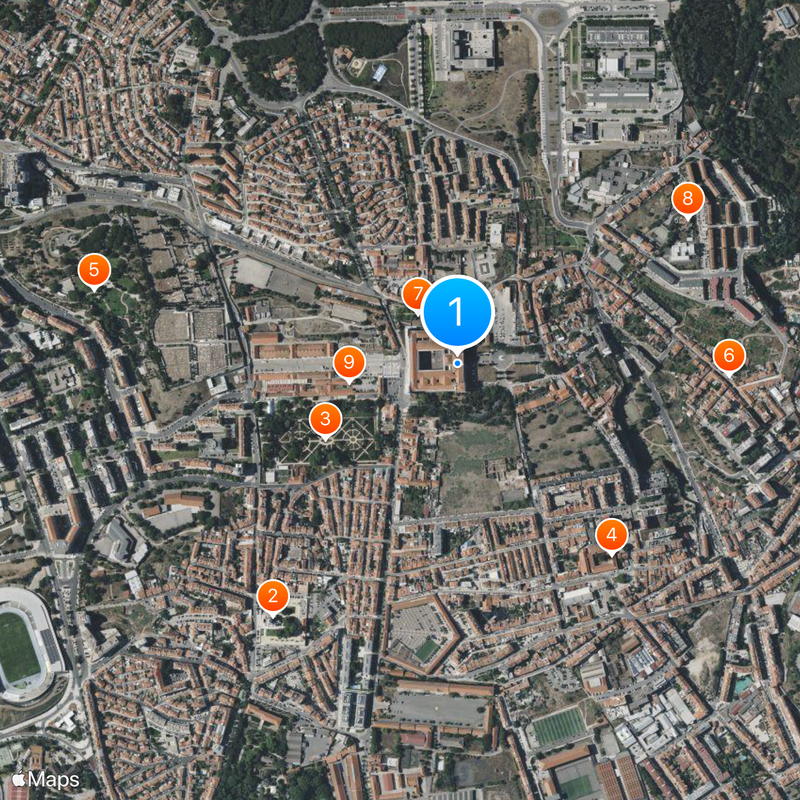
The palace stands in Ajuda, west of central Lisbon, and can be reached by tram or bus. The west wing was completed between 2018 and 2020, so the building is now fully enclosed. Allow time to see both the state rooms and the Royal Treasure Museum, which opened in 2022.
Inside the building is a rare painting by El Greco, the Renaissance artist, hidden in the chapel and often overlooked by visitors. This artwork holds special cultural value for Portugal's artistic heritage.
The community of curious travelers
AroundUs brings together thousands of curated places, local tips, and hidden gems, enriched daily by 95,810 contributors worldwide.